



It’s early September and that means that the Scary Season has begun for those who celebrate the prolonged season. These are the Halloweeners who celebrate the true spirit of the season, like the good old youth of yore. This is when kids really knew how to celebrate the season by breaking into people’s houses to steal furniture for the bonfire in the town square. Damn those late 19th and early 20th century kids knew how to celebrate. We really have lost a bit thanks to the TikTok era. Sure, we have moderately vandalous challenges, but these kids were committed.

I’m not quite in that camp, but I do like to begin watching horror movies starting on September 1st. My wife has informed me that this year, I will have to wait for the more traditional October 1st because I failed to properly celebrate Christmas in July. She is correct. I only watched a couple of Christmas themed films, and I think only one (gasp!) Hallmark movie, this July because I was watching every American Revolution movie and/or series I could get my hands on. It did mean that I got to watch the magnificent musical 1776 again, as well as The Scarlet Coat which is one of my favorite films.
Just because I cannot watch the movies at home though, doesn’t mean that I cannot begin sharing recommendations for other people to watch during the Scary Season. Those who have been readers for a long enough time know that I am always resistant to do “Top 10 Lists” (though I enjoyed Sarah Hepola’s recent RomCom list and will have a reply post of my own soon), and I’m even more opposed to the “List of Films You are Supposed to Like.” This is that, largely, unwritten list that almost singlehandedly explains the gap between critics and audiences.
That doesn’t mean that there aren’t movies I don’t think you should have seen in order to get an overview of a genre. I do. I just understand that such lists are subject to revision and should avoid being elitist whenever possible. Those caveats aside, I have decided the time is ripe for a Five-Foot Geekshelf of Horror Films from the 1960s and 1970s.
What is the Five-Foot Geekshelf?
Welcome to the sixth entry in my Five-Foot Geekshelf series where I create lists of 13 entries highlighting what I think are things that every geek should own or experience. These lists aren’t meant to be a comprehensive or “best of” lists, rather they are meant to be starting points. They are meant to include frames of reference that we can use to discuss the category the list represents.
I was inspired to do these lists when I was reading through some old genre magazines last year. I came across a short two article series that ran in the May/June and July/August issues of Twilight Zone Magazine in 1983 entitled The Fantasy Five-Foot Shelf that had some very interesting recommendations and recommenders and I thought it might be fun to attempt a series of lists for all the various parts of pop and geek culture that I love.
The authors of the Twilight Zone magazine articles were themselves inspired by the famous nickname for the Harvard Classics series created by Charles William Eliot when he retired as President of Harvard University. Eliot’s collection of 50 books, which took up approximately Five Feet of shelf space, contained everything that Eliot believed was necessary for a person to read in order to have a “liberal arts” education. Given that one of Eliot’s main efforts as Harvard President was to minimize the status of liberal arts and transform the university experience from a liberal education to a practical scientific research education, you can imagine that Dr. Eliot had some significant holes in the series.
It must be acknowledged that any list, no matter how long, will always have holes within it that anyone with a level of familiarity will notice with minimal effort. Because of this, I am willing to forgive Dr. Eliot for leaving out The Republic of Plato, even if his leaving it out meant that Karl Popper’s analysis became the common opinion of the dialogue for generations. Anyone who has actually read The Republic begins to doubt that Dr. Popper read more than a couple of undergrad papers on the book. I have a great deal of respect for Popper analysis in the Philosophy of Science, but his interpretation of The Republic leaves a lot to be desired.
That’s just my fancy way of saying that my lists, including this one, will have holes in it and that’s where you the discussant come in.
The first few entries in the series included a discussion of 13 Martial Arts films that belong in everyone’s video/movie library and a list of 13 roleplaying games from the 1970s I think you should own. Today’s list will focus on horror movies from the 1960s and 1970s. I could have started with the Universal era, but there is something very interesting about this particular period in time. It was a time where audiences pushed back against the Gothic horror of the early 20th century (to their detriment), while also pushing the boundaries of horror in ways that paralleled the New Hollywood films of the era with their raw grit and sepia tones.
While I don’t consider myself an expert on horror films, my friends J and Luke Y. Thompson know a lot more than I do; I really love horror films as a genre. Horror films capture our anxieties in ways few other genres can, and they provide us with a sense of cathartic release. If you were to ask me how much I love horror films on a 1 to Rebekah King, I’d be somewhere about the John Landis level, with my true love being the Amicus and Hammer films produced from the 1950s to the 1980s (with a new blessed resurgence). There will be some “obvious” films missing from the list like Rosemary’s Baby (1968), and Halloween (1978). Of course I think you should watch these, but I also assume you probably already have. With those caveats in mind, here’s my list of 13 Horror Films from the 1960s and 1970s I think every geek should watch. Later in the month, I’ll be doing a follow up to this article where I provide game stats for a number of the films in a variety of roleplaying game systems.

Geekshelf Time!
1) Nothing But the Night (1973)
Christopher Lee has starred in at least three iconic roles across many generations. For the Baby Boomers, he will always be known as Dracula, but he was also Saruman and Count Dooku. If you read up on his life, he’s definitely in the running for the most interesting man in the world during his lifetime. While he did a lot of work with Hammer Studios, he and fellow Hammer alum Anthony Nelson Keys teamed up to create Charlemagne Films where they produced one and only one film Nothing but the Night.
Nothing but the Night is an interesting horror film that touches on the fear of death that we all have and combines it with a bit of intergenerational hatred. Where Children of the Corn and The Children contained explicit “the kids are dangerous” messages, Nothing but the Night turns that on its head a bit. Given that there is a mystery at the core of the story, I will offer only one spoiler. The film was partially an inspiration for Get Out. The terror is different here, but…
2) The Asphyx (1973)
The Asphyx, ah, The Asphyx. I have such fond memories of this film. When I was a child I used to spend the night at my Oma and Opa’s house every other weekend. My Opa was a HUGE fan of genre fiction of all kinds and he introduced me to Flash Gordon, Buck Rogers, and The Asphyx.
Like Nothing but the Night, this film has as its central theme the battle against mortality, but in this case asks the question “what if we could kill (or at least capture) death and thus live forever?” What are the costs of such a life and is it worth living? The movie is wonderfully weird and while it was made in the 1970s, it perfectly captures the Victorian tone in both imagery and narrative. If you’re running a Victorian, or even modern, horror roleplaying game session for Halloween, this film is rich with ideas to inspire you.
3) The Beast Must Die (1974)
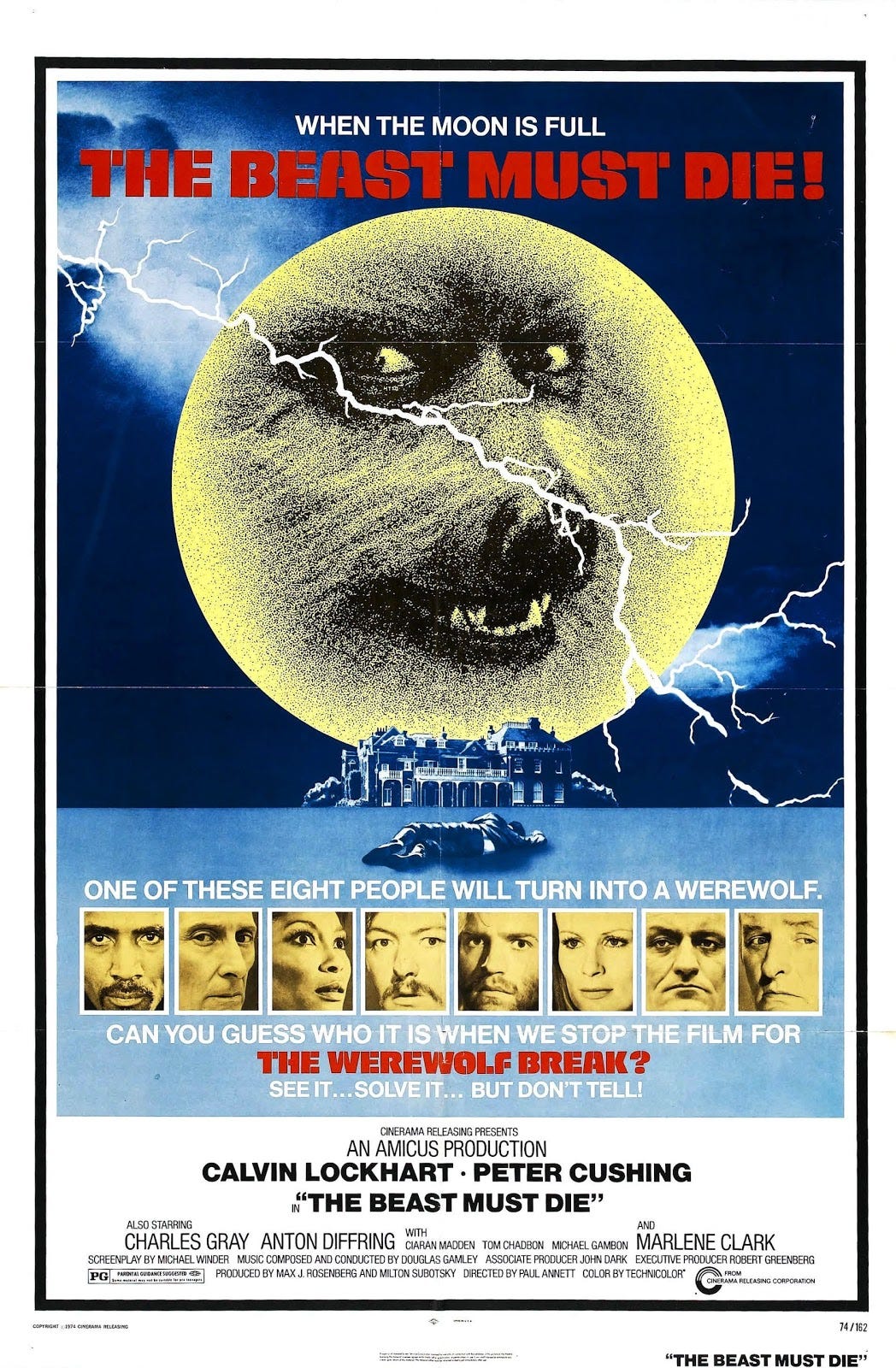
What do you get when you combine The Most Dangerous Game, The Wolfman, and the classic Cozy Mansion Mystery? The Beast Must Die is what you get. Amicus Productions, a competitor of Hammer Studios, produced this one and it is a tone of fun.
Millionaire Tom Newcliffe is a monster hunter who has invited a group of people to his home in order to reveal that one of them is a werewolf who must be killed. The mystery portion of the film is directed in much the same manner as a typical Agatha Christie tale and includes a famous “Werewolf Break” where the film is paused so that viewers can make their final guess regarding which guest bears the curse of lycanthropy. It’s a ton of fun and you can see echoes of its influence in films like Ready or Not and Werewolf by Night as well as other mansion murder mayhem films. Calvin Lockhart is wonderful as Tom Newcliffe and is my personal mental model for Blade the Vampire Hunter. He’s cool, calm, collected, and on the prowl to kill a werewolf.
4) Day of the Triffids (1963)
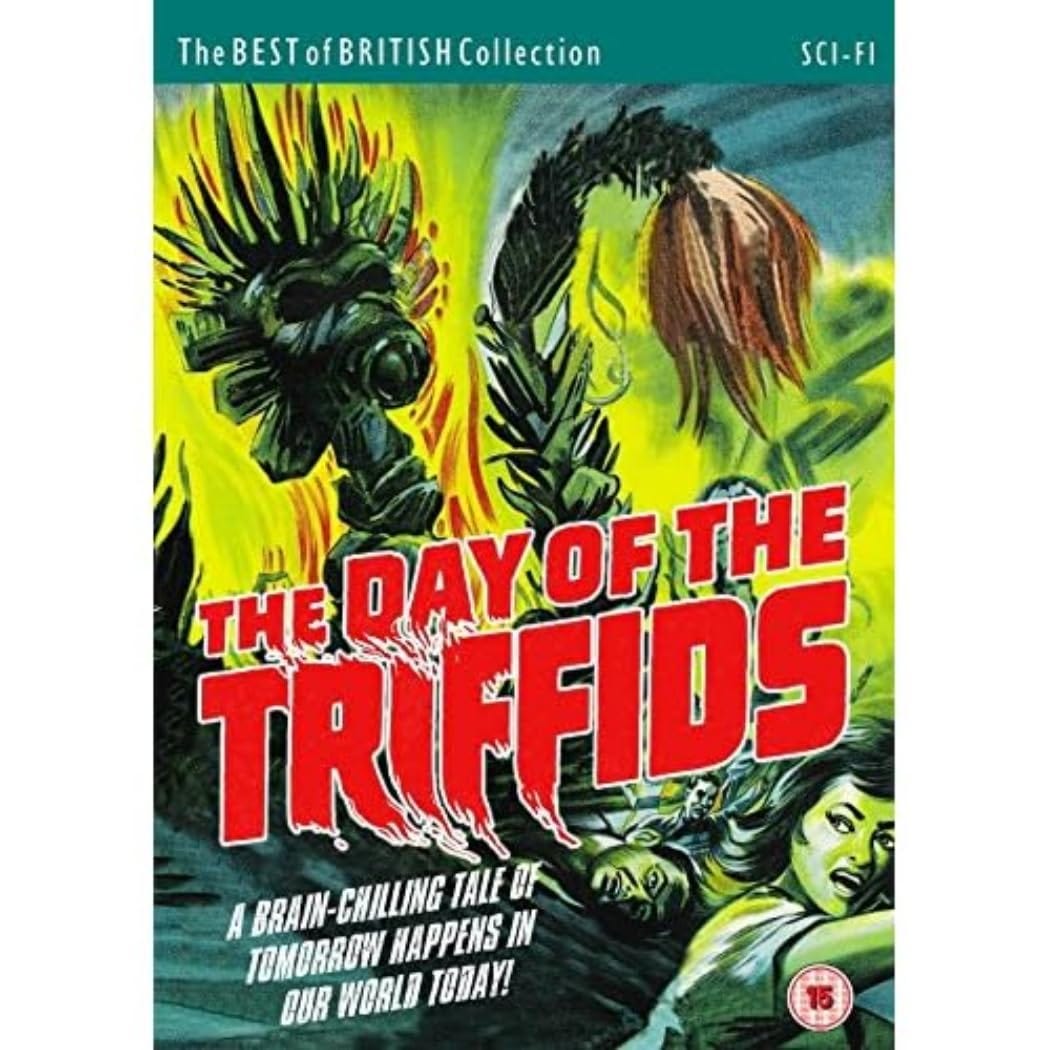
John Wyndham’s 1951 novel Day of the Triffids is a classic science fiction tale that has vast influence in both the science fiction and horror genre. Like many horrific science fiction stories, this film catalogs how the world shifts after an apocalyptic event and the decline of civilization is as much the story as the actual monsters. People are, as they say, the real monsters. You can see echoes of Day of the Triffids in 28 Days Later, It Comes at Night, The Walking Dead, Bird Box, and The Quiet Place. If the apocalyptic story is more about how society changes than it is about jump scares, it’s been inspired by Wyndham’s tale. In the cases of 28 Days Later, Bird Box, and The Quiet Place the connection is pretty explicit.
5) Burn, Witch, Burn (1963)
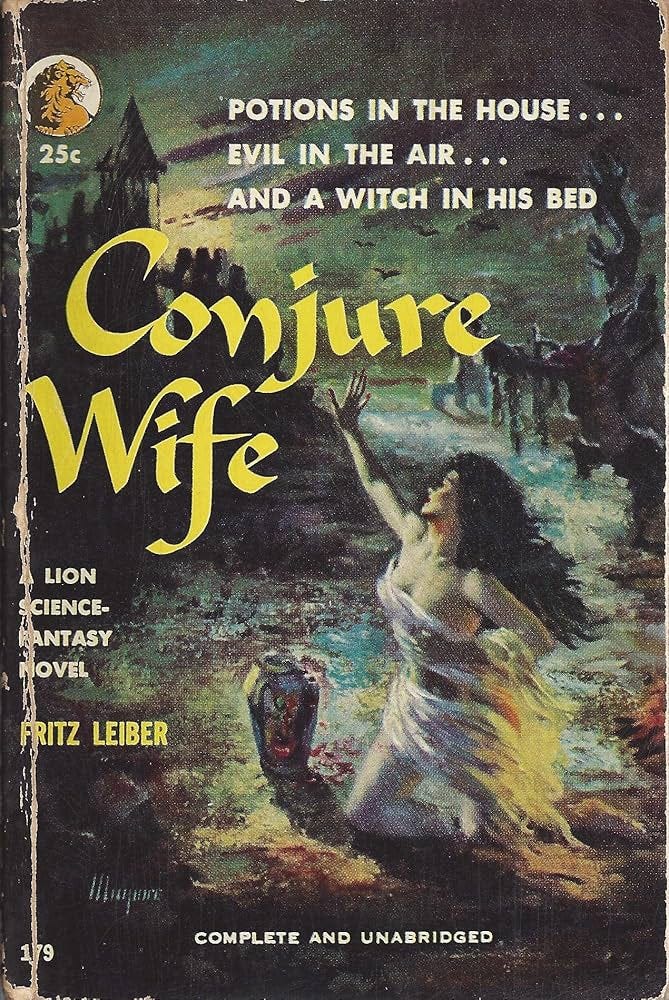
I’m a huge fan of Fritz Leiber. After my introduction to fantasy fiction via Michael Moorcock, Leiber was my transition from deconstructive Sword & Sorcery into Sword & Sorcery proper. His Fafhrd and Gray Mouser stories are among my favorite tales, but Leiber’s writing extended beyond the narrow confines of Sword & Sorcery and into literary horror. His novel, Conjure Wife, is among my favorite modern urban fantasy tales. It tells the story of a University Professor and his wife, a story that pre-sages David Mamet’s play Oleanna with regards to campus politics and the lives of professors and which pre-sages Bewitched with the use of a supernatural wife. Like Bell, Book, and Candle this is a tale of a witch in love, but unlike that light hearted story this is one with dark undertones.
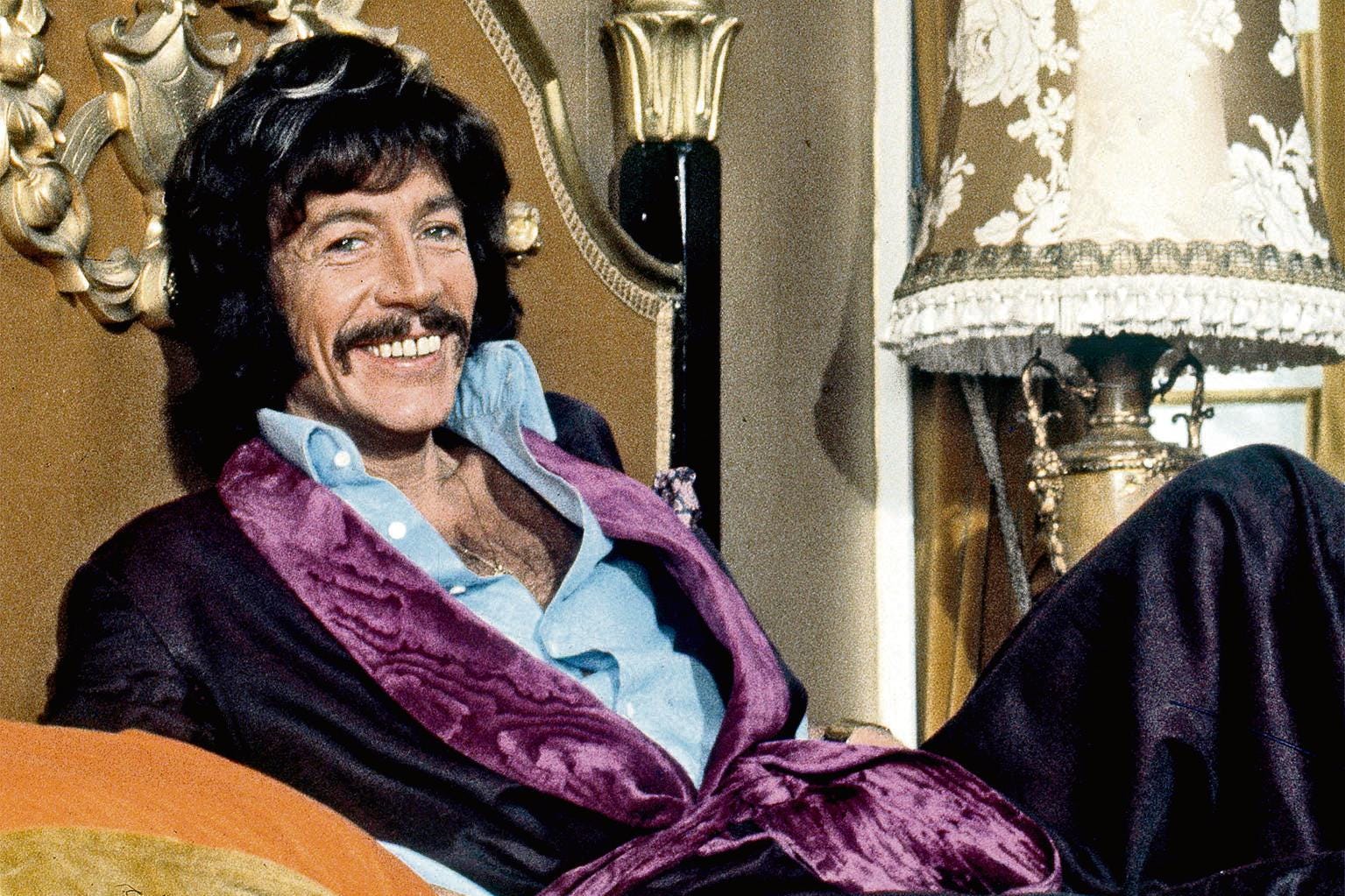
The film stars Peter Wyngarde as Norman Taylor, the naive university professor who is about to have his entire world disrupted. You may remember Peter Wyngarde as the actor who played sexy spy Jason King of Department S in two ITV series or as Klytus in Flash Gordon. He’s magnificent here. He manages to be sexy and charming while also seeming distant and academic. Janet Blair plays his wife, who begins innocent and complies with his requests, but in the end shows a ruthlessness in defending her family that hints at Leiber’s (and the film maker’s) critique of early 1960s patriarchy. It’s a fun film and a very different from the other tales that inspired Bewitched. As much as I like I Married a Witch (which is good enough to have a Criterion edition) and Bell, Book, and Candle it’s Burn, Witch, Burn that I make sure to watch every year.
6) Captain Kronos Vampire Hunter (1974)
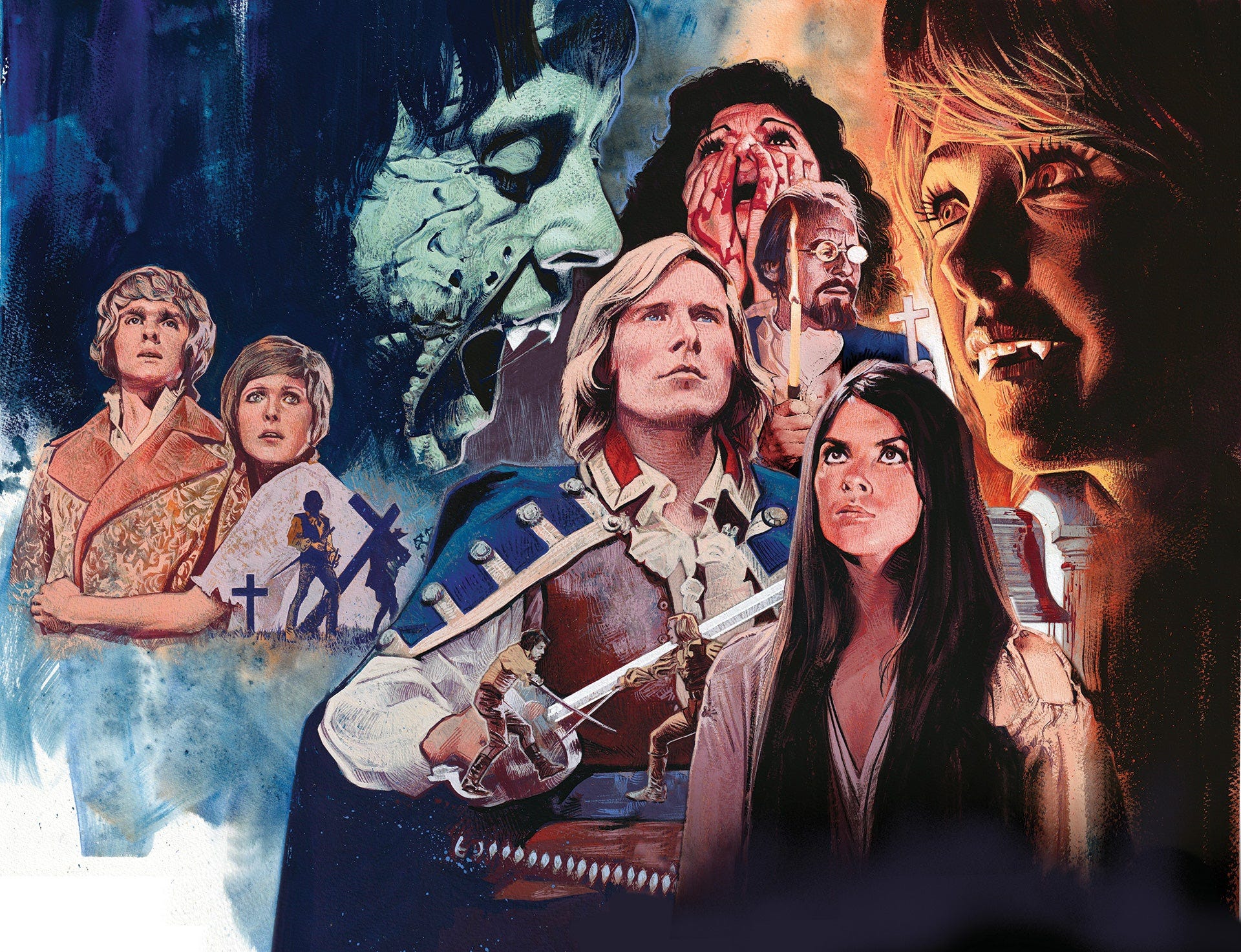
As I mentioned above, I’m a big fan of the British horror movies of the 1950s through 1970s. I cut my teeth on films like the Quatermass Xperiment and the Cushing and Lee revitalizations of Universal’s Classic Monsters. The saturated colors, sensuality, and passion on display in these films made horror feel as vibrant as the Greek and Norse Mythology I was reading at the time. There was depth of world building and more importantly, though I didn’t notice it at the time, engagement with the underlying fears experienced by society at large.
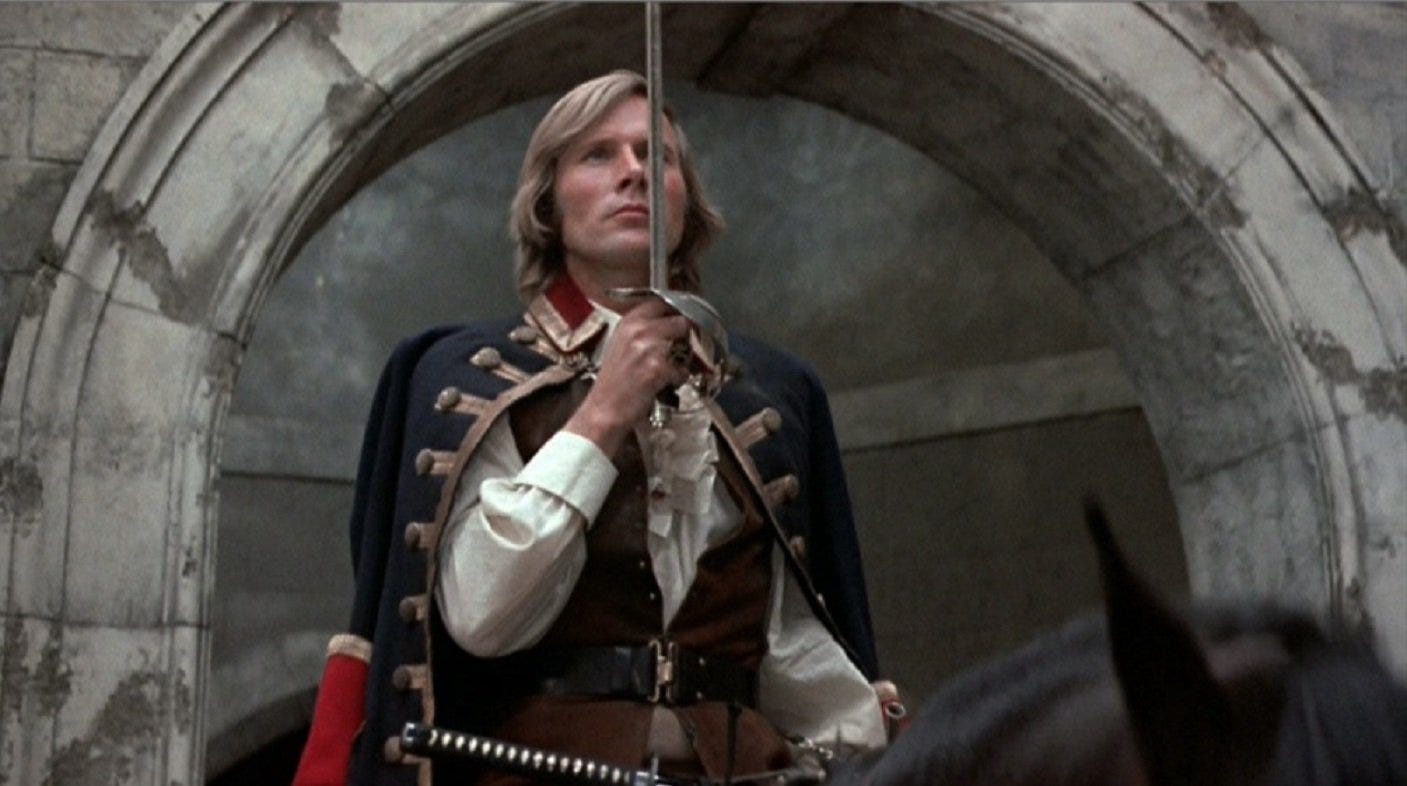
Captain Kronos was directed by Brian Clemens and was released in 1974. Clemens has written a couple of films I greatly enjoy (The Golden Voyage of Sinbad and The Watcher in the Woods) and is credited with the story on one film that doesn’t exist (Highlander II: The Quickening) and with Captain Kronos he shows that when he’s in control of story and direction, the results are extremely entertaining.
Horst Janson stars as the eponymous Kronos who is summoned by his former brother-in-arms Dr. Marcus to investigate a series of deaths involving young women who have died of rapid aging. Kronos determines that these deaths are the work of a vampire, but not the blood drinking vampire we are used to seeing in films. This vampire feeds on youth directly.
The girls you spoke of - they were not drained of blood but of youth, of life itself. You see, doctor, there are as many species of vampire as there are beasts of prey. Their methods and their motive for attack can vary in a hundred different ways. — Professor Hieronymous Grost (Kronos’ Companion)
While the film was not well received critically, and it was one of Hammer’s last films before its revival, the film is rich with inventive vampire lore and has a compelling story. Hammer films at the time were venturing from the sexy and serious into the sexy and camp with films like Dr. Jekyll and Sister Hyde (1971) and Dracula A.D. 1972, so the more sincere, but still sexy as it starred Caroline Munro as the romantic foil, Captain Kronos was a bit discordant with the productions at the time. I like the camp era of Hammer, but it was definitely an era when Hammer was following rather than setting trends. Classic Gothic horror was, for a time, on the way out of the zeitgeist and tended to be relegated to camp. It’s a cycle that happened before. After all, Frankenstein met Abbott and Costello as Universal’s horror dominance waned. For all that it came out at the wrong time, Captain Kronos is an entertaining and engaging vampire film that deserved as many sequels as there are kinds of vampire.
7) The Devils (1971)
When I was a kid, I loved watching the various film adaptations of The Three Musketeers. In my mind the G.O.A.T. is the Richard Lester version starring Oliver Reed, Michael York, Richard Chamberlain, and Frank Finlay as the Musketeers and Charlton Heston as Cardinal Richelieu. At the time I had no idea how horrifyingly brutal the Thirty Years War was or even an inkling of the terrible events of St. Bartholomew’s Day in the century prior. All I knew was that there was swashing of buckles going on and that was enough for me as a kid.
When I got older, I came to appreciate the events that surrounded the film and it added greater context to the political tensions underpinning all the adaptations I’d seen. I still have a soft spot for the Gene Kelly version, with Vincent Price as the Cardinal, but now I see where it fails on numerous levels to show with any veracity the sinister political machinations of His Excellency. Vincent Price is perfect casting for the role, but the film is far too bright in tone and technicolor to capture the cruelty of the period.
I also didn’t know how ironic it was for Richard Lester to cast Charlton Heston as the Cardinal in a version starring Oliver Reed. You see, when Oliver Reed was interviewed about the controversies surrounding the excesses of the Ken Russell film The Devils, he responded, “We never set out to make a pretty Christian film. Charlton Heston made enough of those.” As with the Three Musketeers stories, one of the chief antagonists of The Devils is Cardinal Richelieu, and though this Richelieu remains primarily in the background he is crueler and more ambitious than most interpretations of the character.
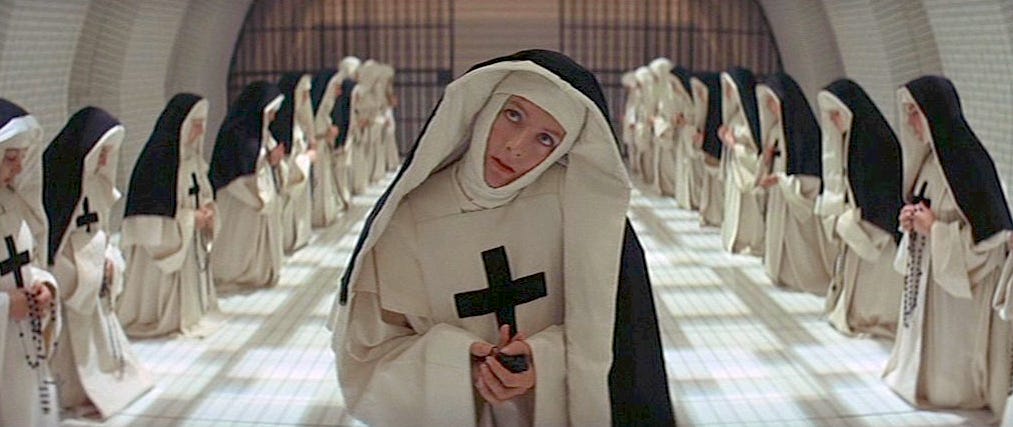
Ken Russell’s film The Devils is a dramatized account of the accusation, trial, and execution of Father Urbain Grandier for the crime of witchcraft. This particular account is based on Aldous Huxley’s non-fiction work The Devils of Loudun. Historically Urbain Grandier (Oliver Reed) is accused of witchcraft and sexual depravity by Sister Jeanne des Anges (Vanessa Redgrave). This accusation spreads and transforms into a mass hysteria in the convent. Events unfold and there is a trial after which Grandier is executed. The inciting incident that leads Sister Jeanne to accuse Grandier of wrongdoing is when he secretly marries Madeleine (Gemma Jones), a woman he falls in love with after giving her mother the last rites. Jeanne had been fantasizing about him and this triggers her envy, envy that gets used by those who want to destroy Grandier. With the exception of the secret marriage, these are all documented historical events and thus are not spoilers.
The Devils is an interesting, important, and disturbing film. It is disturbing on two levels. The first is in the way it depicts acts of sexual and violent depravity in the film. Even though the film as it exists in modern edits isn’t tremendously graphic, these moments can be very difficult to watch. Russell understands that believing is seeing and there are moments when you can imagine exactly what is happening as your mind fills in the gruesome gaps. When you read about the actual events surrounding the Grandier trial, and the 30 Years War in general, you realize that Russell is not trying to be exploitative in a Grand Guignol fashion. Instead, he is trying to get you to see how horrifying a totalitarian state can be.
Because the state in this case is the Kingdom of France during a period when the government and the local Catholic Church were heavily intertwined and dominated by Cardinal Richelieu’s influence, many might think that this is an anti-religious or anti-Catholic film. While Russell has said that The Devils was the “last nail in the coffin of [his] Catholic faith,” his treatment of Grandier as the film progresses is more a critique of French Political Catholicism as political institution than religion itself. Grandier’s faith and piety grow as the film progresses. When it comes to the 30 Years War, one must keep in mind that France was fighting not only Huguenot, but Spanish Catholics as well. The English would soon be fighting their Civil War, where Puritans would fight against a Protestant (though Catholic sympathizing) king. When I teach about the Colonial Period of America in my introductory classes, I remind my students of what was happening in Europe to explain how unique our vision of religious liberty was at the time.
Russell has stated that this film is about state power and the main argument of the film is that tyranny could happen under any regime and that it is even worse when the tyranny is supported by institutions who should resist them. Grandier’s opening speech is about how religious toleration and his priestly guidance has saved the city from the ravages of war. This point is made even more explicit in Grandier’s final moments at the stake and in the last shot of the film where the Grandier’s wife Madeleine leaves the now destroyed town of Loudun. In some ways the film is a more brutal and sexual version of The Crucible because it seeks to convey a similar message about the state, power, and manipulation.
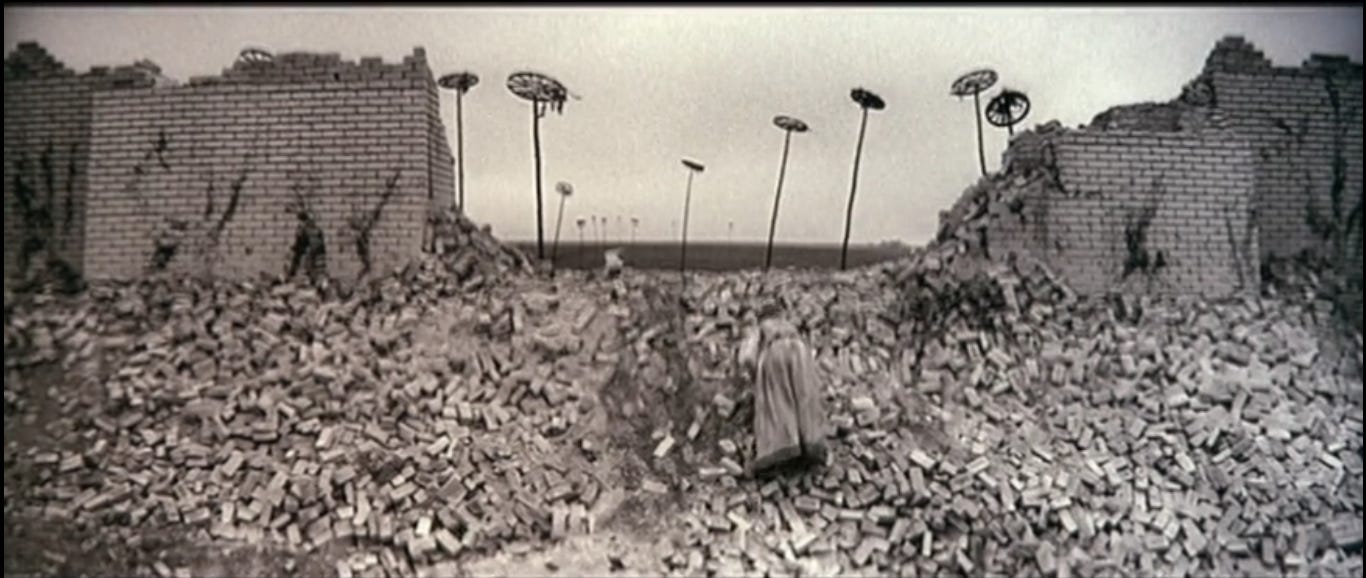
The second way it is disturbing is in the odd visual and audio contradictions within the film that destabilize the viewer and push them out of their comfort zone. In this case, I don’t mean the late-Sixties/early-Seventies exploitation material. I mean the way that Ken Russell is simultaneously pushing brutality and camp in a discordant mix that makes the unseen brutality all the more horrific. In this manner Ken Russell’s direction is an intersection of three filmic movements. With The Devils, he combines the sexploitation camp of films like Hammer’s Dr. Jekyll and Sister Hyde, and a host of other late-Sixties and early-Seventies films capitalizing on the sexual revolution for film revenue, with the rawness of a Sam Peckinpah film, and a focus on using score and sound to manipulate the audience similar to Hitchcock in Psycho.
A key example of Russell’s use of sound is in an early scene featuring Grandier. He has previously praised his town for resisting the secular conflict that has ravaged most of Europe and in this moment he is leading a funeral procession for plague victims. During the procession a version of the Dies Irae plays, the same one that is echoed in Camille Saint-Saëns Danse Macabre. Both songs feature a musical interval called the “tritone”,” which is a dissonant and disturbing musical tone often called the Devil’s Interval. Russell, whose films include The Music Lovers, Mahler, and Lisztomania knew his music and he uses it here to make you feel uncomfortable. You don’t see much violence, but your eardrums feel it.
It is a film that pushed boundaries in a variety of ways and as a result received an X rating and was banned in some countries. For a long time it was difficult to find a copy to watch. Though controversial and difficult to find, it has been a very influential film. As I watched the movie, I was reminded of scenes from later films. I cannot imagine that the director of the Timothy Hutton film Taps, wasn’t thinking of the scene, in the trailer below, where Grandier’s crossbowmen confront some of the Cardinal’s guard.
It’s interesting to me that Russell’s “depravity camp” seems to be a part of an honored tradition among English directors when depicting the crimes of France, regardless of whether it is Richelieu’s Catholic or Napoleon’s Imperial France. Where Russell’s film opens with a scene where the King of France enacts the Birth of Venus with himself as Venus in what is essentially a burlesque, Ridley Scott’s film Napoleon focuses more on Napoleon’s sexual relations with Josephine while ignoring any political savvy the real Napoleon had. Similarly, Almost all of Russell’s villains have external physical, or behavioral, manifestations of their evil. Richelieu is wheeled around and Vanessa Redgrave’s Jeanne has a hunched back. Meanwhile, Oliver Reed is a charismatic sexual dynamo who may be morally gray in breaking rules on chastity, but is morally forthright when it comes to valuing peace. When one compares this imagery with that of the French film La Reine Margot, which covers the horrific St. Bartholomew’s Day Massacre, it’s easy to see the contrast. Neither flinches away from the horrors of the day, but only Russell’s engages in depravity camp.
I don’t often issue caveats when recommending films, but I cannot recommend Ken Russell’s The Devils to everyone. It is a film that will offend many people. Not everyone will agree with me that the film isn’t as heretical as critics of an earlier era found it to be. For me it’s a film that begins as exploitative camp, but when it hits Grandier’s trial and Oliver Reed takes over the film it transforms into something powerful and horrifying. The Criterion Channel is currently showing the unrated version that Shudder has shown in the past as a part of their Nunsploitation collection. If you are up for it, it’s a disturbing way to spend a day. All the more disturbing because as camp and over the top as this film is at times, it is nowhere near as brutal as the reality.
8) Night of the Living Dead (1968)
I don’t think any discussion of horror films can be complete without George Romero’s classic horror film Night of the Living Dead. Not only did the movie change the zombie genre film forever, it showed how a director on a shoestring budget could return to older film techniques (including filming in Black and White) to create a real sense of dread. Romero uses the film to comment not only on the fear of conformity that was prominent in the horror films of the 1950s and 1960s, but to expand the commentary to questions of familial fidelity versus communal responsibility and race relations. The film ends with a gut punch, that is all the more powerful for how casually the event is treated in the film. One part of what makes it work is the powerful message about race, but the other reason it works is the casual nihilism it expresses. That nihilism elevates the film and takes the horror from gore and tension into the realm of cosmic horror where we wonder what the point of anything really is.

The film was shot outside of Pittsburgh, and like films in the late 1970s and early 1980s that took advantage of New York’s urban decay, the architecture alone speaks of a breakdown of the social order. The film has also been deeply influential in the comic book and gaming industries with titles like Marvel Zombies and games like All Flesh Must Be Eaten building on the mythos that Romero transformed.
9) The Devil’s Rain (1975)
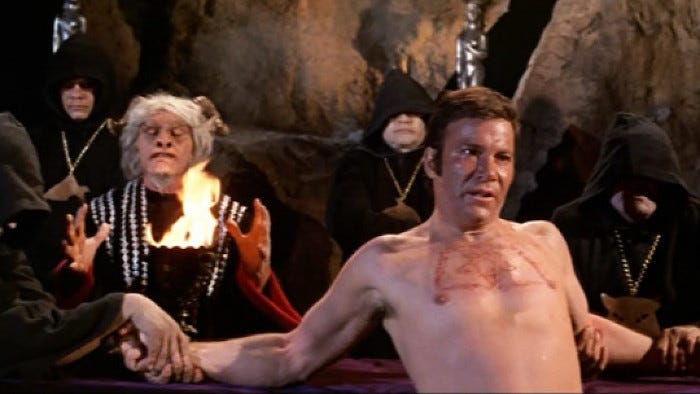
You ever wonder where the William Shatner mask they used in Halloween came from? It was manufactured from a life cast of Shatner taken for The Devil's Rain and used to very good effect. The Devil’s Rain was directed by Robert Fuest, who provides the bridge across the Atlantic with this film. Fuest had worked on the Dr. Phibes films, as well as an adaptation of Michael Moorcock’s Jerry Cornelius novel The Final Programme. While British horror can have a downbeat ending from time to time, it is rare that they are able to capture the hopelessness of the Satanic Cult films US production companies were churning out in the 1970s. If you were a character in one of these films, things were not going to end well for you. There were no Final Girls in the vast majority of these films, just the bleak disappointment that you would be killed last. The depressing endings of the New Hollywood films, as well as the New Hollywood Satanic Cult Horror films, were so predictable that I’ve come to call any downbeat ending a 70s ending. The Devil’s Rain has a self-sacrificial ending that hits a bit differently than most of the genre.
The Devil’s Rain is a very 1970s film. I chose it as to represent the Satanic wave because it’s a bit off the beaten path. Most people might have recommended Race with the Devil, which is essentially Steven Spielberg’s Duel but with a Satanic Cult instead of a pissed off trucker. The Devil’s Rain is more Lovecraftian with Ernest Borgnine starring as the priest of a Satanic Cult who transforms into a goat headed demon, William Shatner plays the devout Christian Mark who attempts to defeat the Satanic Cult, and there are appearances by Tom Skerritt, John Travolta, and Anton LaVey. That last one giving the film a touch of “authenticity.”
10) Texas Chain Saw Massacre (1974)
When I was a kid, Texas Chain Saw Massacre was the film that everyone bragged about being brave enough to watch. It held an almost mythical status as the most frightening and gory film ever made and that status prevented me from watching Tobe Hooper’s original film until I was well into my 30s. When I did watch the film, I still found it scary, but I also found it to be an interesting film that may have taken some inspiration from the story of Ed Gein’s life but took that into entirely new directions. Thematically it shares an element with Nothing but the Night. Both films are about some social group seeking to extend itself and traditions through the destruction of the young. The cultures being preserved are very different, but neither deserves to be maintained.
When I was younger, I followed the common trend of asserting that Tobe Hooper didn’t direct Poltergeist because of the vast differences in style between that film and Chain Saw. I still think it’s impossible to argue that Spielberg had no influence on Hooper’s direction, but over time I’ve come to see Poltergeist as Hooper’s film. Repeated viewings of Hooper’s film Lifeforce have beaten all resistance out of me. Did Hooper learn from Spielberg? Absolutely, but he applied those same lessons to Lifeforce and they retain a similar Hooper-ness.
11) Suspiria (1977)
For years I heard about the brilliance of Dario Argento’s 1977 horror classic Suspiria and I avoided watching it because the people who recommended it tended to be the kinds of people who dismiss mainstream films and enjoy sitting through repeated viewings of Ulysses Gaze. Who am I kidding? No one wants to live through that. That’s real horror. See, I can be mean every now and then.
When I finally watched the film a decade ago, I was extremely disappointed in myself for waiting so long. It contains so many of the elements that I enjoy in film, not just in horror films, and is a masterpiece of the horror genre. The use of saturated color provides both a reminder that what the viewer is seeing “isn’t real” as well as creating a deeply disturbing visual environment. The combination of imagery and score keeps the viewer in a constant state of unease. The story is relatively straightforward. Young ballet dancer (speaking of which, you need to read Rebekah King’s latest piece on horror in the ballet) Suzy Bannion seeks to study at an exclusive Tanz Academie, only to discover sinister things are afoot. She flees, returns, and all Hell breaks loose. The film makes a nice companion piece to Burn, Witch, Burn because both deal with witchcraft, but Suspiria does so in ways that create real dread beyond the social commentary.
12) The Exorcist (1973)
Mike Oldfield’s album Tubular Bells contains some of the most beautiful music I’ve ever heard. It’s a masterpiece of progressive rock and I listen to it frequently when I am writing. I find it quite relaxing, which actually surprises me because it is used as the music in one of the most frightening films I have ever seen. William Friedkin hadn’t initially planned on using Oldfield’s song in the film and had hired Lalo Schifrin to compose a score that included elements that evoked Brahms’ Lullaby. Schifrin’s career is filled with memorable scores ranging from Bullitt (1968) and Mission: Impossible (the show) to Magnum Force (1973) and Black Moon Rising (1986), but his composition did not appeal to Friedkin and he selected a beautiful, and at times haunting, obscure progressive rock song instead. It works brilliantly.
I think the reason that the Oldfield song doesn’t fill me with dread is that it isn’t featured at the moments that scare me most in The Exorcist. While a good deal of the film focuses on the eponymous event where Father Merrin (Max von Sydow) and Father Karras (Jason Miller) attempt to exorcise the demon from Linda Blair’s young Regan, those moments don’t frighten me. Father Merrin’s strength in the face of evil, and his knowledge that evil can be defeated, provide hope in the supernatural scenes. Those scenes do generate dread and shock, but I “know” the priests will win in my heart of hearts because of Merrin’s strength. Even Karras’ lack of faith only cracks that armor so much, but it provides room for the truly frightening element…psychiatry in 1973. What the medical profession puts Regan through is as horrifying as anything in Cuckoo’s Nest. The misapplication of science is the real horror and it scares the shit out of me.
The supernatural elements in The Exorcist are handled beautifully, and in a way that makes them feel real. At no point am I pulled out of the film, as I was when a possessed Patricia Arquette asked Gabriel Byrne “how is your faith now” in Stigmata (1999). He stands there stunned, but in the back of my mind, all I can say is “pretty good now. I mean, it’s not faith anymore, it’s knowledge.” The Exorcist doesn’t have a lazy shock moment like that. Karras’ weakness is his desire to prevent an innocent from suffering anymore. He begins a doubter, sees the power of faith, but is still overwhelmed by watching the suffering of the innocent. Friedkin’s film takes faith, and the potential terrors of science, seriously and it is possibly the greatest horror film ever made.
13) Theatre of Blood (1973)
I had a really difficult time choosing between Theatre of Blood and The Devil Rides Out for my final recommendation. In the end, it was the lack of Vincent Price depth on this Geekshelf that pushed me towards Theatre of Blood. Price is the Maestro of the Macabre and I could create an entire Geekshelf of Vincent Price Films Every Geek Should Watch, and his 1960s partnership with Roger Corman produced some of the best films Corman ever made. Vincent Price’s charisma and talent elevate Corman’s well edited, but very low budget, films from B-Movies to Absolute Cinema. Masque of the Red Death is a phenomenal film and Price is absolute perfection in that film.

In Theatre of Blood, Price plays aged actor Edward Lionheart, an actor who maintains the older tradition of acting with its perfectly performed Received Pronunciation. When he is passed over for an award, he decides to enact his vengeance on the critics who spurned him. He does all of this while delivering what Rebekah King argues is the best version of a Shakespeare speech, the famous ‘to be or not to be’ speech that marks Act III, Scene I of Hamlet. Dr. King argues that the combination of the character’s motivation, and Price’s channeling of that emotion, make it her favorite delivery of that particular speech.

I hadn’t thought of this before I began to write these couple of paragraphs praising Theatre of Blood, but Price’s performance of Lionheart is similar in many ways to that of Boris Karloff as Byron Orlok in Peter Bogdanovich’s underappreciated classic Targets. Price channels all of his acting talent to create an actor who terrifies his victims by reading their damning reviews of his performances. His acting becomes a force of terror. Where Price is the villain of Theatre of Blood, Karloff is the hero of Targets. Bogdanovich’s film makes an argument for the importance of cinematic horrors in a world of very real horrors. The plot of Targets was inspired by the shootings by Charles Whitman at the University of Texas and the real villain of the film is Bobby Thompson, who goes on a killing spree for unspecified reasons. Where some might have the film blame horror films for breaking Bobby’s mind and causing him to choose violence in a Satanic Panic kind of way, Bogdanovich does the opposite. He argues that cinematic horror has a place and when Orlok faces down Thompson in the lot of a Drive-in Theater, he goes even further but I’ll leave it up to you to interpret the final confrontation of Targets.
Brief Final Thought
That’s the list. I think it’s an interesting one that might contain a couple of films you’ve overlooked. The 1960s and 1970s were a rich era for horror films and these only scratch the surface. In fact, they barely nick the surface and the list is a bit Brit heavy. I’ve constrained myself to the Geekshelf rule of 13 though and these are my 13 from the era. They might not be the same tomorrow, but they are what they are today.
Oh, and I think it’s interesting that some of Price’s best work, as well as what is arguably Karloff’s best performance, were in Corman productions. These were low budget affairs that allowed actors towards the end of their careers, and lives, to show us their true talent. Corman may have been a cheapskate, but he provided many a gift to film fans.
Now that The Devils is getting the full 4K uncut release this fall, I'll finally watch it.
Monty Python: "Before you go to bed, Peter Wyndgarde will come and declare his undying love for you..."