



Welcome to another entry in the Five-Foot Geekshelf series! This time I’m doing something a little different. Rather than recommending games you should own I’m recommending books about games. Books about the history of the hobby that were written during that history. The list includes books about design as well as books about the culture that built the thing we all love.
I was inspired to write this list when I was researching “The Stanford System” for the article I published last week. When I was digging into who the Jeffrey A. Johnson who wrote the “Fourfold Way of FRP,” I noticed that he worked at EPYX on Temple of Apshai. I also noticed the names of one of the founders of EPYX, Jon Freeman, and I immediately looked to my bookshelf where I found three books on gaming written by him. One of those books was written under a pseudonym and the other two are an interesting pairing.

As I looked at those books I remembered a list of books I put together in a 2012 post I wrote on my old Cinerati Blogger site. In that post I recommended thirteen game books that I thought every gamer should own. I hadn’t even encountered the issues of Twilight Zone Magazine that inspired the Geekshelf series when I chose to provide that list of thirteen books. I’ve always believed that a baker’s dozen of recommendations was the perfect number, but it’s nice to see a bit of serendipity between my subconscious design preferences and those of people like Karl Edward Wagner.
Every gamer I’ve ever met has, at some point, aspired to design. As Gary Gygax points out in his book Role-Playing Mastery (find a cheaper copy than the Amazon one), to design well, you need to know what came before. In case you are wondering, Gygax’s book is not in this list but it will be on another. The books tjat are on this list are the ones I reach for when I want to understand where we came from, why certain design choices became standard, and how the hobby developed from a handful of wargamers in Lake Geneva and Long Island into what it is today. It’s also a place I look to to find recommendations and comments by people who are often overlooked in modern discussions of the history of gaming. A couple of the books are fairly obvious, even hagiographical, but newer gamers might not know about them. The rest you may not have heard of, and those are the ones I’m most excited to talk about.
The original article was one I’ve been meaning to expand those brief annotations into full entries for over a decade, and seeing Jon Freeman’s name again was the perfect excuse. It’s a perfect topic for a Geekshelf entry. So, consider this the version of that post that should have existed all along.
Don’t worry I’ll be getting back to game recommedation and film recommendation lists soon. The 1980s role playing game list is coming and it’s got a couple of games that deserve more love than they’ve received over the years.
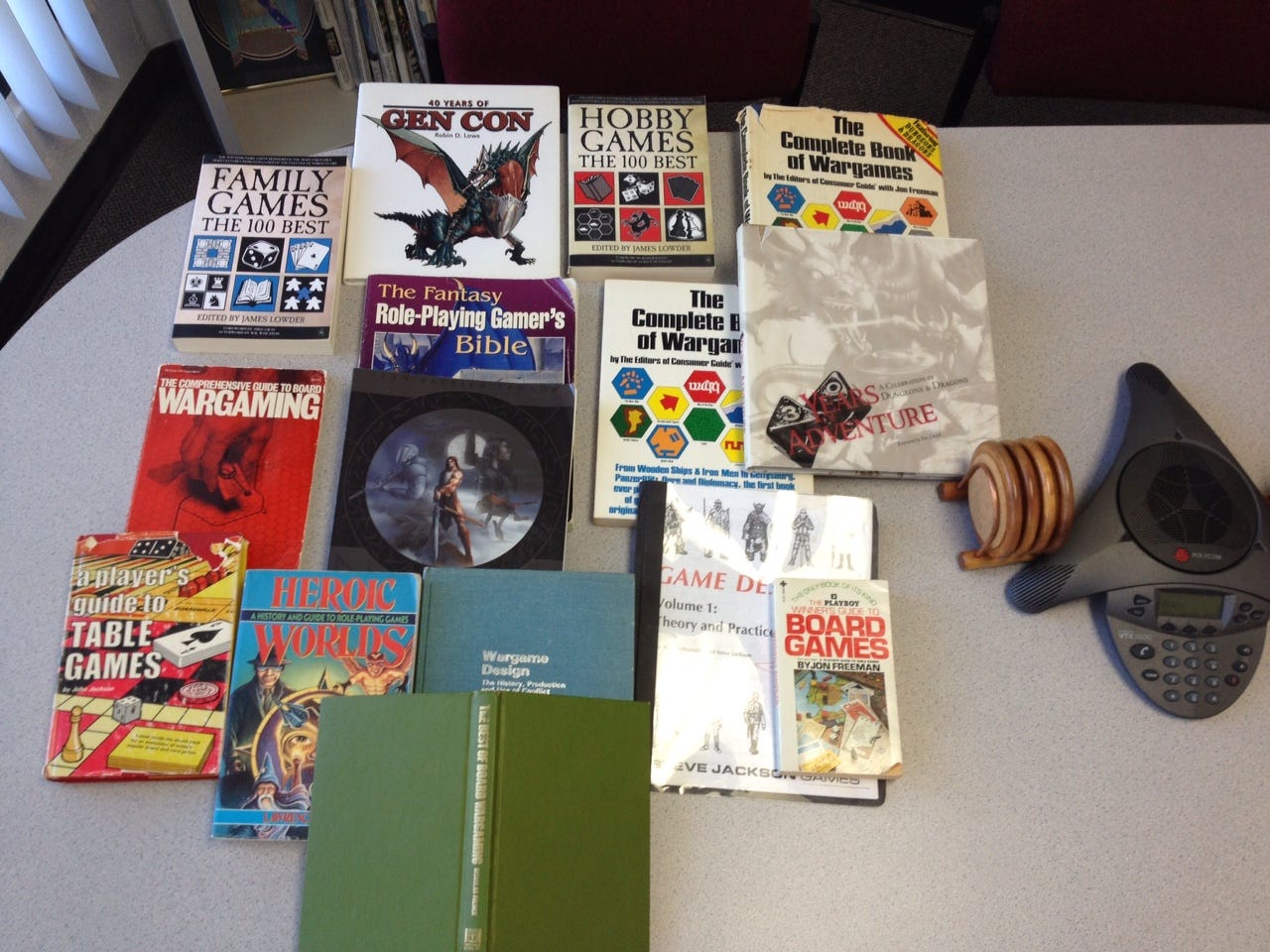
1. Thirty Years of Adventure: A Celebration of Dungeons & Dragons — (2004, Wizards of the Coast)
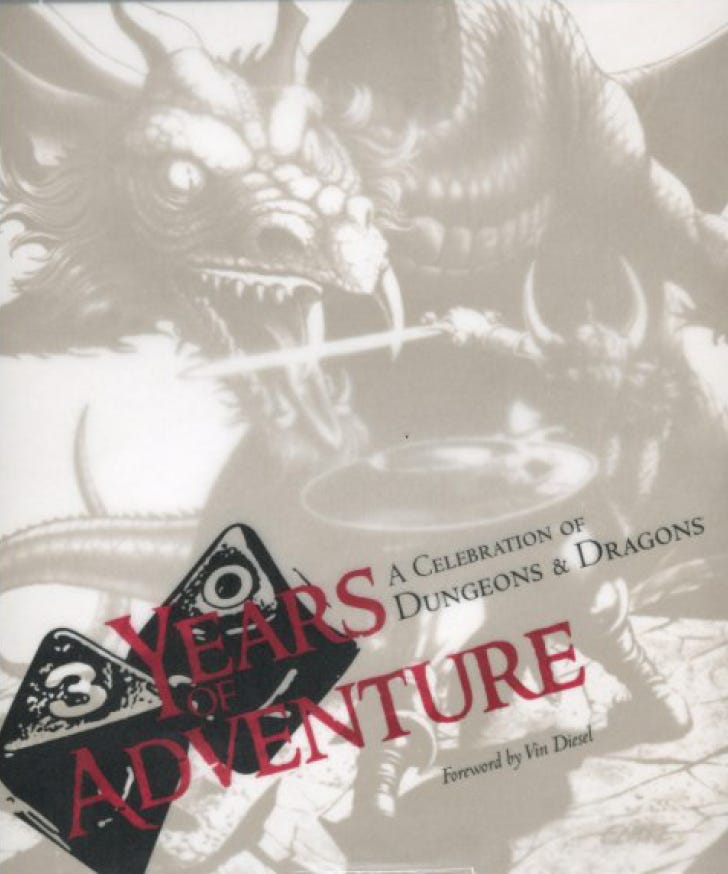
I put this book first because it is the most “pop” of the recommendations. I figured I’d get the pure marketing book out of the way as soon as possible. I also wanted to take a moment to remember how Wizards of the Coast used to think about their game. Thirty Years of Adventure: A Celebration of Dungeons & Dragons is not an unbiased history of the game. Instead, it is the celebration of a brand. It is a marketing hagiography. It was published by Wizards of the Coast when they were already a Hasbro subsidiary, it was assembled to celebrate D&D’s thirtieth anniversary, and the history it tells is the history that the people with professional investment in that history wanted told. You will not find a balanced account of the TSR/Lorraine Williams era in these pages. You will not find Gary Gygax at his most candid. There are things this book simply will not discuss. Then again, you won’t find Wizards of the Coast expressing embarassment and apologizing for being associated with the creators of the game.
This is the kind of celebration book that should have been written, again, for the 50th anniversary of D&D and I am glad I own this book.
The essays are written by people like Dave “Zeb” Cook, Ed Greenwood, Jeff Grubb, Margaret Weis, and Skip Williams. What those essays give you is not objective history but something arguably more valuable, they give you what D&D felt like to the people who were inside it. The internal mythologies, the genuine affection, the sense of a community that had survived some genuinely difficult years and wanted to celebrate its own survival. That’s primary source material. A purely neutral history of D&D would not tell you what the players thought the story was, and that matters enormously for understanding why the game became what it became. This is a book filled with essays by people telling you how much they loved being a part of something. It is a celebration.
The book also functions as a bibliography in disguise. Every essay by a designer or writer from a particular era is an invitation to go deeper. They are asking you to hunt down the issues of Dragon Magazine they’re referencing, to track down the supplements they mention in passing, to learn the names you didn’t know you needed to know. If you want a starting place on the History of D&D as oral history, this is a good place to start. It isn’t as raw and honest as Please Kill Me: The Uncensored Oral History of Punk is. Then again, while I might argue that the creation of D&D was punk in some respects, it was nowhere near as wild as the early punk music scene.
2. 40 Years of Gen Con — Robin D. Laws (2007, Atlas Games)
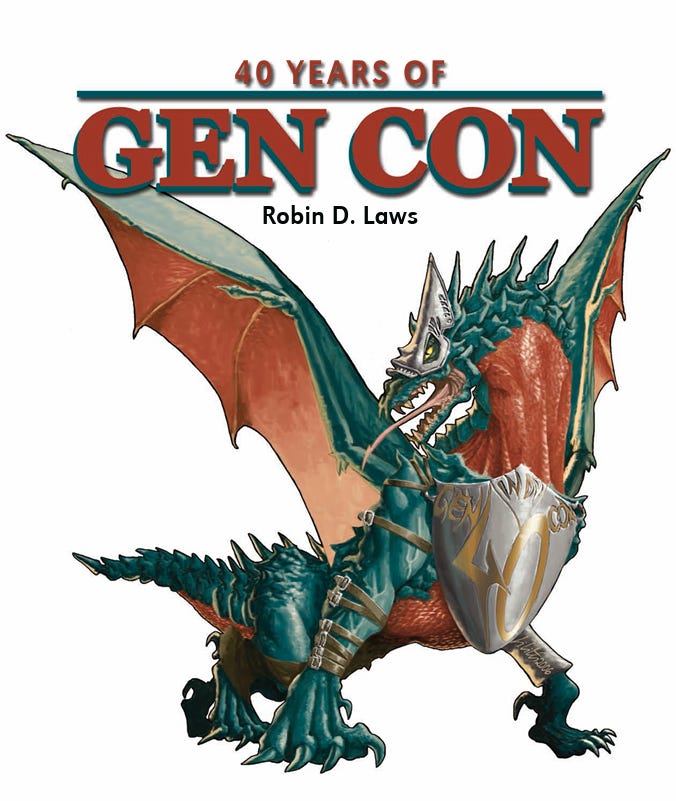
This is the second, and last, living history hagiography you will see in this list, but it’s one I go back to often. Robin Laws is one of the most thoughtful working designers in the tabletop hobby. His QuestWorlds (a generic version of his earlier HeroQuest/HeroWars work) alone would earn him a permanent place in any history of the hobby, and his Gumshoe system represents one of the clearest solutions to a long-standing problem in mystery RPG design that anyone has produced. He also writes extremely well and has written some great books that combine writing and game master advice. You really should check out his Hamlet’s Hit Points if you get a shot.
The argument that 40 Years of Gen Con makes, implicitly and sometimes explicitly, is that Gen Con is more than just a convention because it’s a living documentary representation of the hobby. The things that have happened at Gen Con over its history trace the arc of what the hobby has cared about, fought over, celebrated, and mourned. The game that launched in Lake Geneva. The years in Milwaukee. The move to Indianapolis. The rise of the collectible card game market in the 1990s, and the crash, are things reflected in the convention’s exhibitor lists as clearly as in any detailed historical or financial accounting. The board game renaissance of the 2000s. Gen Con has been there for all of it, and because it has, this book functions as a history of the hobby told through the story of a single institution.
I have a particular soft spot for convention history as a subject because conventions are where the hobby’s social networks actually exist. Games happen at conventions that never get published. Friendships form that shape decades of design decisions. The oral history of the hobby is inseparable from the history of the conventions where it was passed along. Laws is aware of this, as am I. The years I was able to attend Gen Con, both in Milwaukee and Indianapolis, forever changed how I experienced this hobby. I got to play Tunnels & Trolls with Ken St. Andre, meet Shane Hensley of Deadlands fame, and chat with Robin D. Laws and Ken Hite about H.P. Lovecraft over Old Fashioneds. It’s a magical place that is the true living history of the hobby and this volume is a wonderful celebration of that space.
3. The Complete Book of Wargames — Jon Freeman (1980, Simon & Schuster/Fireside)
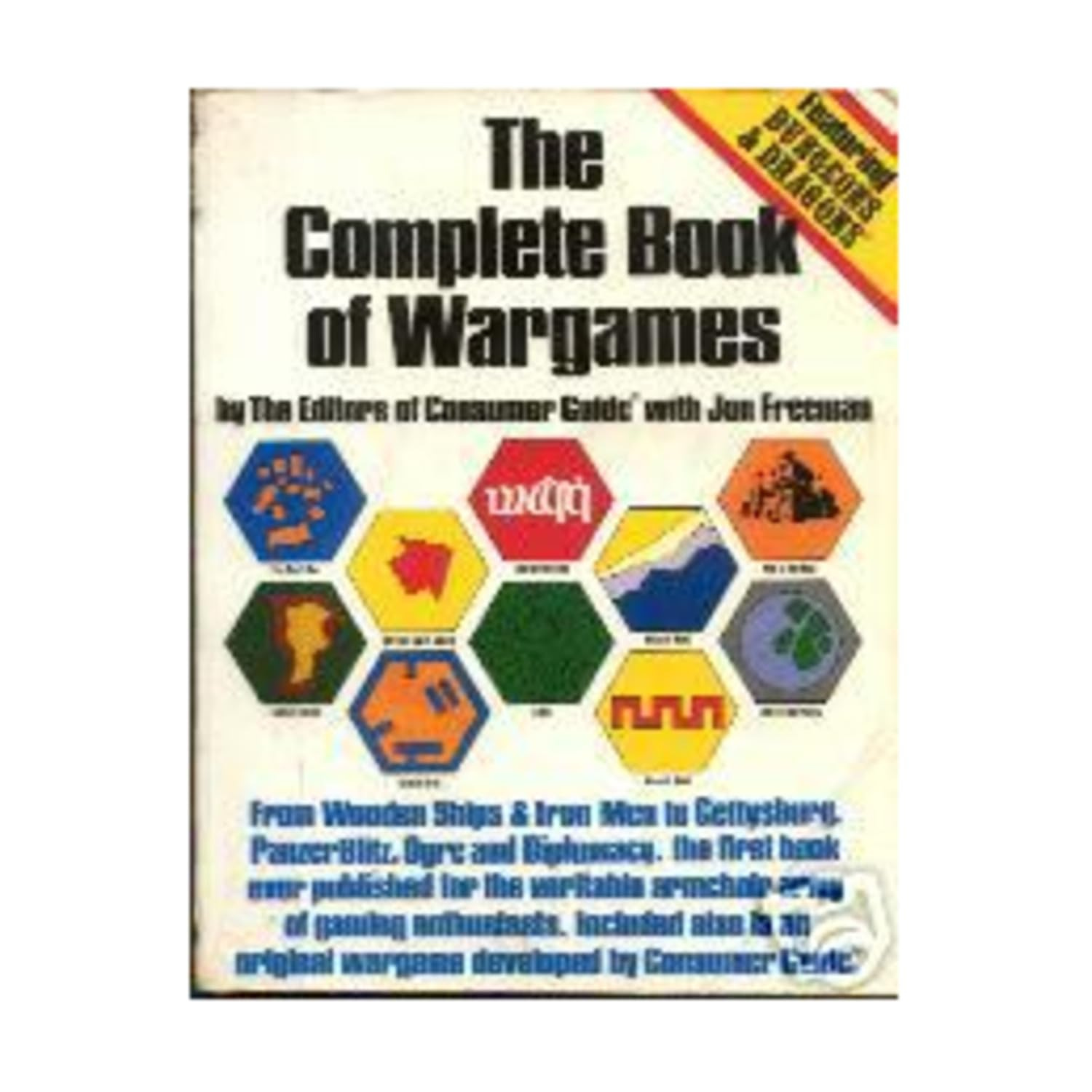
You would expect a book about Wargames that was written by one of the most important computer role playing game designers of all-time would be extremely well know. Sadly, that’s not the case. John Freeman was one of the founders of Epyx Games and one of the designers of the DunjonQuest series that included Temple of Apshai. His wife Anne Westfall designed, and programmed, what is probably the best Chess spinoff video game ever designed (Archon), yet I rarely here Jon Freeman’s name mentioned in discussions of the role playing game hobby. When I first picked up The Complete Book of Wargames, for pennies, on eBay, I had no idea who the author was. I just knew that it was an overview of the wargaming hobby in the late 1970s.
The Complete Book of Wargames was written in 1980, which means it was written at the absolute peak of the commercial wargame hobby, just before everything changed. SPI was still publishing. Avalon Hill was still the Avalon Hill that had defined serious wargaming since the late 1950s. The hobby was as big as it had ever been commercially, and it would never quite be that big again. By the time the decade was out, SPI had been acquired by TSR under circumstances that grognards of a certain vintage still discuss with barely contained fury, and the commercial wargame market had contracted to a fraction of its former size.

What Freeman gives you is the taxonomy of that hobby at its height. The book discusses the systems, the designers, the debates, the games that defined each subcategory of the form. The review of the book in Dragon Magazine #46 by Tony Watson argued that the book was unnecessary for experienced gamers. That was probably true at the time. Those involved in the hobby knew more than what was provided in the book, and yet so many of the games discussed in this book are now forgotten.
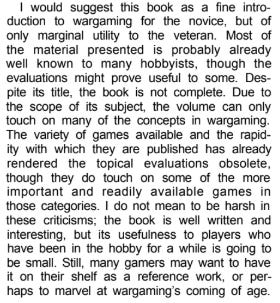
Freeman’s selections are broad enough to appeal to both the casual and serious gamer and while the book is far from “complete,” it is a perfect primer for the hobby. I particularly like reading Freeman’s recommendations regarding ow to play games and his criteria for evaluating the quality of games is solid. I would expect no less from someone who helped design Temple of Apshai.
4. The Fantasy Role Playing Gamer’s Bible — Sean Patrick Fannon (1996, Prima Publishing and 1999, Obsidian Studios Inc.)
Get the first edition of sean Patrick Fannon’s The Fantasy Role Playing Gamer’s Bible if you can. It’s the one with the purple cover and the stick figure cartoons. I know that sounds like the kind of collector snobbery that drives sensible people out of hobby communities, but I mean it sincerely. The stick figures are part of the book’s charm, and they’re gone in the later edition. They’re earnest and slightly awkward in exactly the way that mid-90s RPG culture was earnest and slightly awkward, and they match Fannon’s enthusiasm in a way that the revised edition’s more polished presentation doesn’t quite capture.
The book occupies a niche that very few books have filled well. It’s not an explanation of what role-playing games are for complete outsiders. There were plenty of those and I might just do a Geekshelf of just those in the future. This is a book for people who already know what an RPG is and want to understand the hobby more deeply. Fannon covers a wide variety of topics with a comprehensiveness that I haven’t seen matched in any comparable volume. These topics include game selection, game mastering philosophy, worldbuilding approaches, group dynamics, and how to find a gaming community.
The hobby has changed a lot since the book was published in 1996 document, but much remains the same. The 1990s were an interesting time in the hobby. This was a time period after the satanic panic had largely wound down, after the CCG boom had started reshaping the hobby market, but before the internet had fully transformed how gamers found each other. Desktop publishing and pdfs were new phenomena. The social infrastructure Fannon describes is its own kind of history. He examines how gamers located other gamers, how information about obscure games circulated, how gaming communities formed and maintained themselves before the internet was widespread. The funny thing is, as the internet becomes more cluttered and worse at its job, these skills are just as needed today.
5. Game Design Vol. 1: Theory and Practice — Nick Schuessler and Steve Jackson (1981, Steve Jackson Games / SJG30-3101)
While the cover says “Vol. 1,” there was never a subsequent volume. Steve Jackson promised that Volume 2 was on the way and it was going to cover component design aids, hints on the best markets for your games, and maybe more. I still wish Volume 2 had been released, but I am greatful Volume 1 was published. The book comes at design from two different positions, one from Nick Schuessler and one from Steve Jackson.
Nick Schuessler was the publisher of The Journal of WWII Wargaming and had taught a University of Texas course in wargame design since 1976. He approaches design from the theoretical and historical end. He comes at game design from a mathematical and simulation-oriented position that is rooted in primary sources. Jackson, who by 1981 had already designed Ogre, G.E.V., Raid on Iran, and The Fantasy Trip, comes from the opposite direction. He learned to design by doing. He playtested until games broke and then patched them back together. The introduction is honest about this tension. Jackson describes shouting “Playability!” at Schuessler’s theoretical arguments while Schuessler shouts “Realism!” back. This book is the playability vs. realism argument made manifest. What is surprising about this setup is that in the end they almost always agreed on what made a good game. That productive friction is what makes the book worth more than either author could have produced alone.
The chapters cover theoretical foundations, historical background, mapping and movement, terrain, combat and play sequence, combat strength and resolution, advanced combat systems, research, components, playtesting, RPG design, designing for the market, and game evaluation. That’s the full arc from “what is a wargame” to “here’s how to get it published,” and the chapters on playtesting and game evaluation are worth the price of admission on their own. Jackson’s playtesting chapter is the single most concentrated piece of practical design wisdom in the hobby literature. His “try the dumb strategies” principle alone is something many designers, and all game masters, should keep in mind. As with Jon Freeman’s thoguhts on game quality, the game evaluation chapter, written from Schuessler’s more critical perspective, is a bracingly honest account of how and why game reviews fail to tell you what you actually need to know before buying something.
I should note something that will delight anyone who has already bought the other books on this list. In the bibliography, Jackson and Schuessler describe Jon Freeman’s Complete Book of Wargames as the best general work on commercial wargaming then in print.

SJG has reprinted it as a PDF and you can buy it for a mere eight dollars. There is no excuse not to own it.
6. Wargame Design — SPI Staff (1977, SPI/Simulations Publications Inc.)
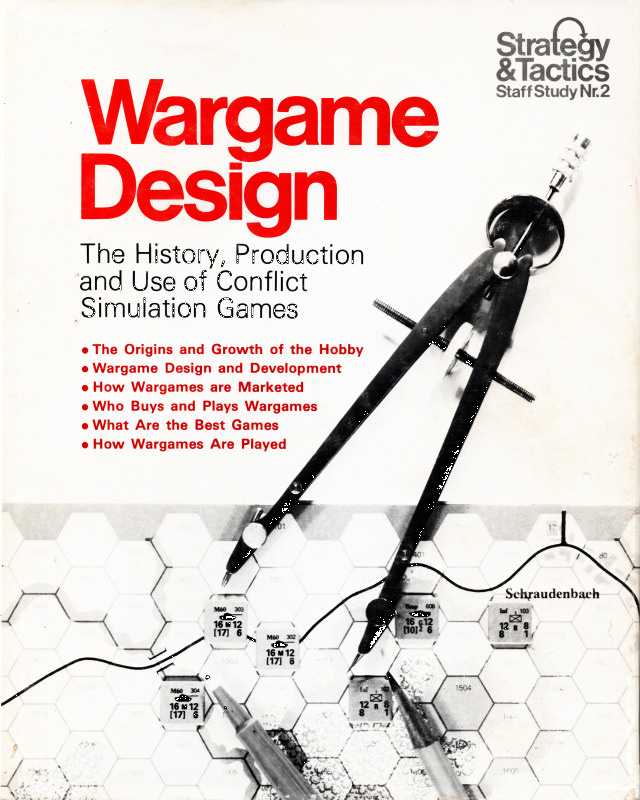
To understand this book you need to understand SPI. Simulations Publications Inc. was, alongside Avalon Hill, one of the two companies that defined serious American wargaming in the 1970s. Where Avalon Hill was the older and more commercially cautious company, SPI was the more intellectually and ludically ambitious operation. While Avalon Hill published a significant number of games, their house magazine (The General) merely included support for existing games. I say merely because SPI’s house magazine (Strategy & Tactics) included a full wargame with every issue. SPI published Strategy & Tactics while simultaneously churning out a constant stream of complex historical simulations like War in the East, the notorious Campaign for North Africa, and the Napoleon at Waterloo series. SPI had ambitions that outran its business model, and it was acquired by TSR in 1982 in circumstances that the wargame community has never fully made peace with. They say that winners write history. If this is true then TSR was the big loser with the purchase and I’ve explained why in an earlier entry.
Gaming History: Trust But Verify, TSR Buys SPI

John O’Neill, the publisher of the publisher of Black Gate Magazine was recently sharing his adventures emptying out his old storage unit on Facebook. Like me, John is an avid collector of games and …
While SPI existed, it was producing some of the most serious thinking about game design happening anywhere. Wargame Design collects that thinking. It is part history, part design manual, and part manifesto. It reads like a document produced by people who genuinely believed that simulating historical conflicts was an act of intellectual and perhaps even moral seriousness. That sounds grandiose, but it was a real position that real designers held. If you could model Stalingrad accurately enough that players understood why the Germans lost, you had given them something that a history textbook couldn’t. The fact that many of their designs, and designers, have influenced real world military wargaming proves that they were right.
That doesn’t mean you need to believe that every war game should be a serious simulation or an argument about logistics or why and how medieval war changed over time. While the focus of Wargame Design is heavily on the simulation end of the ludic spectrum, the design advice in the book is sophisticated and still useful. Even more important than the design advice though is the history contained within the book. You get a rare glimpse inside the sales figures of SPI and their competitors. They give you a sense of how large the wargaming market was just as AD&D, and D&D Basic, were about to be released.
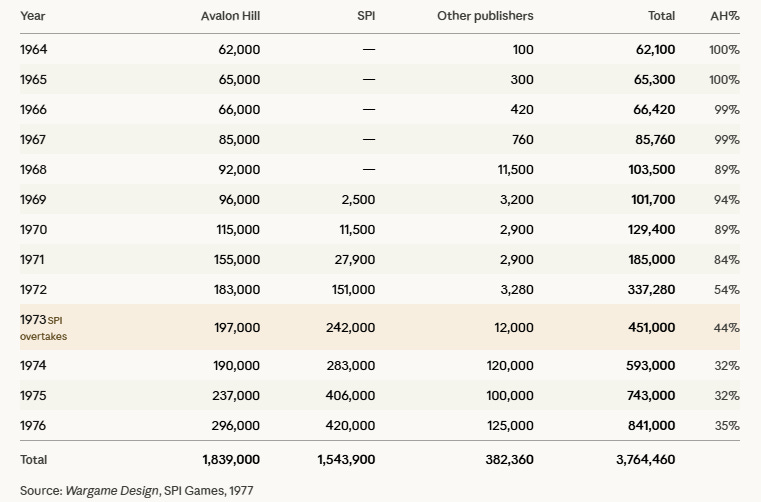
In 1976 there were at least 841,000 sales in the wargaming market. Business was booming, but by 1982 SPI would be owned by TSR and eventually Avalon Hill would be absorbed by Wizards of the Coast (who own TSR). Wargaming thrives today. There are a host of companies ranging from desktop publishing to medium sized business (GMT Games). While it thrives, it is not the giant it was trending to become. The thoughts on design from that time are an interesting read and are both informative and a cautionary tale.
7. A Player’s Guide to Table Games — John Jackson (1975, Chilton Books)
I don’t know why Jon Freeman wrote A Player’s Guide to Table Games under the name John Jackson. I don’t know if he was writing under a pseudonym or if he later changed his name from Jackson to Freeman. What I do know, because The Playboy Winners Guide to Board Games (see below) makes it clear on its copyright page, is that they are the same person. It’s also clear if you read The Complete Book of Wargames. The stylistic fingerprints are identical. The characteristic way the author situates a game within its historical context before evaluating it, the particular balance of enthusiasm and analytical distance, the breadth of knowledge that ranges comfortably from Monopoly to Squad Leader are not coincidental similarities. They are the same writer, writing for different publishers under different names.
Freeman wouldn’t form Epyx with his partner until 1978, so it’s pretty impressive that he got a book on Table Games published at all. Though once you’ve read the book you understand why. Jackson/Freeman knows his games and how to play them. He’s a great pitchman for the industry. His combination of enthusiasm and insight make the book a good read for any gamer, new or experienced. Keep in mind that the late 60s and early 70s were a boom period for Table Games.
The book predates The Complete Book of Wargames by five years, and it catches the tabletop hobby at an earlier moment, one where the line between mass market and hobby games is just beginning to solidify into the distinction we now take for granted. Jackson writes about Sid Sackson with the same seriousness he brings to hex-and-counter wargames, and that’s unusual enough to be worth noting. Sid Sackson’s designs like Acquire, Can’t Stop, Sleuth, and eventually Focus helped to supercharge not just “Ameritrash” gaming. His emphasis on elegant mechanics that reward deep play connected directly to what would become the Euro game tradition. In this book, Jackson/Freeman traces those connections before they were conventional wisdom. Where SPI’s book focused on the simulation side of playability vs. simulation, Jackson/Freeman is a huge advocate for playability.
8. Family Games: The 100 Best — edited by James Lowder (2010, Green Ronin Publishing)

There are two books in the Lowder 100 Best series, and I’m going to discuss them together across this entry and the next because they’re companion volumes that are best understood in relation to each other. Own both. Read both. Then play every game on both lists that you can find.
Family Games: The 100 Best is the more accessible of the two. Like A Player’s Guide to Table Games, it covers games that can be played with non-gaming family members, games that bridge mass market and hobby, games that serve as on-ramps. The contributors range across the hobby: designers, writers, historians, enthusiasts, each assigned a game they love and asked to make the case for it. The games range from 10 Days in the USA and Apple to Apples (you should be playing this instead of Cards Against Humanity which “is similar”) to Guillotine, Monopoly, and Zooloretto. That’s right. This volume defends Monopoly, and it’s Steve Jackson of Steve Jackson games who does the defending. Take that gaming purists!
The format is what makes both volumes more than lists. Each entry is written by a different person with a different relationship to the game they’re discussing, which means the book becomes a mosaic of perspectives on what games are for. One contributor emphasizes mechanical elegance. Another talks about family ritual. A third traces a game’s influence on everything that came after it. Read all the essays and you end up with something like a genuine theory of why tabletop games matter. You’ll learn game design theory through case study from a hundred individual arguments, none of which is making the whole case but all of which contribute to it.
9. Hobby Games: The 100 Best — edited by James Lowder (2007, Green Ronin Publishing)

Hobby Games: The 100 Best tilts toward the specialist end of the hobby. These are games with steeper learning curves, games aimed at dedicated hobbyists, games that were influential within the hobby even if they never crossed over to mainstream awareness. The contributors include many of the most significant designers and writers working in tabletop at the time of publication, and the games range from classic wargames to Euro imports to landmark RPG supplements.
Published three years before Family Games, this book has a slightly more urgent quality to it. You can feel the writers aware that they are making an argument at a particular moment in the hobby’s history. The board game renaissance was just beginning to gather the momentum that would eventually make tabletop gaming a mainstream leisure activity rather than a specialist pursuit. Some of these essays read like dispatches from the front lines of that cultural argument. There are arguments praising Button Men and Call of Cthulhu, Dungeons & Dragons and Gettysburg. If you want a book that serves as the foundation of a games collection, you could just buy every game in this book and you’d never need another game. This is a true list of bangers, written by some of the best designers in the history of gaming.
There is one caveat for the book some of the games included in this volume are out of print, unlikely to return, and receive no other substantial critical treatment anywhere. The essays written about them are the most considered accounts those games are likely to get. That’s its own kind of value, separate from the recommendation function the books are most known for. The hobby’s history is not well documented, and every serious piece of writing about a particular game is part of the documentation.
10. Heroic Worlds: A History and Guide to Role-Playing Games — Lawrence Schick (1991, Prometheus Books)
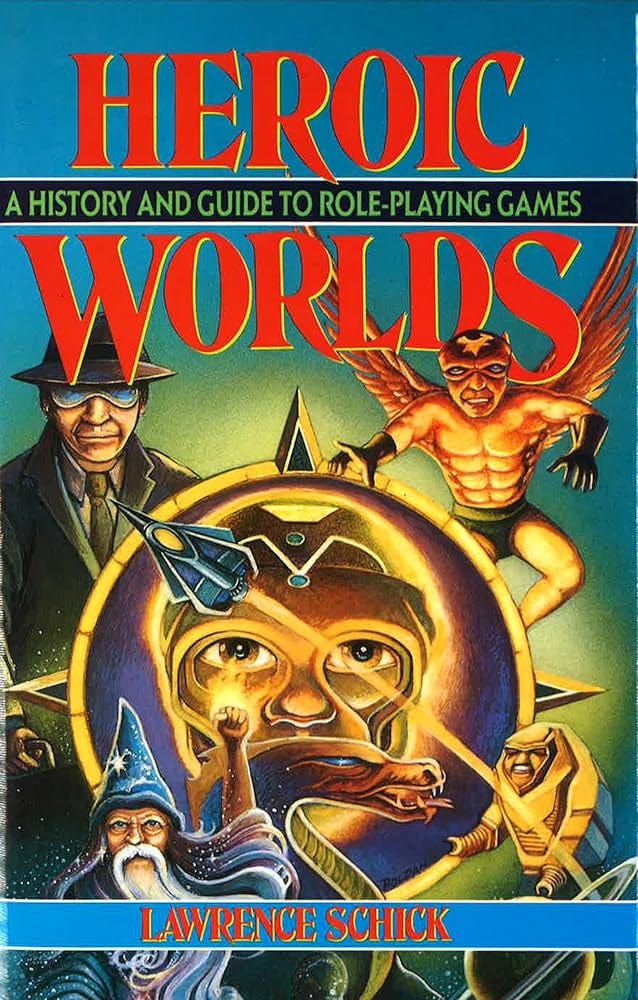
Lawrence Schick is not just a historian of the RPG hobby, he’s a participant in it. He designed White Plume Mountain for D&D, did significant work at TSR during the early AD&D years, and later at other companies. His position inside the industry gave him access to designers, to primary documents, and to institutional memory that an outside historian simply could not have obtained. The result is the most comprehensive survey of the RPG hobby as it existed in the early 1990s that has ever been produced.
The book is organized as a reference work. It catalogs an enormous number of games and supplements with brief descriptions and assessments. but Schick’s analytical voice comes through clearly. His brief notes on individual games often contain more genuine critical thinking than much longer reviews from gaming magazines of the era. He has opinions, they’re grounded, and he’s not shy about expressing them. He has also translated a some very entertaining editions of The Three Musketeers, but that is a discussion for another time.
What makes the book indispensable now, in 2026, is precisely what might seem like its limitation. It was published in 1991. Vampire: The Masquerade had just come out. Shadowrun was in its first edition. The long shadow of the satanic panic was still visible. The games Schick catalogs are the games that defined what role-playing meant to the generation that built the hobby, and understanding that foundation is essential for understanding everything that has come since. It makes a wonderful companion guide to Shannon Appelcline’s history of the role playing hobby, with one added benefit. It is also an extremely good completist checklist for the collector. I’ve been using it as one for thirty years.
11. The Comprehensive Guide to Board Wargaming — Nicholas Palmer (1977, Hippocrene Books)
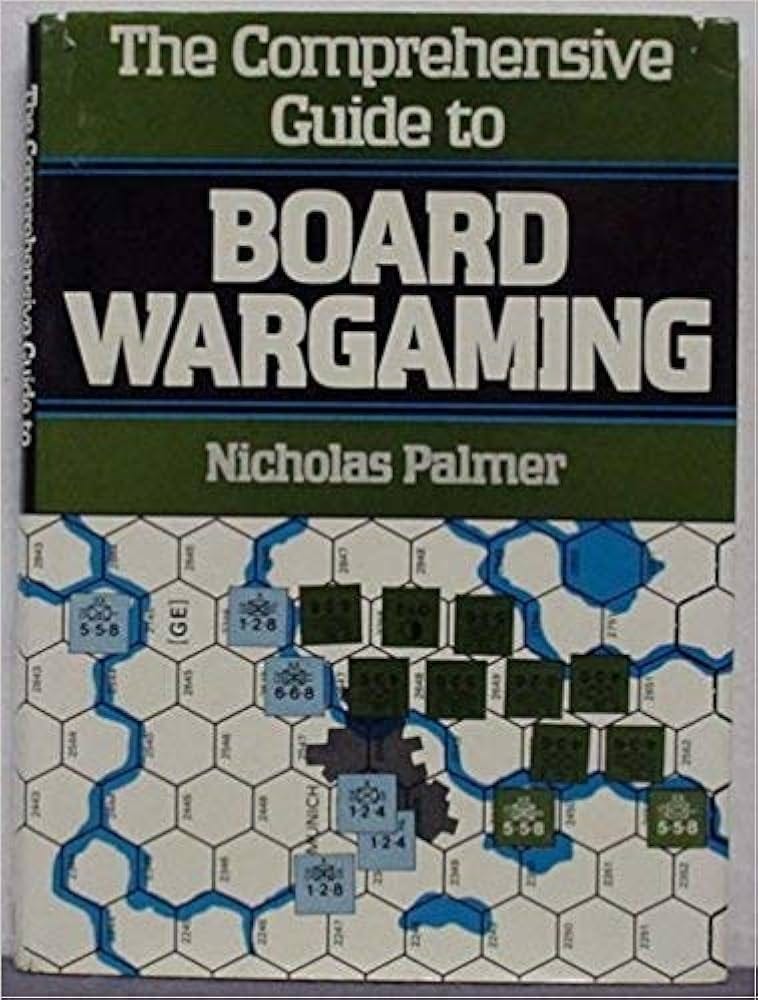
Palmer is an Englishman writing about what was, in the 1970s, largely an American hobby. That slight angle of outside observation gives the book a quality that insider accounts often lack. He is genuinely enthusiastic about wargaming but he’s not reverent, and he’s willing to say when a celebrated game is celebrated more for historical reasons than because it’s actually good. That makes his evaluative judgments more trustworthy than those of writers who were more deeply embedded in the hobby’s commercial and social networks.
The book covers the major game systems with unusual clarity. He examines the different approaches to combat resolution, supply, command and control, and scale. Unlike many reviewers, it is clear that Palmer has PLAYED these games. Palmer explains not just what these design choices are but why they matter, which is a harder thing to do and more valuable. His discussion of how you model historical uncertainty in a game where the player has perfect information about their own forces is as good an introduction to the fundamental challenge of wargame design as I’ve encountered anywhere.
He also presents a number of “problems” in the book related to the games he discusses. Palmer presents a series of tactical problems drawn from published games and asks you to work out the best approach, usually one per chapter with each chapter highlighting a design concept. They’re not just rules-application exercises, they’re genuine problems about how to balance competing considerations under time pressure and imperfect information. They illuminate, in a very direct way, what wargaming as a hobby is actually for.
12. The Best of Board Wargaming — Nicholas Palmer (1980, Hippocrene Books)
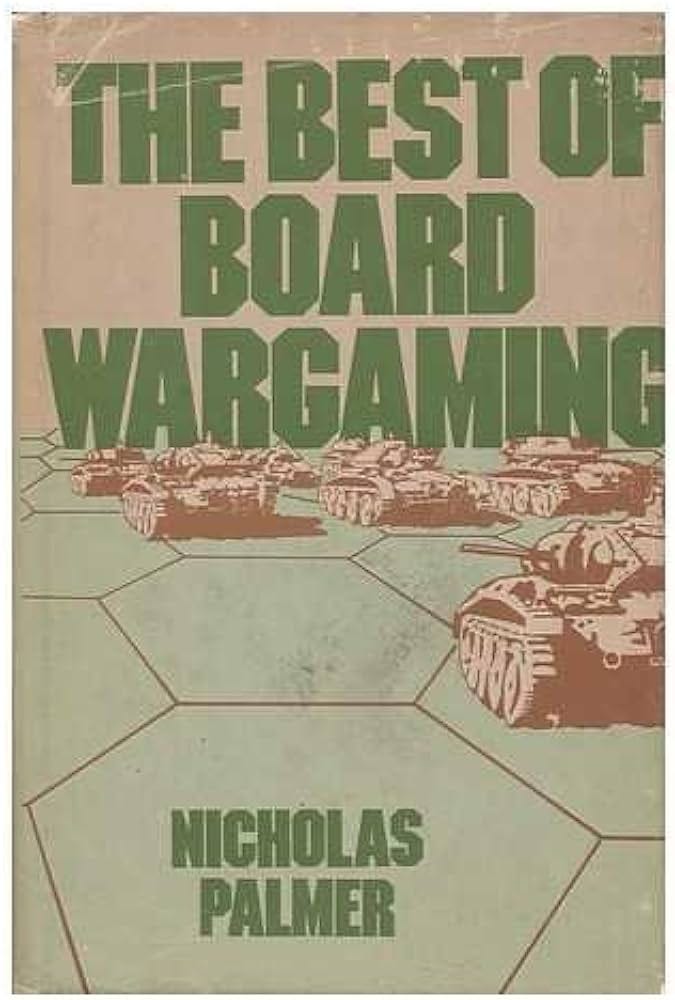
The Best of Board Wargaming is an excellent companion to The Comprehensive Guide. Where the Guide is organized around systems and concepts, this one is organized around specific games. These are the games that Palmer, and polls, consider the best the hobby has produced as of 1980. Where the Guide goes into detail regarding a few games, this one is a true survey which means the two volumes are best owned and read together.
The Simulation versus Playability debate gets its most extended treatment here, and Palmer’s version of the argument is worth sitting with even if you’ve encountered the same debate framed differently elsewhere. The basic question he keeps returning to is. “when does fidelity to historical reality start working against the game, and when does simplification for playability start working against the history?” There is no universal answer, which is why designers are still arguing about it, but Palmer maps the terrain of the disagreement more carefully than most.
Because of when they were released, these books end up documenting a specific moment in the history of a hobby that has since changed enormously. The commercial wargame industry Palmer was writing about in 1977 and 1980 has a thriving fanbase, but is not as mainstream as it once was. You saw those SPI numbers above. Modern wargames don’t tend to sell anywhere near those late numbers. The era of publishing giants with a relatively large fan base has been replaced by a smaller, more passionate community of hobbyists who support companies like GMT and MMP. You still see a lot of wargame DNA in video game strategy titles. I see echoes of it every time I play a Total War game, but the modern environment is different enough that Palmer’s world can feel like a foreign country. It’s a foreign country worth visiting.
13. The Playboy Winner’s Guide to Board Games — Jon Freeman (1979, Playboy Press)
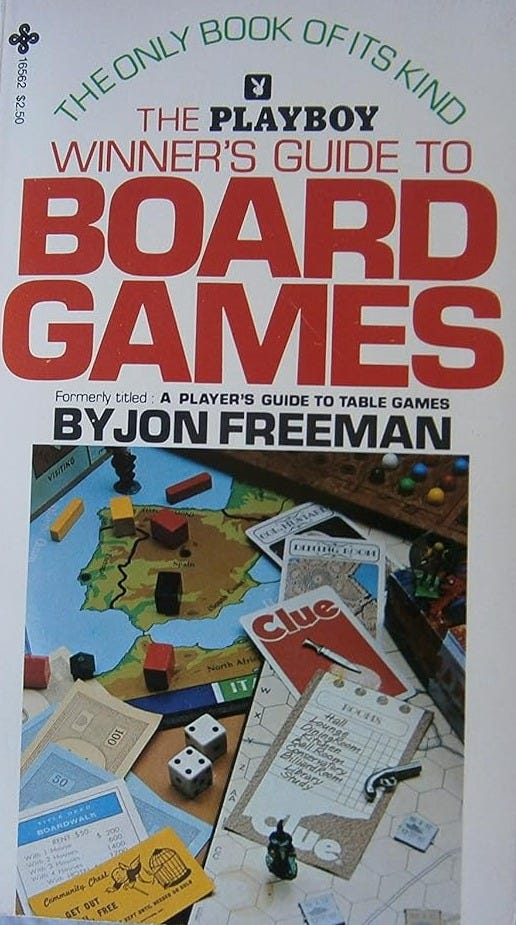
This book is a reprint of the earlier published “John Jackson” book on table games, but I include it as its own entry for a couple of reasons. The first is because it was published 4 years later and adds additional material filling the time game. The second is that Jackson is now using the name Freeman, signalling he wanted to connect the book with his design work at Epyx. Third, because it is a “Playboy” branded paperback book, which signals that board gaming was WAY more mainstream by the late 70s than it was in the middle of the decade when the book was originally published.
The book is an anomaly by any measur. It is a serious, analytically rigorous treatment of tabletop games published under a Playboy imprint, which means that substantive discussions of hex-and-counter wargame design appeared alongside whatever else Playboy Press was publishing in 1979. Freeman acknowledges, with characteristic dryness, that there are no pictures. You are reading it for the prose. The prose justifies the reading. In this case, readers really were reading a “Playboy” for the articles. There wasn’t anything else in the book. Other than the branding, this book is Kindergarten appropriate.
The extension into role-playing games and the serious treatment of Squad Leader alongside Risk and Scrabble is where the book earns its place as an addition to the earlier volume. Freeman is doing something here that none of the other books on this list quite attempt: he is arguing that all of these games belong to a single tradition and can be understood by a single analytical framework. For him, the mass market ones your grandmother owns, the hobby games your game group argues about, the wargames that take six hours and a bookcase worth of rules, are kindred spirits. It’s an ecumenical position that I share. I love “Hobby Games.” I love Miniatures Games. I love Role Playing Games. Heck, I love Candyland. To me, these are all different forms of the spirit of Homo Ludens. We are creatures that play and all of these forms of play are in the same family.
In Defense of Candyland

I was reading a year in review recommendation tweet by screenwriter Joe Russo earlier today, not Avengers: Endgame Joe Russo, rather Nightmare Cinema Joe Russo. In that tweet, Russo wrote, among othe…
Freeman discusses the Simulation versus Playability question in all three of his books on this list, but that discussion reaches its fullest expression here precisely because the scope is broadest. You can see the whole thing from up here.
That’s thirteen books, and I’ve already thought of several I left out. Shannon Appelcline’s Designers & Dragons series should probably be its own entry when I get to post-2012 game books. It’s the most comprehensive history of the RPG industry that exists and it belongs on every serious collector’s shelf. Jon Peterson’s Playing at the World is probably the single best book about the origins of D&D ever written, but it was published after the 2012 post this is expanding on, so it’ll wait for a future list. And Rick Swan’s Complete Guide to Role Playing Games should have been number fourteen here, but I’ve already written about it separately and I can only be so self-referential in a single post.
A Review of Rick Swan's The Complete Guide to Roleplaying Games

In November of 1990, the world of role playing games was still largely a mystery to the majority of mass culture. Most people "knew," thanks to the culture wars, that D&D was devil worship and it mad…
What else have I missed? Tell me in the comments. I’ll make sure to write about them in the future.
Hello Christian, along with these titles, I remember also a book by Frank Mentzer published by TSR about rpg collecting, I never owned it but I believe it is smtg very close to Schick's Heroic Worlds... do you remember it? Have you ever owned/read it? Ciaooo