


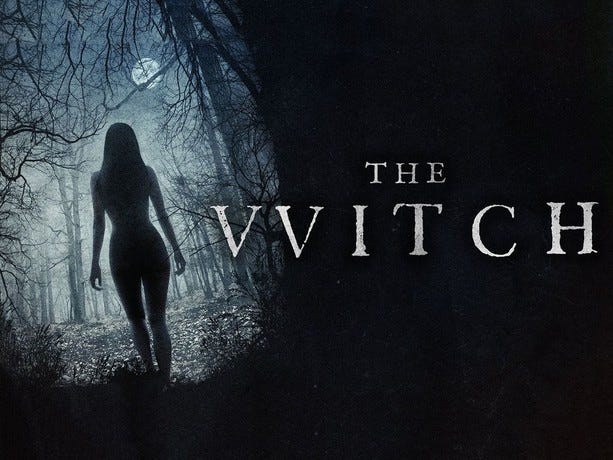
As you might have guessed by the title above, all of this week’s film recommendations feature witches in one form or another. While my earlier “Geekshelf” article covering great horror films of the 60s and 70s included a couple of foundational witch themed films that everyone should watch, it was far from a complete list (even for the era). The list included one of my absolute favorite “witch films,” Burn, Witch, Burn which was based on Fritz Leiber’s novel Conjure Wife. I think one of my favorite parts of the film is that even as witchcraft is at the center of every plot element, the real horror is competition for tenure track positions at a university and the lengths people will go to acquire that prestigious and low paying position.

Witches have long been a part of societies darkest fears. The concept exists in almost every human society and the societal fears they embody can vary wildly and include things like fear of aging (particularly of women) in a phenomenon Rebekah King called Hagsploitation. There’s more to it than just aging, but the ways that aging alters the body can be quite frightening to the young and to those about to begin aging in earnest. Witches can also represent society’s struggles with sexual liberation, with women’s empowerment as they gain more formal political authority, and grapple with our concepts of femininity and care taking. Think for a minute how many witch tales involve people going for some kind of medical aid, only to find that the Hag of the Woods has cursed us instead. Then there are the tales of witches and missing children. From Baba Yaga’s chicken footed hut that wanders from place to place enabling her to steal children to the witches of Roald Dahl’s tale (not to mention Jack and Jill) witches stealing and eating children is a common trope that combines many of the fears above.
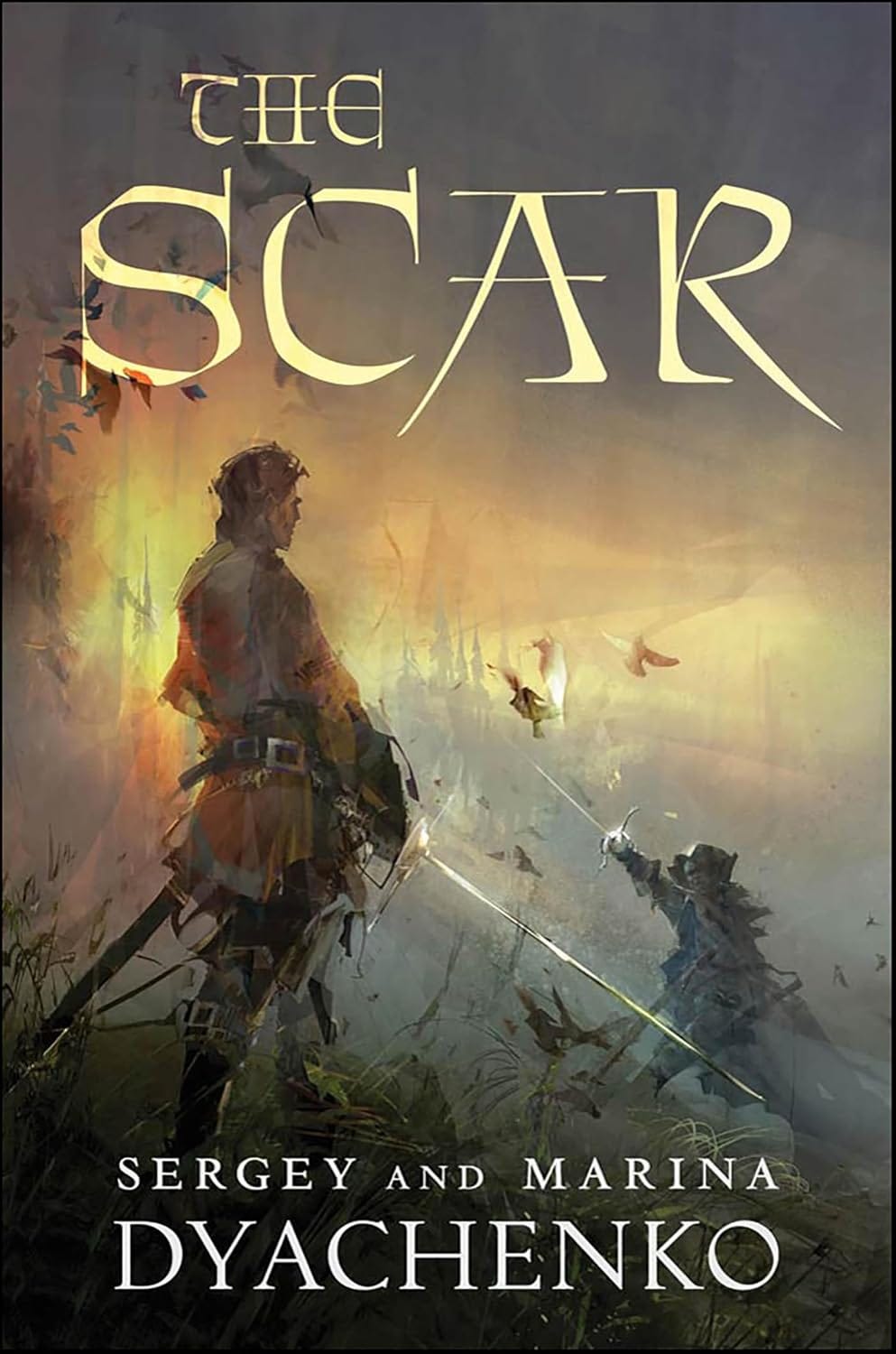
One of my favorite fantasy novels, The Scar by Marina and Sergey Dyachenko, does a nice job of inverting the hagsploitation trope. The novel is rooted in Russian folklore, so it should be no surprise that the protagonist encounters a witch in the woods. He meets her when he is at his absolute lowest state and his encounter with her is when he begins to become a virtuous person, in large part due to her moral guidance. In this novel, like in the movie Centurion starring Michael Fassbender, the witch (Imogen Poots) is a protective and healing figure. That’s not the case in a lot of films appropriate for Halloween viewing, though it is for at least of the films.
As we enter the Spooky Season, I will try to do a weekly list of seasonal films that I think you will enjoy watching. Some of them are classics that have received high praise, but at least one is a personal choice where I think I might just be the only fan the film has. Not all of the films will be scary, but they will all fit the theme.
1. The Witch
Sometimes a film manages to perfectly capture the classic tropes of a horror mythology while updating it in a way that makes it salient for new audiences. Robert Eggers’ The Witch is one of those films. In The Witch, Eggers doesn’t try to update or shift the mythology of witches and witchcraft but instead goes straight to the historical sources and pulls no stops in pushing them to their natural conclusion. From the inclusion of the material components necessary to craft a witch’s flying ointment, to the focus on faith and isolation and how doubt and separation from the community can empower evil. It’s a complex movie that touches on so many more themes, that draws deeply from the lore of witchcraft, and it may well be the best witch related horror film ever made. I cannot wait to see what Eggers does with the Werewolf tale later this year.
2. Warlock
Prior to seeing Robert Egger’s film, my personal favorite witch related film was Steve Miner’s Warlock. The film explores the simple “what if” question of what would happen if a witch traveled through time from 1691 to modern day Boston. A similar time travel conceit was used in I Married a Witch, but that tale was played for humorous effect. Miner’s film, with a screenplay by David Twohy (Waterworld, Pitch Black), has humorous moments, but it takes its subject matter very seriously. Julian Sands is charming and disturbing as the eponymous warlock who has made a pact with the Devil in pursuit of power and the destruction of the Earth.
The witch (warlock) in this film is entirely nihilistic and seeks to unmake creation in the ultimate act of evil. Like Eggers’ film, the movie draws heavily on real lore, right down to the flying ointment’s necessary ingredients, and uses the folklore beautifully. Richard E. Grant is perfect as the witch hunter in the film. He has been in many comedies and could have played his role up for camp, but he plays the role straight and it elevates the film.
People often criticize characters in horror films because they behave in ways the viewer finds ridiculous. I don’t tend to agree with that critique. True, the behaviors are ridiculous for characters “in a horror film,” but they are perfectly normal behaviors that you and I do every day…even when we might be in danger. In many horror films, even a mundane action like opening door when the doorbell rings (as the pirates do in the remake of The Fog) could lead to your death. What separates the victims from the best “Final Girls” (like Sharni Vinson’s Erin in You’re Next, who is my favorite Final Girl) is that the survivor at some point realizes they are in a horror film and reacts accordingly. Erin reacted immediately, and the Winchester brothers of Supernatural fame know it from the first episode. That’s their superpower, early on at least.
The citizens of the late 20th century are not prepared for Julian Sands’ morally depraved Warlock, but the man hunting him across time knows he’s in a horror film and that is why I love this film so much.
3. The Blair Witch Project
The Blair Witch Project was released my Junior year of college and I remember all of the promotional materials that aired in anticipation of the film. Of particular note were the promos produced by the SciFi (now SyFy) Channel that transformed the “found footage” aspect of the film from mere conceit to completely plausible. They produced shows like “Curse of the Blair Witch” which aired in July off 1999 during the build up to the wide release of the film. These all gave the film a verisimilitude it would have otherwise lacked.
The most interesting aspects of The Blair Witch Project are that we never actually see the witch in the movie itself and how the film didn’t initially frighten me at all. I left the theater where my friend John Ford and I watched it in preparation of writing a review for the Sparks Tribune. Neither of us was moved by the film on first viewing, but our review wasn’t due for another day so we agreed to mull over the movie before meeting for our regular “dialog” themed review the next day. That night, when I went to bed and turned out the lights, was when the movie caught up with me. I was staring at the ceiling, genuinely scared. It made me reassess the film as one that give delayed fear, rather than immediate cathartic fear.
4. Seventh Son
And here is where I deviate from “expected” recommendations and into the realm of “this is my list and I’m going to share my artistic AND guilty pleasures” mode. If Robert Eggers’ The Witch is the perfect example of what happens when a director stays true to the source material, then Sergei Bodrov’s adaptation of Joseph Delaney’s The Spook’s Apprentice (aka The Last Apprentice: Revenge of the Witch in the US) is the perfect example of what happens when a film gets Hollywoodized. In Delaney’s original young adult series, Thomas Ward is an apprentice witch hunter (called a Spook in the books) who doesn’t know whether to trust Old Gregory and his tales of girls with pointy shoes and his naivete might well free Mother Malkin, a witch of the classic variety.
The screenplay by Charles Leavitt and Steven Knight pretty much tosses aside everything that made the book engaging, and Delaney’s book is a very entertaining example of classic witch lore. Yet there is something about this film that brings me back to enjoyable viewing after enjoyable viewing. The film, which was a financial failure that only earned $114 million on a $95 million budget, is more a Dungeons & Dragons movie than a traditional witch tale. I think the film would have been a financial success had they stuck to the original story (and it would have been a much better film deserving of that success), but Alicia Vikander and Ben Barnes have genuine chemistry in the film and Jeff Bridges is appropriately curmudgeonly so I find the film to be a fun time. Julianne Moore is very good as Mother Malkin, though with much more sex appeal than the character in the book.
I’m pretty sure I’m the film’s only fan, but fan I am and I watch it every year, even if only to see Kit Harrington as the Penultimate Apprentice that requires the recruiting of the final one.
5. Solomon Kane
Where Seventh Son abandons the source material in both plot and tone, M.J. Bassett’s Solomon Kane diverges quite a distance from the source material while still perfectly capturing Robert E. Howard’s Puritan Hero. This is in large part due to James Purefoy’s performance as Solomon Kane and the fact that Robert E. Howard’s characters have been the victims of so much pastiche fiction that getting the character right, rather than any plot elements, becomes the most important feature of any adaptation.
When people complain about L. Sprague deCamp’s Conan stories, it isn’t the plots themselves that are usually the source of ire. Instead, it’s a complete misunderstanding of Conan the character as an intelligent character who is as crafty mentally as he is skilled physically. Howard’s Conan isn’t Thrud and Blunder, he’s a character capable of appreciating the arts even as he knows that the artists themselves despise him as a barbarian. Similarly, Solomon Kane is a man of rigid virtue and Purefoy’s performance shines through in what is a relatively weak screenplay that didn’t trust the source material. I imagine this is in part due to the fact that some of it would be very out of touch with modern sensibilities. There is an entire Kane arc that was inspired by H. Rider Haggard that many would view as problematic and shifting away from that was likely an influence on the decision to write an alternate villain and conflict. Weaknesses in the screenplay aside, which I think I am actually overstating because it isn’t a bad screenplay, this is a film where the performances elevate the movie into something well worth watching.
6. Bell, Book, and Candle
I’m going to take a moment to shift away from the grim and dark and turn toward the witty and romantic. As might be surmised from my earlier mention of I Married a Witch, I am a sucker for the romantic witch story and the pinnacle of the witch romance is Richard Quine’s (It Happened to Jane, The Notorious Landlady) 1958 adaptation of the play Bell, Book, and Candle by John Van Druten. The story is a simple one. A young witch named Gillian (Kim Novak) is bored with her life and ends up having a series of screwball romantic comedy adventures with her upstairs neighbor Shep (James Stewart).
The film is a delightful high concept mashup of the traditional screwball comedy with witchcraft lore that is made all the more charming because of a wonderful cast. Elsa Lancaster (the Bride in James Whale’s Bride of Frankenstein) plays Gillian’s Aunt Queenie and appropriately alternates between angry and charming. Jack Lemmon is very funny as Gillian’s brother Nicky, but the real show stealer is Gillian’s Siamese cat and familiar Pyewacket. This film, along with I Married a Witch, was one of the major inspirations behind the television show Bewitched, but it has a charm all its own.
7. Weapons
Okay, I almost didn’t include this film because including it in a list of witch films is almost a spoiler, but witches and disappearing children go hand in hand in folklore and Weapons is a very strong entry in the creepy as heck witch film genre. Additionally, it’s been out long enough and there’s been enough discourse that I think people know this is a witch movie. Many of the same things that made Robert Eggers’ The Witch such a strong film are what make Zach Cregger’s Weapons so effective. It’s a movie that uses the traditional witch tale to touch on a host of modern anxieties that range from the very common fear of parents that their children will be abducted to mass shootings and pandemic fears.
A Final Request
I’m looking for someone who is willing to stop by the “Geekside Chats” on a fairly regular basis to talk about a wide variety of pop culture. Ideally, you’d be willing to talk about movies, books, and role playing games. I’m willing to do a rotation for each of those if that fits best, but I’d like to do it fairly regularly. If you are up for it, let me know in the comments and we can try to schedule
I do enjoy Warlock (also the other movie by that name, with Henry Fonda, but I digress...) especially for Julian Sands's very player-character bad guy. I mean in the sense that he's not playing to anyone's rules but his own. Incidentally, it is of course a reskinned version of the Terminator plot only going the other way in time.