


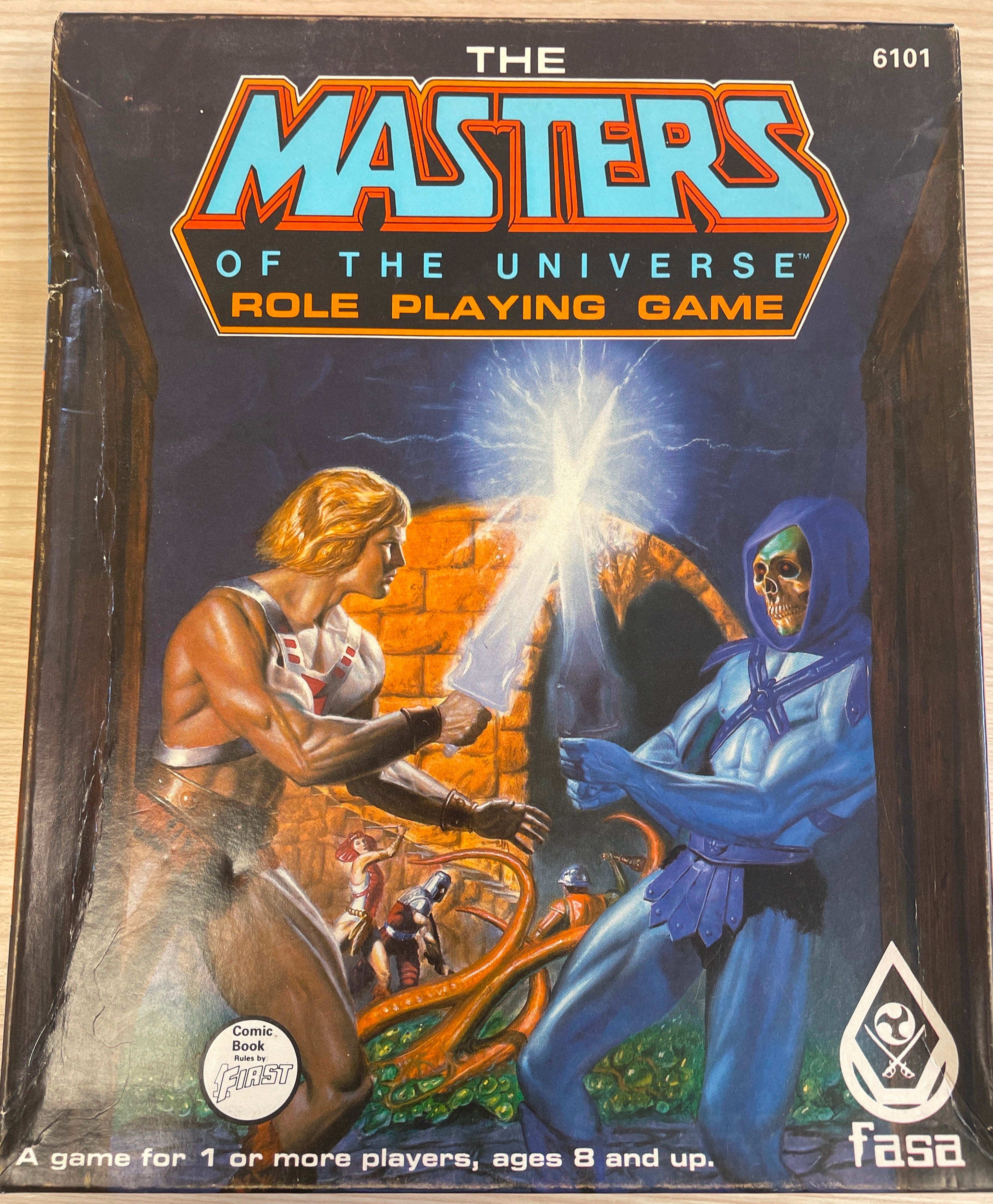
Why Am I Discussing the Masters of the Universe Role Playing Game?
Last week, Amazon/MGM released the teaser trailer video for their upcoming Masters of the Universe film. With this film, Hollywood once again delves deep into the Mines of Gen X Nostalgia in an attempt to create profitable entertainment. The mining of the childhood pop culture entertainment of the parental generation (and soon to be grand-parental generation on a larger scale) has been a long practice of Hollywood and many films and television shows that entertained Generation X were products of venturing into the Boomer, Silent, and Greatest Mines.
Flash Gordon and Buck Rogers were comic strips and movie serials produced 40 years before the cartoons, movies, and television shows. The same goes for Zorro, The Lone Ranger, Little Orphan Annie, Popeye, and so many more beloved chidlhood characters. Sometimes these revisitations of Boomer, Silent, and Greatest generation childhood characters were very successful. The Richard Donner Superman film is a masterpiece and Filmation’s Lone Ranger, Flash Gordon, and Zorro cartoons are a blast. Sometimes the revistiations are terrible, I’m looking at you 1981’s The Legend of the Lone Ranger. That was a film that was so bad that it was a significant reason studios didn’t reorder Filmation’s animated Lone Ranger series. Other times, the results were mixed. The 1980 Flash Gordon film is a much loved cult classic by many cineastes, but it was a flop and it too cost Filmation money by diluting the brand in the minds of studio executives.
That’s right. Filmation, one of the studios that invented the daily weekday afternoon cartoon show (DIC was the other), stopped making relatively popular animated shows when live action shows using the same characters failed in the box office. Lou Scheimer, one of Filmation’s founders, discusses the connection between these cinematic failures and cartoon production orders. I don’t know whether Zorro the Gay Blade (1981) hurt the production of Filmation’s Zorro series of the same year, but I’m going to guess that it did. George Hamilton’s performance in that film rubbed critics at the time the wrong way. Not because of Hamiton’s performance as Bunny Vega in the film (no Spoilers), but becauase Hamilton played the role of Don Diego Vega for laughs as well. As Ebert wrote in his 1981 review:
“Here’s the curious thing. I remember a lot about Zorro. I even remember that he was once played by Clayton Moore, who got to keep wearing his Lone Ranger mask. But I cannot remember if the Zorro movies were ever supposed to be funny. I assume that the Zorros, played by Douglas Fairbanks, Tyrone Power, and John Carroll, were more or less serious, within the broad outlines of the adventure genre. But what about all the Zorro movies and TV shows that Guy Williams made for Disney? Were we laughing at him, or with him?” — Roger Ebert 1981
What’s interesting about Ebert’s review, and how it connects to the wave of campy 1980-1981 revisitations of classic serial characters is how Ebert takes at face value the seriousness of the character of Zorro from his childhood, while rejecting it for the Zorro of the next generation. While I’m not a Boomer who watched Disney’s Zorro when it aired, I have watched the old Disney series and I can assure you that it is being played as straight as the Fairbanks and Powers version of the character…just for a younger audience. Unlike Flash Gordon, Zorro has seen a couple of theatrical and televised revisitations in the past 20 years that have been relatively successful, largely because they took the character seriously while retaining the swashbuckling wonder.
All of this is to say that when creators in a future pop culture environment revisit the entertainment of a prior generation, there are risks and those risks often involve being perceived as mocking or rejecting what made the original creations work in the first place. One of the rare exceptions of “going camp” working well is the 1960s Batman television series, but what makes that series remarkable is how it balances camp and sincerity. Yes, the sexual innuendo and the ambiguity of some characters’ sexual identity are played up, but Adam West and Burt Ward play their parts with such sincerity that it ends up having the layer of irony without the layer of dismissal. It may be “Silly Batman,” but it’s also pretty solid Batman storytelling. I think that’s also why I enjoy Flash Gordon so much. While everyone but Sam Jones is chewing the scenery and playing camp, Jones is grounded and it makes Brian Blessed’s, Timothy Dalton’s, and Max von Sydow’s performances shine as theatrically brilliant. There is love and joy in the performances and that shines through.
For camp to work, it requires love and it is the assumption of the lack of love that can drive off fans. Which brings me to the new Masters of the Universe trailer for the upcoming Amazon/MGM Studios film. It has sparked no small amount of controversy among its potential fans. Some of that, as is always the case in modern critical circles, is fueled by political divisions in America where sides want to see their preferred vision of an ideal pop culture represented on the screen. A lot of it, however, is fueled by very genuine concerns about the balance of camp, sincerity, and love.
Instead of focusing on the concerns expressed by the rage baiters online, I’ll share my concern in this regard. In the trailer, Idris Elba has two moments showing what kind of Man-at-Arms he is going to portray in the film. In one, he is a father figure providing advice to a confused and uncertain Adam. As brief as the moment is, I am genuinely touched by it. In the other, Elba is holding a gun and giving his best "Whedon Whoo!” in what I imagine is supposed to be a moment that hangs a lantern on an exciting shift in a battle. I’m tired of Whedonisms in my entertainment. While I loved Buffy, Angel, and Firefly, I found Whedon’s Justice League revisions staid and formulaic. The same is true of the J.J. Abrams circle. They’ve done a lot of productions that I love, but seem to be hit or miss now as they seem to have regressed from their peak productions and run out of fresh ideas other than irony and attempts to subvert expectations.
This isn’t a post on how I think Masters of the Universe will be terrible, because I honestly don’t. I have high, if somewhat reserved at moments, hopes for the film. Nor is it a complaint about the state of modern pop culture, because there is a ton of great stuff out there and some of that stuff comes from the Whedon and Abrams circles. Besides, I have a real soft spot for Abrams since he was the producer of the first film project I ever worked on. I was an intern, uncredited which is fine since the experience was great, on the Paul Walker, Leelee Sobieski, and Steve Zahn vehicle (pun intended) Joy Ride. Working with the crew was great and while I am certain Abrams doesn’t remember me from my few weeks working on the production, I certainly remember him and the positive production environment he created. Ask me some time about my experience moving giant mining truck tires in an attempt to create a perfect sketchy roadside repair shop.
If you want to read posts that grapple with the Masters of the Universe trailer and critiques, I recommend reading the two posts Luke Y. Thompson has up at Mortal Cinema. Luke is one of the biggest Masters of the Universe fans I know. I don’t always agree with him on the motivations of critics, but his excitement about the potential of this film is genuine.

Now it’s time for me to explore the 1985 Masters of the Universe Role Playing Game, why it was “Strange” and what games I’d recommend you use if you want to play Masters of the Universe style adventures at home.
Fasa’s Masters of the Universe Role Playing Game: A Missed Opportunity
A running them in my “Strage Licensed RPGs” series of articles is that there is often a disconnect between the intended audience of the particular role playing game and the role playing game market. For example, the Street Fighter Storytelling Game was published in the hopes of getting people who played Street Fighter video games to buy the role playing game. White Wolf wanted to tap into a larger market. The biggest challenge they faced was how to emulate the special moves of the characters while feeling as “plug and play” as a video game. Since the game used the Storyteller dice pool system, this was doomed to fail. They did, however, end up designing a lot of cool rules for other Storyteller games and added depth to the combat rules of their entire line of games.

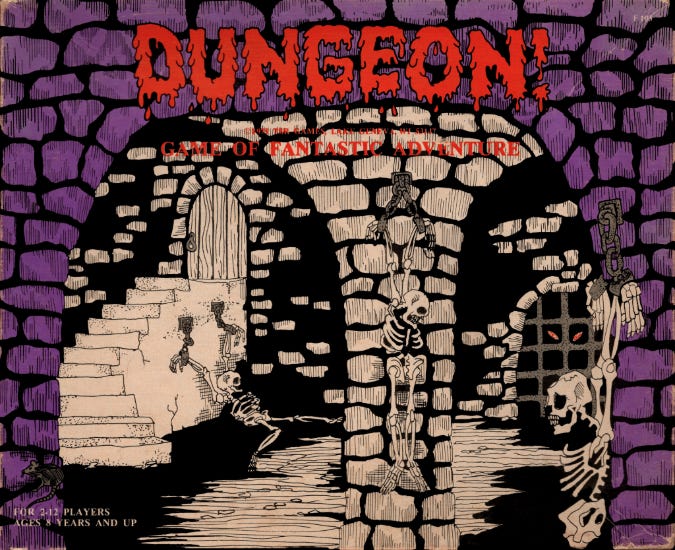
The challenge facing Ross Babcock and the rest of the design team at FASA was how to design a role playing game based on a weekday afternoon cartoon. This meant that the game had to be very accessible and easy to play, because the majority of He-Man fans were kids. To meet this design goal, Ross followed the example set by TSR’s Dungeon Boardgame. Dungeon had mechanics that were based, loosely, on TSR’s Chainmail miniature battles game and had just enough role playing elements to let the players get a taste of what role playing feels like. The main role playing game elements were the combat system, the inclusion of spells, and assymetrical victory conditions. Heroes weren’t as good at fighting as SuperHeroes, but they didn’t need to earn as much Gold to win the game. This gave different characters different strategies, but it also gave the feel of taking on a role and players often felt free to ham it up during play.
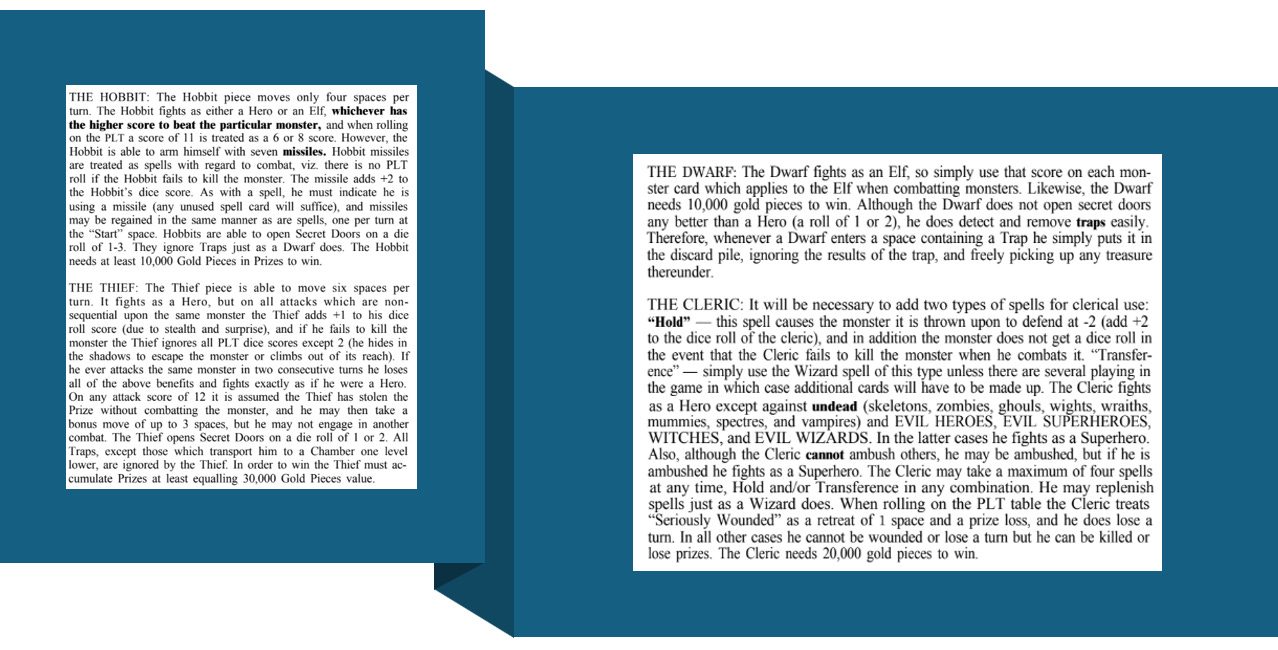
TSR also quickly provided some alternative characters with the addition of the Dwarf and Cleric in The Stategic Review vol. 2 no. 1 and the Hobbit and Thief in Dragon #1. While no rules for designing character classes were presented, the addition of new character classes fueled the role playing feel of the game. If Fasa followed suit with their Masters of the Universe game it could work and as testimony to the possibility, I’d like to add that versions of teh Dungeon boardgame have been published for decades and it is a popular and easy to play game.
Unlike Dungeon, which was meant to be its own game that might inpsire someone to buy D&D, Fasa hoped to have enough rules in the base game to provide a foundation for a full fledged role playing game. In this way, the game could serve as a “Basic” edition of the rules. After all, the Basic Rules for Star Frontiers (as discussed in my article on that game) were little more than a boardgame and yet they had the same basic mechanics as the fully developed Expanded version of the rules.
[Retro Review] Star Frontiers (1982): A Look Back at a Classic SF RPG
![[Retro Review] Star Frontiers (1982): A Look Back at a Classic SF RPG](https://substackcdn.com/image/fetch/$s_!CzLt!,w_280,h_280,c_fill,f_webp,q_auto:good,fl_progressive:steep,g_auto/https%3A%2F%2Fsubstack-post-media.s3.amazonaws.com%2Fpublic%2Fimages%2F8b9669a8-7905-41bd-b74f-19ef08ca0f38_807x1000.jpeg)
This post includes a free micro-rpg at the bottom based on Star Frontiers. Let me know what you think.
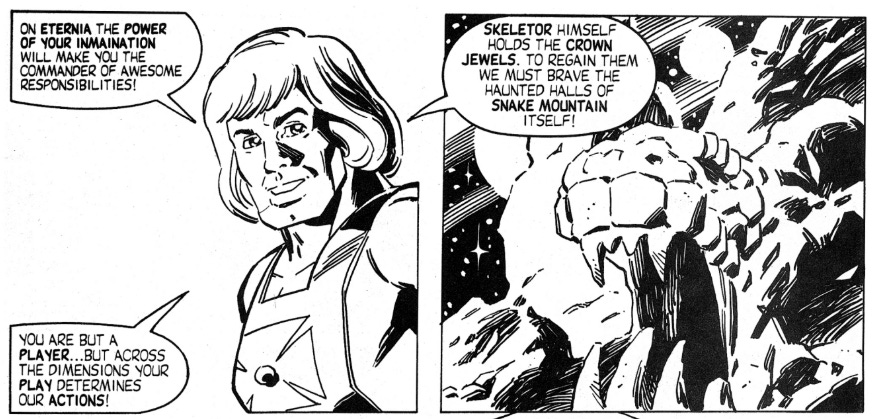
Combining the Dungeon and Star Frontiers models, Fasa’s Masters of the Universe Role Playing Game begins with a simple premise. The players take on the role of He-Man and his allies as they invade Snake Mountain in the hopes of regaining the Crown Jewels of Eternia, which have been stolen by Skeletor and are protected by him and his minions. The map of Snake Mountain is a straight forward dungeon map with 1 inch squares that could be used for a variety of adventures. It doesn’t look much like I envision Snake Mountain itself, but it has a good amount of variation and each of the encounter squares (and rooms) are numbered.
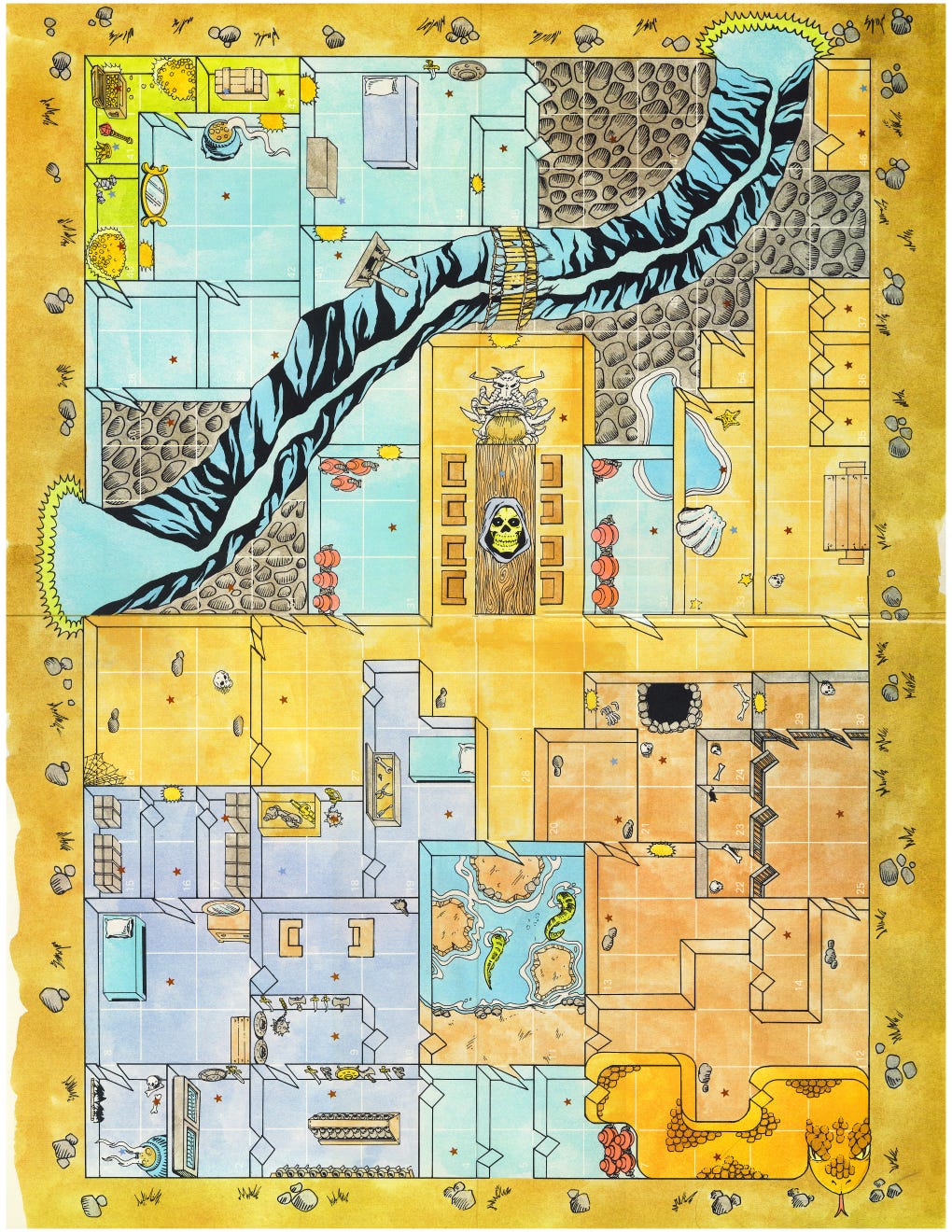
The numbering of the rooms is a standard role playing game module feature that allows Dungeon Masters to look up the room number and tell the players who and what they find there. That’s not exactly how things work in Masters of the Universe. In this game, most of the encounters are random. To determine who the player characters encounter when entering the room, the game master (Skeletor in this game) rolls a six sided die and then adds a modifier based on ther room to see what kind of encounter the players’ characters will face. For example, in the Secret Passage (#21) you add +4 to the roll of a six-sided die giving you a possible range of 5 to 9. This means that the characters could encounter anything from 1-3 Spiders to a “Special Encounter” that could include any one of the 6 villanous characters included in the game (Mer-Man, Whiplash, Trap Jaw, Beast Man, Evil Lyn, and Skeletor).
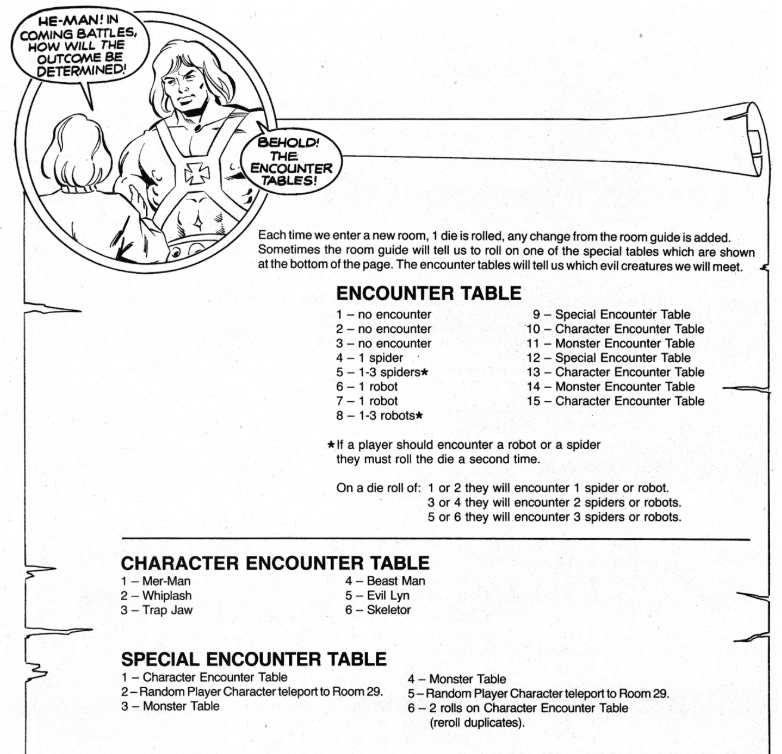
This is a pretty cool innovation that doesn’t quite elevate the game to role playing game status, but it does add replayability to the experience as who and what you encounter as you seek the Crown Jewels might vary from play to play. The use of different modifiers based on the room entered is a nice touch.
As with an actual role playing game, each character has ratings in five attributes (Strength, Agility, Intelligence, Life Force, and Magic) and a number of skills that range from combat oriented skills like Swords and Clubs/Hand Weapons to non-combat skills like Machines and Animal Riding. There is also an extensive list of spells, but more on that in a minute. Each skill is ranked from 1 to 6 and provides a bonus to a roll of 1d6 when using the skill. You will note that therer is a difference between Machine Use and Machines because Man-at-Arms has both, but what that difference is never gets described in the text. Similarly, Man-at-Arms wields his famous Club in the picture, but has neither the skill nor the item in his equipment. Where the skills are rated from 1 to 6, Attributes have a rating of 11 to 66.
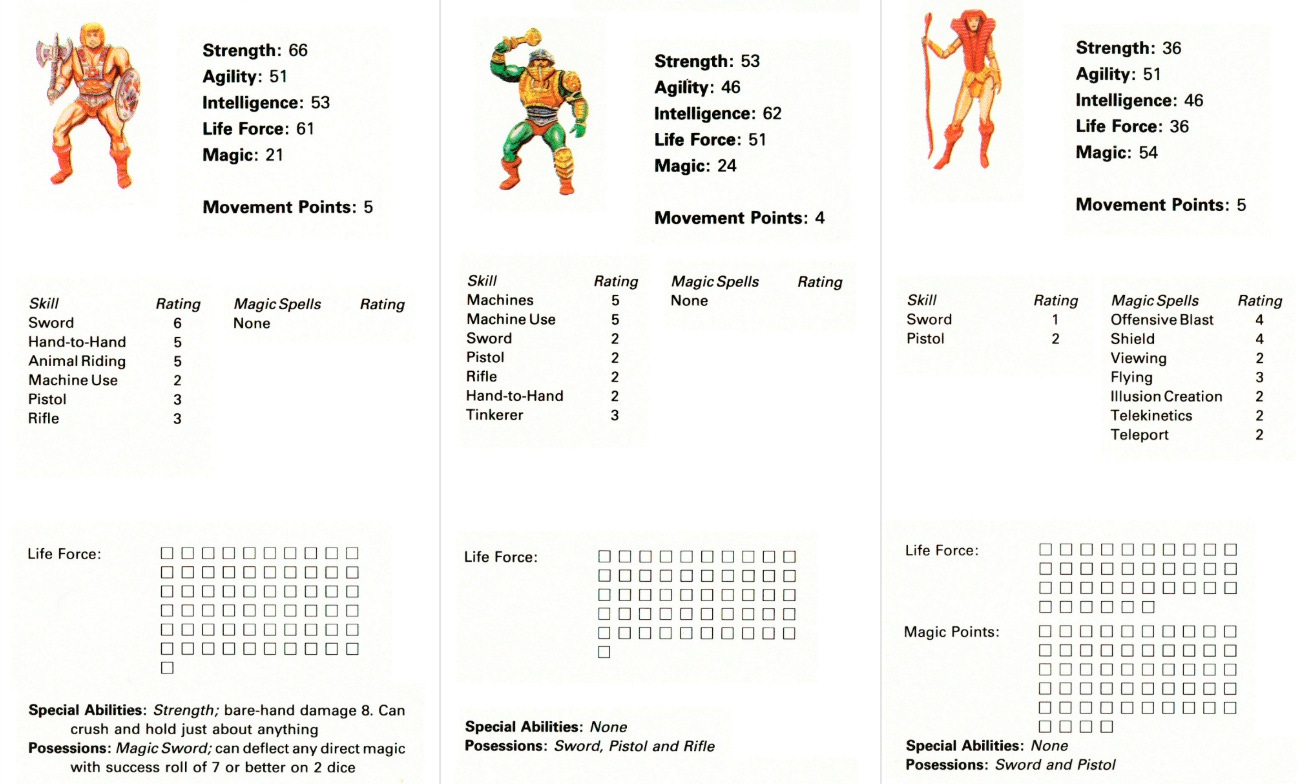
Fans of Steve Jackson’s various games will recognize this as an opportunity to use the inventive d66 which produces 36 numbers between 11 and 66 in order to determine success or failure, but that’s not how Attributes are used in Masters of the Universe. In fact, Attributes other than Life Force (hit points) and Magic (which provides the spell point count for those with spells) dont have much use in the game. The one exception is Intelligence, which when combined with magic provides the character’s basic Skill Level with Magic Items. At least I think it provides the skill bonus for all magic items (that require a skill roll), but it’s only specifically mentioned for the Blast Jewel magic item.
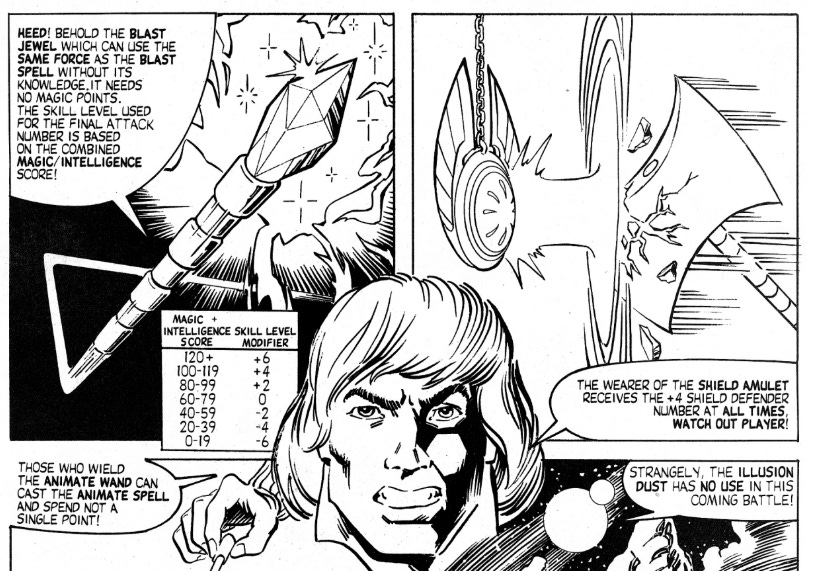
As you might have noticed, the initial presentation of all of the basic rules is in a comic book format. The illustrations are done by Hilary Barta (one of John Byrne’s regular inkers), Doug Rice (Dynamo Joe for First Comics, Avengers, Badger), Willie Schubert (Star Wars, Fantastic Four), and Rick Taylor (colorist). The art work varies a little bit in quality from page to page, but there are some fantastic illustrations that make it look like the artists enjoyed themselves. On the other hand, the rules are kind of presented at random and can be confusing in the first read.
Key to conflict resolution, and casting of spells other than Shield, in the game is the handy dandy Resolution Matrix! Though combat matrices were the rule of the day in the mid-1980s when this game was published the Masters of the Universe Matrix is a high mark in lack of clarity. Sure, Advanced Squad Leader players can decipher it, but the average new gamer would be befuddled by the array of letters and numbers. To add to the confusion, when casting magic the player compares their roll to a 3 on the Defender’s number column.
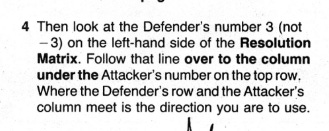
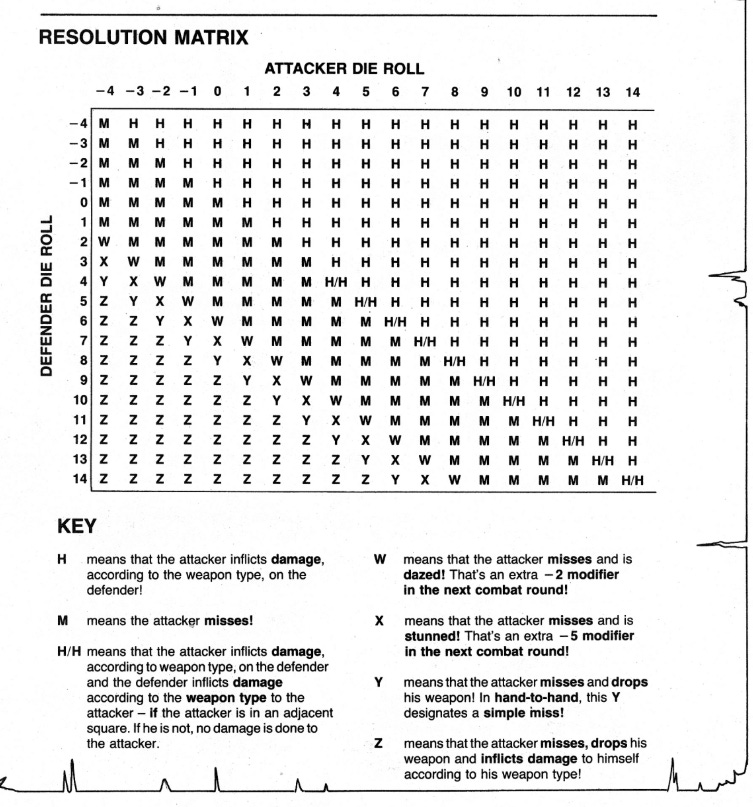
The more I’ve played the game solo (I printed a copy out as there is no way I’m punching my copy are you kidding?) the more intuitive the matrix has become and it’s definitely usable as the foundation for a resolution system. However, the full potential of this chart is never realized. The base “difficulty” of casting a spell is 3, but they could have made things more interesting by varying that difficulty based on circumstances of casting (they do vary it in melee combat) or by having character Attributes add bonuses to the resistance of various actions. As I write, there’s real potential here, but it isn’t taken advantage of and that leads to some confusion in the rules.
Speaking of the magic system, this is the space with the biggest mechanical gap. Sure, there are no character creation rules, but this is an introductory game and everyone is going to fight over who gets to play He-Man and who gets stuck playing Fisto. Orko’s kind of interesting as he has a huge list of spells. Though he seems very untalented and only has a rating of 1 in each, as you compare his “average roll result” of 4.5 (1d6 plus his +1 modifier) he’s actually successful fairly often and can’t get a disasterous result. Doesn’t seem very Orko to me as this Orko is pretty useful, especially if your Skeletor is an experienced game master and is already thinking of ways to make that Legends/History skill matter and sets a difficulty 5 to “What is the connection between Snake Mountain and Castle Grayskull?”
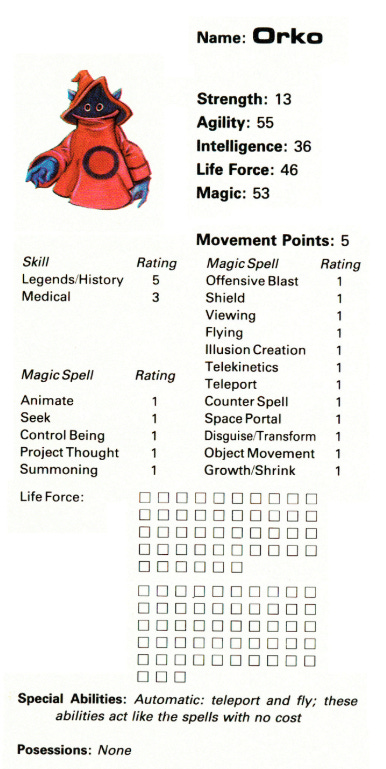
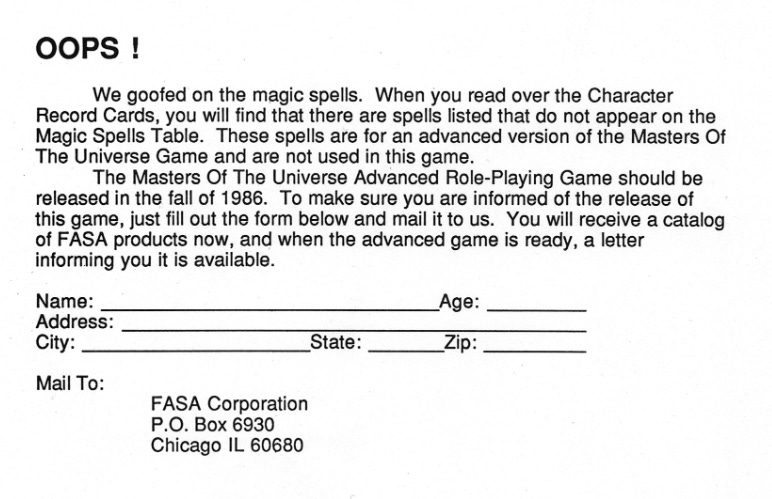
Sorry for the Orko digression, but the biggest gap in the game is hinted at on his character sheet. You see that big list of spells? Yeah, there are only rules written for six of those and even then the effects are pretty vague. Shrink/Grow let’s you grow to twice your normal size, but so what? It doesn’t do anything else. That’s fine if you’ve got some suggestions for how to referee a game and tell a story, but in a combat focuse boardgame introduction it’s pretty terrible. The designers knew this was a HUGE error and that’s why they printed the famous (or famous amongst RPG obscuria nerds) OOPS! card. This card apologizes for leaving out the rules and takes the opportunity to say “Our bad, but the thing we left out will be in our advanced version and let us tell you when you can buy it!” It’s just like modern video game devs selling DLCs that are really just patches to the main game.
Contrary to critics of the game who assert the game is unplayable, there is a pretty solid foundation here for a role playing game. It will take some effort to add a full skill system, incorporate the stats, and write up all the spells and expand on the effects of those already written, but I think it would be worth the experience and might just do that this summer. Let me know if I should.
Having said that, I cannot recommend that you pick up this game as the game to use when playing Masters of the Universe Adventures at this moment. When I expand it? Sure. But out of the box? Nope.
So what games are good for playing a Masters of the Universe game?
My 5 Recommended RPGs for Playing Masters of the Universe at Home.
As you read my recommendations for which game system to use in your home campaigns, I’d ask you to take a moment to decide which “version” of Masters of the Universe you’d like to play. This decision will have significant impact on the system that best emulates your desired experience. There are essentially, four different “setting tones” for a Masters of the Universe game, with the potential for a fifth depending on the tone of the new movie. There’s the classic Weekday Afternoon cartoon tone that has superheroic action, with mild 4-color violence. Sure, you’re punching people, but death is rare and victory is often achieved without combat.
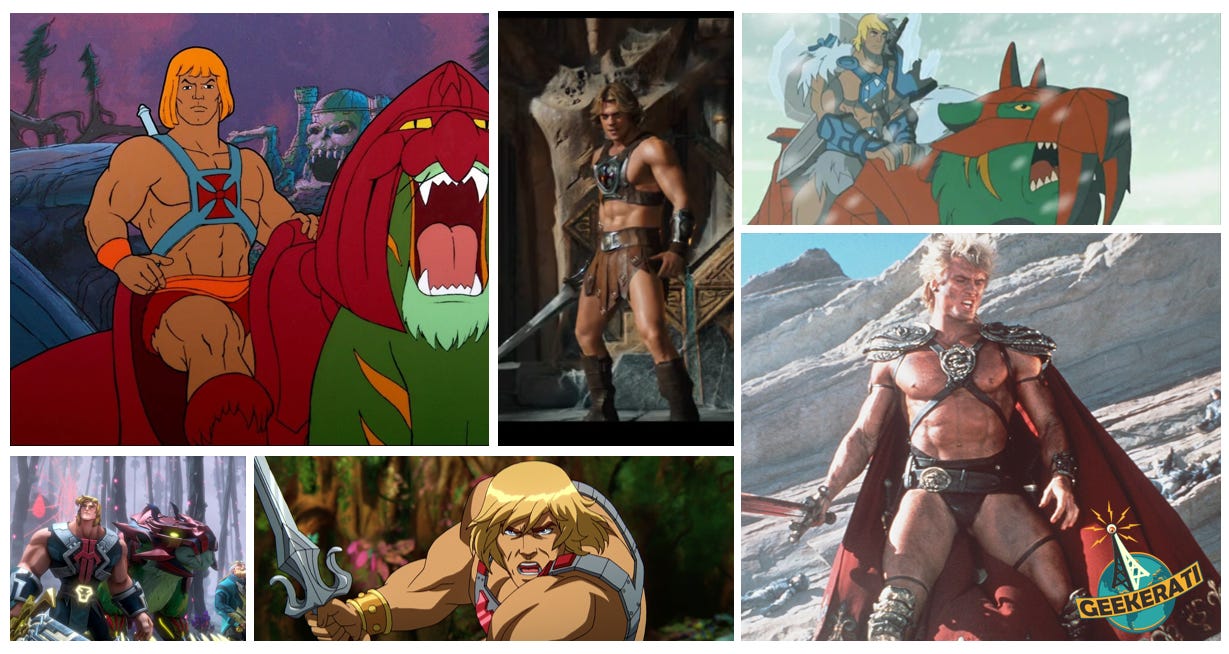
Four Color Masters of the Universe
Some people think of the original cartoons as camp, but having watched many recently I don’t agree. A lot of arguments that older things are camp or coded a certain way are rooted in practitioners of late 20th/early 21st century pop culture literary analysis. Many of these critics are writing analytical self-inserts that are the critical equivalent of Mary Sue-ing a tale. The critics might write about what the cartoon (or other cultural artifact) meant for them and how they felt a connection as an outsider to a particular character for one reason or another, but such connections are rooted in perceptions of self and aren’t there for all viewers. That doesn’t make them less real and important for that critic, it just means that other viewers will miss these completely and won’t feel compelled to find the same relationship with that character. Shipping is a fun and valid activity, but your ships aren’t everyone’s ships.
Serious Action Animation Masters of the Universe
The next tone is the one evoked in both the excellent series He-Man and the Masters of the Universe that ran from August 16, 2002 to January 10, 2004 as a part of the Cartoon Network Toonami block. The show was much edgier than its TV-Y7 rating suggested and Michael Halperin’s 39 Episodes are a very solid update of the original series that sought to make up for the 1990 show The New Adventures of He-Man. I enjoy that show, but it is narratively very different from the original and has its own lore. What accounts for the slightly increased edge is the fact that the Cartoon Network show was no longer beholden to the FCC rules for children’s’ cartoons and didn’t need to have prosocial elements baked into the show. Michael Halperin was selected to develop the 20th anniversary series and his love for the material shows. Halperin had previously worked on Filmation’s Jason of Star Command as well as a Filmation adjacent 1990s Zorro series that starred Henry Darrow as Zorro’s father. Darrow had played Zorro in Filmation’s 13 episode 1981 animated series, the one that I think was killed off by George Hamilton’s campy Zorro. Halperin brought in writers from the original series like Larry DiTillio (author of what may be the best RPG adventure of all time) and Michael Reaves.
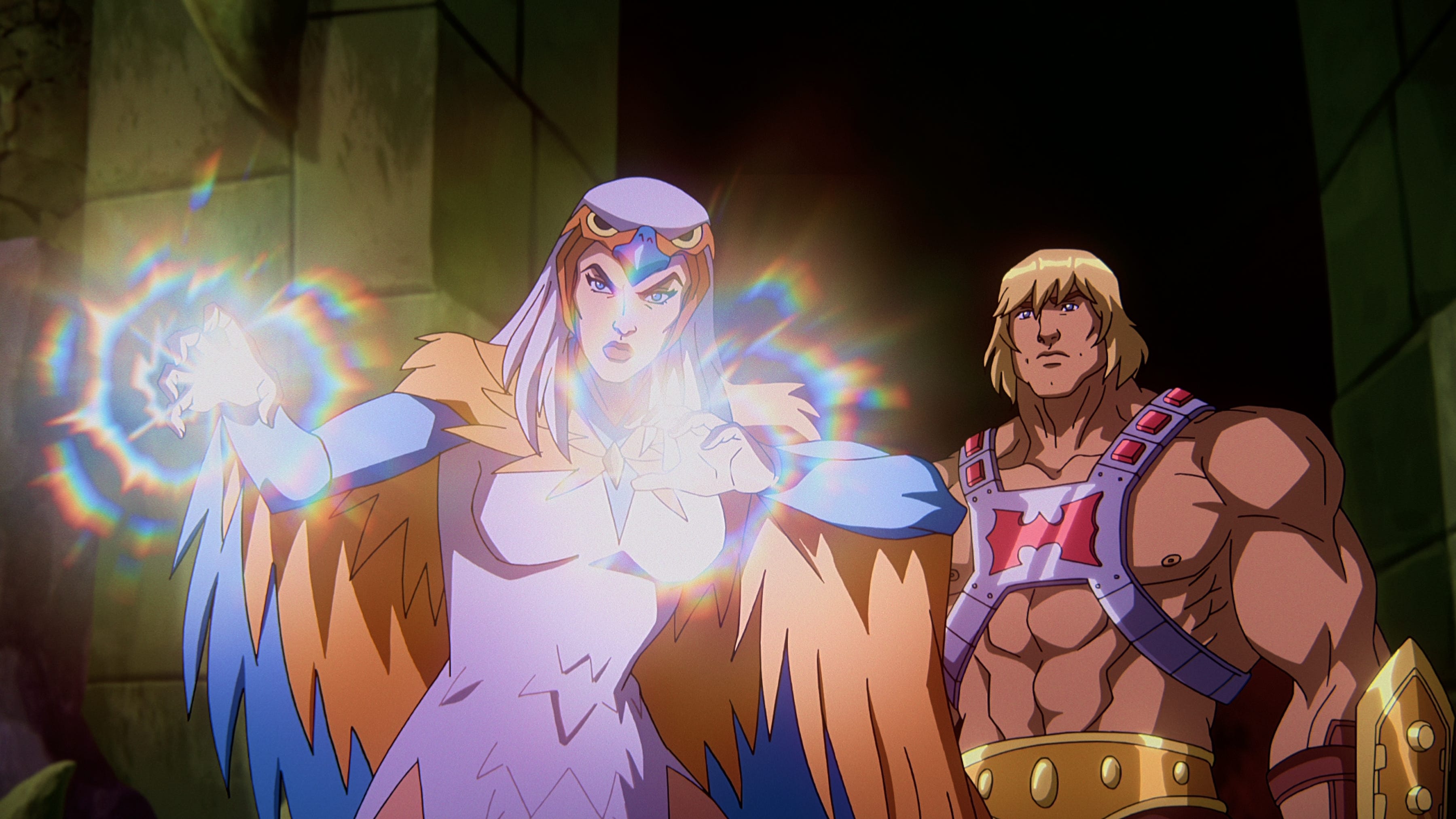
Kevin Smith’s 2021 Revelations and 2024 Revolution series were popular with critics, but had mixed reception from fans. The mixed receptions were along the cultural war lines we see drawn today and while the first 10 episodes (Revelations) had fairly strong viewership numbers, when the last 5 episodes were released the level of interest in the series was much lower and the show was cancelled. The animation and tone of the show are clearly inspired by the Halperin era of the show. Smith and his team definitely attempt to take the material seriously, and the return the concept of “Sorceress Teela” shows a knowledge and love of the lore. However, Smith couldn’t avoid his need to Smith things up and subvert expectations. The first 10 episode long series was pretty much an exploration of a Masters of the Universe without He-Man. That’s an interesting premise from the right people, but a lot of fans didn’t think Smith was the right person. Critics liked the show, but many fans rejected it and it was not a strong performer for Netflix.
Smith’s attempt reminded me of the World Without a Superman era of DC, but with a dash of Dragonball Z. Everyone knew Superman wasn’t going to stay dead, but the idea of discussing what the world would be like without him was an interesting one. This era resulted in some very mixed stories with the Eradicator, Steel, and Superboy stories having some interesting developments (same for Justice League), while the Cyborg Superman was mid and a lot of the other DC titles suffered because they didn’t really grapple with the consequences and seemed to be counting time. And in the end “somehow Clark Kent returned.” Smith’s Masters of the Universe had similar, though different issues, but I think it’s a show that will be revisited in the future as a flawed but passionate interpretation.
Super Sentai Masters of the Universe
I have my own personal reasons for being minorly annoyed at the Kevin Smith iteration, or rather mad at Netflix for how they marketed and distributed it. The show was release at the same time as an entirely different take on He-Man and the Masters of the Universe, one aimed squarely at children who had been fans of Guillermo del Toro’s (and thus Netflix’s) core animation series Trollhunters. Trollhunters was inspired by a book del Toro wrote with Daniel Kraus and it is one of my favorite animated series. It balanced kid friendly and action packed perfectly for my tastes.
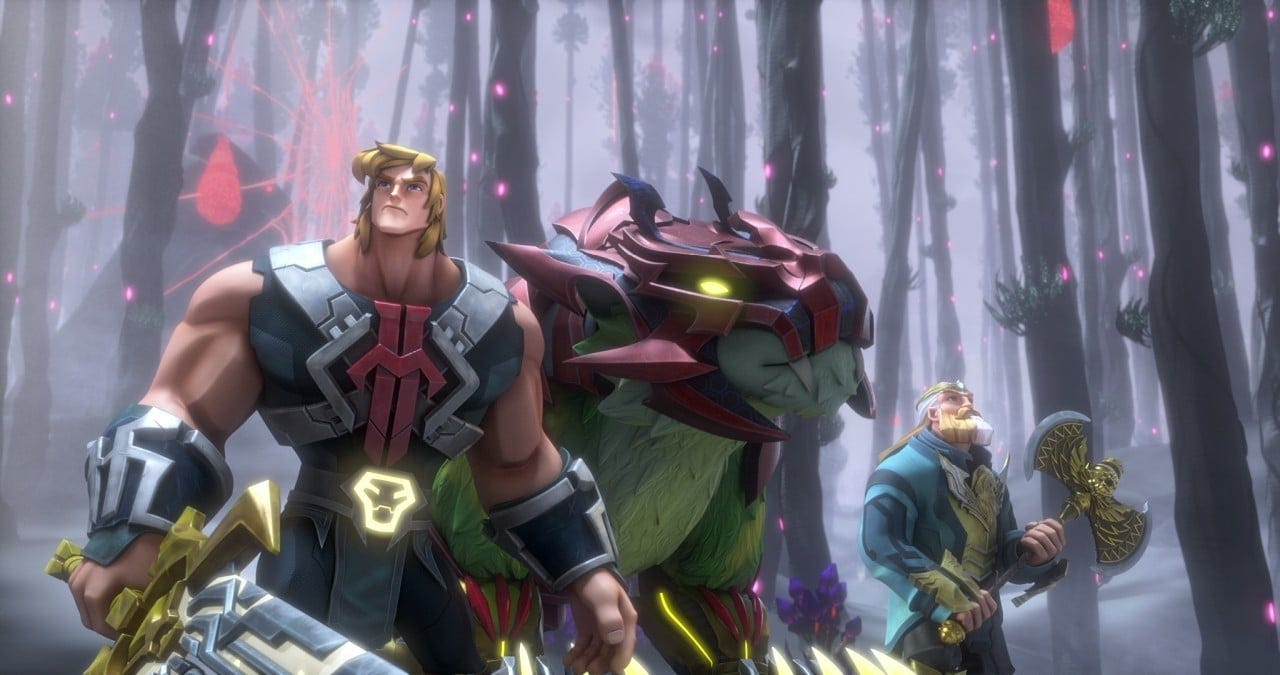
This computer animated version of He-Man was developed by Robert David, who had worked on Max Steel and the 2003-2010 run of Teenage Mutant Ninja Turtles, and it provides a third setting tone for a game. While this show shared the name and character concepts of the original series, this version of He-Man was a mashup of Hamlet, Shazam (aka Captain Marvel), Power Rangers (or other Super Sentai stories), and Masters of the Universe. The technofantasy elements were dialed to 11 and the Power of Grayskull transformed not only Adam but his friends as well. The show was a major departure in lore, but it focused on heroic elements and friendships in a way that was very touching. I was particularly found of the Cringer storyline, which hinted at the darkness and evil that existed in the world. Add to this the fact that my friends Shawna Benson and her sister Julie were writers on the show, and that the voice actors included the hard working Yuri Lowenthal and visits from Kevin Conroy, Bobcat Goldthwait, and Wallace Shawn (inconcievable), the show was pretty much made for me.
Straight Sword and Sorcery Masters of the Universe
While the various animated versions of He-Man all share a kind of super-heroic foundation, the Masters of the Universe film from 1987 is very much a pure Sword & Sorcery (with tech) adaptation of the characters. The film was not appreciated by fans or critics at the time. It cost around $22 million to produce, but only grossed $17 million in the United States and pretty much nothing overseas. The movie’s current Tomatometer is 21% and it’s Popcornmeter sits at 41%, but I think if you could do time-series analysis on the Popcornmeter, you’d find that this is a film that has grown on fans over time.
I think that one of the reasons fans rejected the film as much as they did was that they wanted a more super-heroic tone than the film they got. Instead, they got D&D Fantasy invades Burbank. Maybe it’s the fact that I have a huge soft spot for Golan and Globus era Cannon Films like Enter the Ninja, Hercules, Revenge of the Ninja, Breakin’ (and Breakin’ 2: Electric Boogaloo), Lifeforce, American Ninja, King Solomon’s Mines, and so many more, but I am a fan of this version. It’s not as camp as I expected and is a solid film when compared to other Sword & Sorcery films of the 1980s. It’s significantly better than Cannon’s other Sword & Sorcery film, The Barbarians (starring “The Barbarian Brothers” David and Peter Paul), and Frank Langella’s performance as Skeletor has depth. Langella, who is perfectly capable of chewing the scenery, does more than that here. He takes Skeletor seriously and I think it’s worth your time.
The Game Recommendations and the Tones they Fit

Savage Worlds Adventure Edition fits all four tones perfectly, but each different tone requires the addition of some of the setting guides for the game. Savage worlds is a flexible system that is Fast, Furious, and Fun.
Four Color MotU games should add elements of the Fantasy Companion, and the Science Fiction Companion.
Serious Action Animation Masters of the Universe should use the Fantasy and Science Fiction Companions and add the Horror Companion to the mix.
Super Sentai Masters of the Universe should use the core book and the Super Powers Companion. You don’t need the Fantasy, Science Fiction, or Horror Companions for this setting but if you want to include them you can.
Gamma World 7th Edition works really well with the Four Color, Serious Action Animation, and Super Sentai Masters of the Universe genres. As much as I love Savage Worlds, I think this is the version I’d like to play.
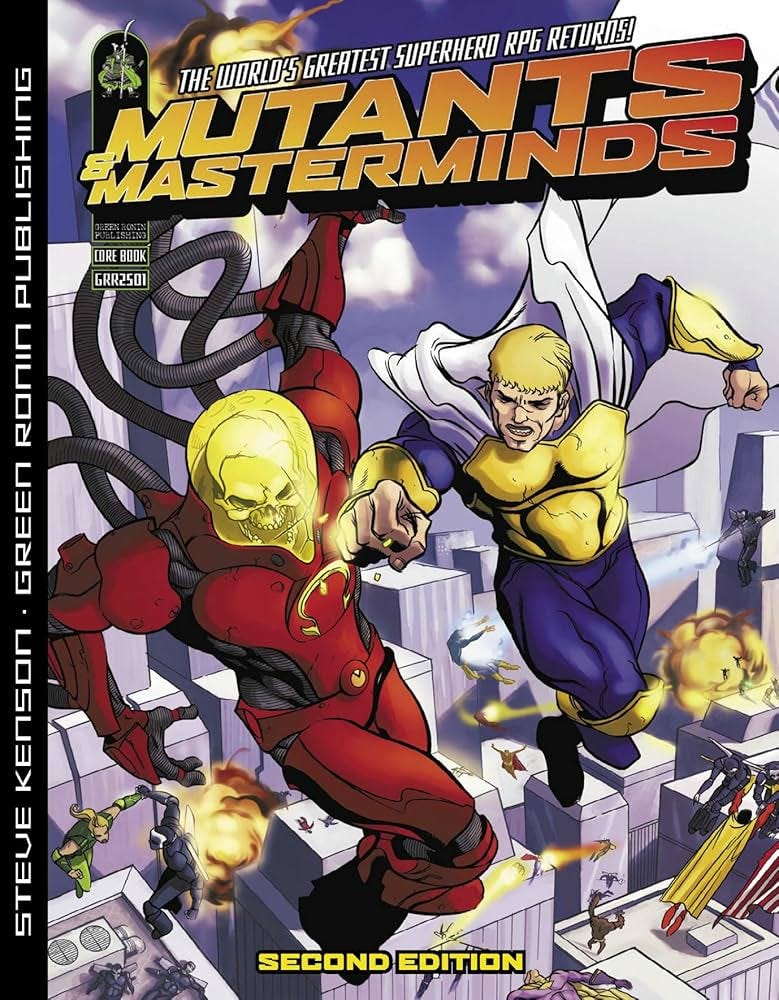
Mutants & Masterminds 2nd Edition is a great game and it has three sourcebooks will help you design your campaign and let’s you capture all of the genres appropriately. Warriors & Warlocks is good for both the super-heroic and the straight Sword & Sorcery interpretations. Mecha and Manga add some wonderful technofantasy elements for the super-heroic variations. Worlds of Freedom will provide you with tons of inspiration as you look for story ideas. You can, of course, use the newer edition of Mutants & Masterminds and the sourcebooks work with it as well.
Feng Shui 2 is an underappreciated gem that has mechanics and character types that lend itself well to Masters of the Universe play. It’s a largely narrative and cinematic system and is easy to learn and quick to play. The first three games I mentioned can, though don’t have to, become very much tactical battle games. Feng Shui isn’t designed for that kind of play.
Cartoon Action Hour, and it’s Warriors of the Cosmos and Galactic Heroes supplements, was designed specifically to play role playing game sessions inspired by the Four Color and Serious Animation versions of Masters of the Universe. I will mention though that Cynthia Celeste Miller’s design intentions with the game are very much storytelling based and not action based. This is the game to play if you want to incorporate the FCC rules that restricted violence and demanded prosocial elements into your game setting.


Those are my five main recommended game systems for playing Masters of the Universe games, but I think Tiny d6 and Outgunned could work very well too.
What game would you use?
After seeing Thundarr the Barbarian, my friends and I got very into the idea of RPGing in that world and Expedition to the Barrier Peaks points the way of combining fantasy and SF. We did some hybrid early D&D and Metamorphosis Alpha stuff that would have worked really well for Masters of the Universe.
I think the WEG D6 Star Wars could be adapted to run a MotU game. It has simple tech and magic that both could be tweaked to fit. The cinematic action created by the rules suits the IP. The character creation using archetypes allows the feel of the game to be set right there and makes room for every kind of character.