



Before I Get to the Games, Here’s a Mini-Geekly Rundown
When I started this Substack, I used to do Weekly Geekly Rundowns where I highlighted things from around the internet and the Substackosphere. I put a lot of work into them, and I really like doing them, but a full-time job and finishing my dissertation took priority and limited my writing time. The first kind of article that suffered was those Rundowns because they take a lot of cognitive load due to the amount of outside reading and viewing each one entailed. They may have been 20-to-30-minute reads from time to time, but some took as long as six hours to write, typos and all.
In the past couple of days, I’ve seen a couple of really cool things that I really have to share, so here is the mini rundown.
Blade Runner 2099
I’m pretty excited about this preview for Blade Runner 2099 because it is, in some ways, closer to Philip K Dick’s original Do Androids Dream of Electric Sheep thematically than Ridley Scott’s post-theatrical edits of Blade Runner. It always annoyed me that he transformed Deckard into a replicant in later edits, in part because one of the points of the novel was that many humans had become less capable of empathy than the artificial lifeforms they created. To minimize the spoiler, I’ll just say, “Mission Street Station” and leave it at that. This trailer screams Mission Street Station.
Stan Lee and Elder Abuse
Luke Y. Thompson has a review of the new documentary about Stan Lee as well as a written interview with the director. They make interesting reading and have me interested in watching the film. Nancy Rommelmann has been doing a series of articles about the exploitation of the elderly that was inspired by her interactions with the people “taking care” of her mother, and it reveals the lack of empathy (maybe there is a theme here) that people have when motivated by greed. The manipulation of Stan Lee and his name dates back to at least the late-90s and early-00s when Lee’s partner at Stan Lee Media used shares in the company to secure a loan to throw a fundraising gala in support of Hillary Clinton’s run for Senate. That partner, Peter F. Paul, claimed that he launched the fundraiser in the hopes of raising Stan Lee Media’s profile, but it only ended up contributing to the company’s collapse.

Accidental Time Travel to the Jurassic Era

One of my favorite novel series is Eric Flint’s “Ring of Fire” series in which the entire modern city of Grantville, West Virginia is transported back in time into the middle of the 30-Years War. The first book in the series, 1632, is available for free from Baen Books. Steve Jackson Games recently ran a crowdfunding campaign for a GURPS roleplaying game sourcebook for the series, late pledges are still open, and one of the first pdfs I purchased from RPGNow (now DriveThruRPG) was a roleplaying game in the setting from Battlefield Press. I’ll review that soon because it used the Action! roleplaying system as its mechanical foundation.
Needless to say, that puts me right in the middle of the target audience for The End of Oak Street. In this upcoming film, a suburban neighborhood is transported back in time to the Jurassic Era where the residents must quickly do battle with dinosaurs. I don’t know if the movie will go the route of 1632 where the modern residents use their knowledge of science and technology to change history, or whether the answer to what happens to everyone is in the title of the film, but I’m eager to see it either way.
Now…on to the games.
After Missing Two Weeks of Recommendations, Here is a Flood of Games
As I mentioned in the article from July 6th, Professor Dungeon Master announced a few years back that July should be promoted as Independent Tabletop RPG Month on his YouTube channel.
Professor Dungeon Master wants gamers and reviewers to avoid discussing the World’s Largest Roleplaying Game and to focus their attention on independent creators. Since my DriveThruRPG library currently has 9,284 (soon to be 9,294) pdfs, I’m pretty sure I can consider myself am an ardent supporter of independent RPGs.

Before you ask, no I haven’t read all of them. I agree with Umberto Eco that the books we own aren’t just for us to read but are also there for us to be able to use for research if we should ever need them. Nassim Taleb called this kind of collection an “antilibrary,” but I think that’s a misnomer. I think that the traditional term of library is the right word and that the neologism minimizes the concept and forgets what libraries are for. We don’t go to the city or university library to find things we’ve already read; we go there to find things we want to read or need for research. If you can afford to turn your home into a library, then you should do it as much as you can. I also believe that you should share your library with others and be ready to share it with posterity. My shelves at home are filled with books upon books. I’ve read most of them, but not all. Even in my office at work there are books I haven’t read, though those are there specifically because I know they contain information I might have to reference. It’s more likely that I’ve read the entirety of my copy of The New S Language (a book containing an old programming language that became the basis for the modern language R) than my copy of The R Cookbook. It’s not only more likely, but also the actual truth. I read one out of curiosity of the history, but I’ve only read snippets of the second as I’ve needed them.
I treat my DriveThruRPG library in a similar way. Some of the games I’ve read repeatedly and deeply, usually after either printing them out or buying a print version. The rest serve as reference documents that I go to when looking for new or old ideas. I’m not likely to play Sir Pellinore’s Game, but I will eventually write a blog post about old Fantasy Heartbreakers and then I’ll need that copy. So it waits in my virtual bookshelf until the day of that article comes.
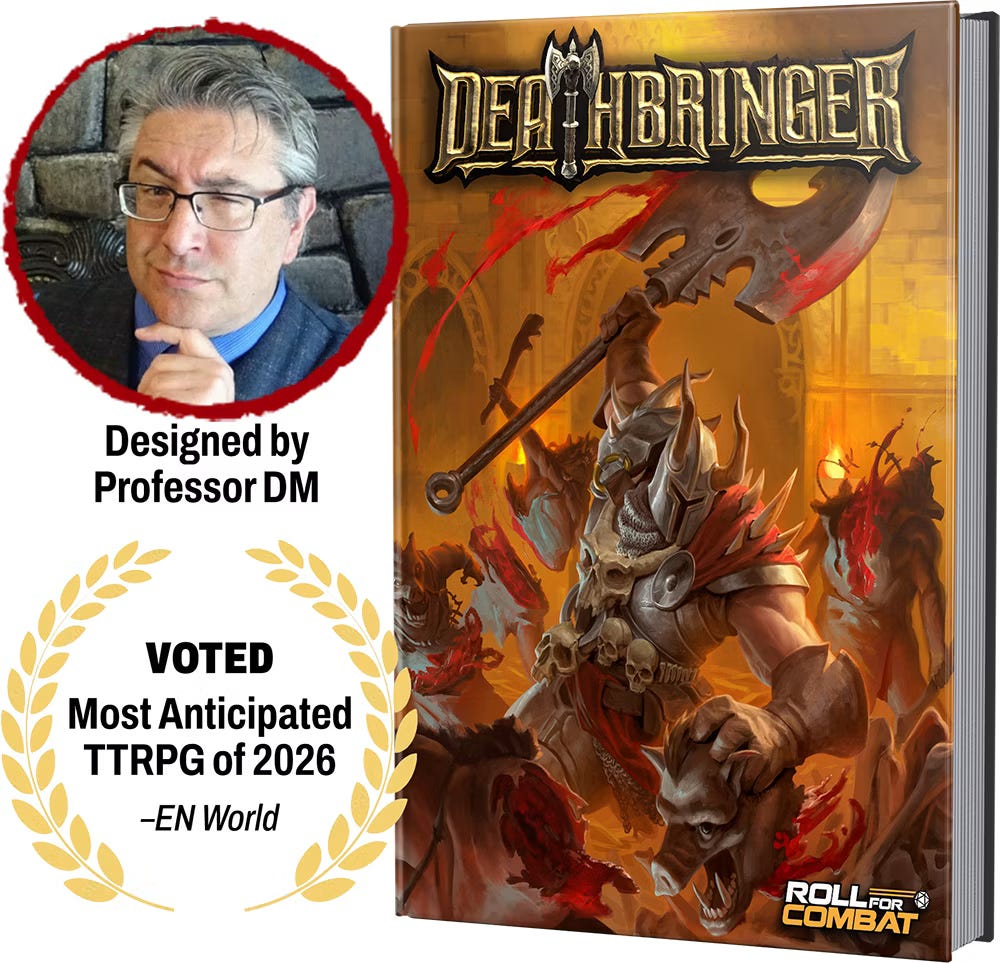
All of which is to say that I support indie creators for a variety of reasons, including that I might want to use their designs for research or reference at a later point. Speaking of Professor Dungeon Master and supporting independent game designers, I’d be remiss if I didn’t mention he’s in the middle of a crowdfunding campaign for his own Deathbringer roleplaying game.
My main recommendation goal is to be serious in promoting things different from the familiar paths of “d20+ability+proficiency bonus vs target number.” None of the games I will be recommending will be D&D retroclones or D&D with only a small change. I am a big fan of Fantasy Heartbreakers in general, they don’t break my heart, as they are a demonstration of incremental game design, but I want to look at other systems entirely. I will still mention retroclones and Fantasy Heartbreakers in the descriptions of the games I recommend, as I did last article in the Savage Worlds recommendation with Savage Pathfinder, but detailed descriptions and reviews will have to wait for August and every other month of the year.
My official criteria for what constitutes an Independent RPG are:
That the game is not produced by Wizards of the Coast/Hasbro
That the game is not a D&D clone or directly D&D adjacent.
The game must be currently available for purchase in either print or pdf form from a legal seller.
I had considered excluding Games Workshop inspired RPGs as well, but after thinking about it I decided against excluding them for two reasons. Games Workshop may itself be large, but it hasn’t published RPGs itself in decades and the companies that do publish Warhammer based games are not powerhouse publishers with armies of attorneys. Rather they are well run smaller companies composed of talented superfans (and sometimes former employees) of Games Workshop. What do you think?
Before we jump into this week’s list of games, here is a rundown of the games from the Week 1 article.
July 1 — Colonial Gothic (It’s the 250th Anniversary of the United States after all.)
July 2 — Good Guys Finish Last
July 3 — Champions
July 4 — Dragon Warriors (I’m a big fan of Dave Morris and Oliver Johnson’s work and will be reviewing their Blood Sword gamebooks and the RPG I backed on Kickstarter soon.)
July 5 — Troika
July 6 — Savage Worlds
July 7 — Castle Falkenstein
As you can see, there are a number of small publishers represented in the last article’s picks and a variety of game systems. Most of those game systems are quite different from D&D. As we move forward, there will be some that have some similarities but with enough differences to make them more than clones.
July 8 — Fantasy AGE by Green Ronin Publishing
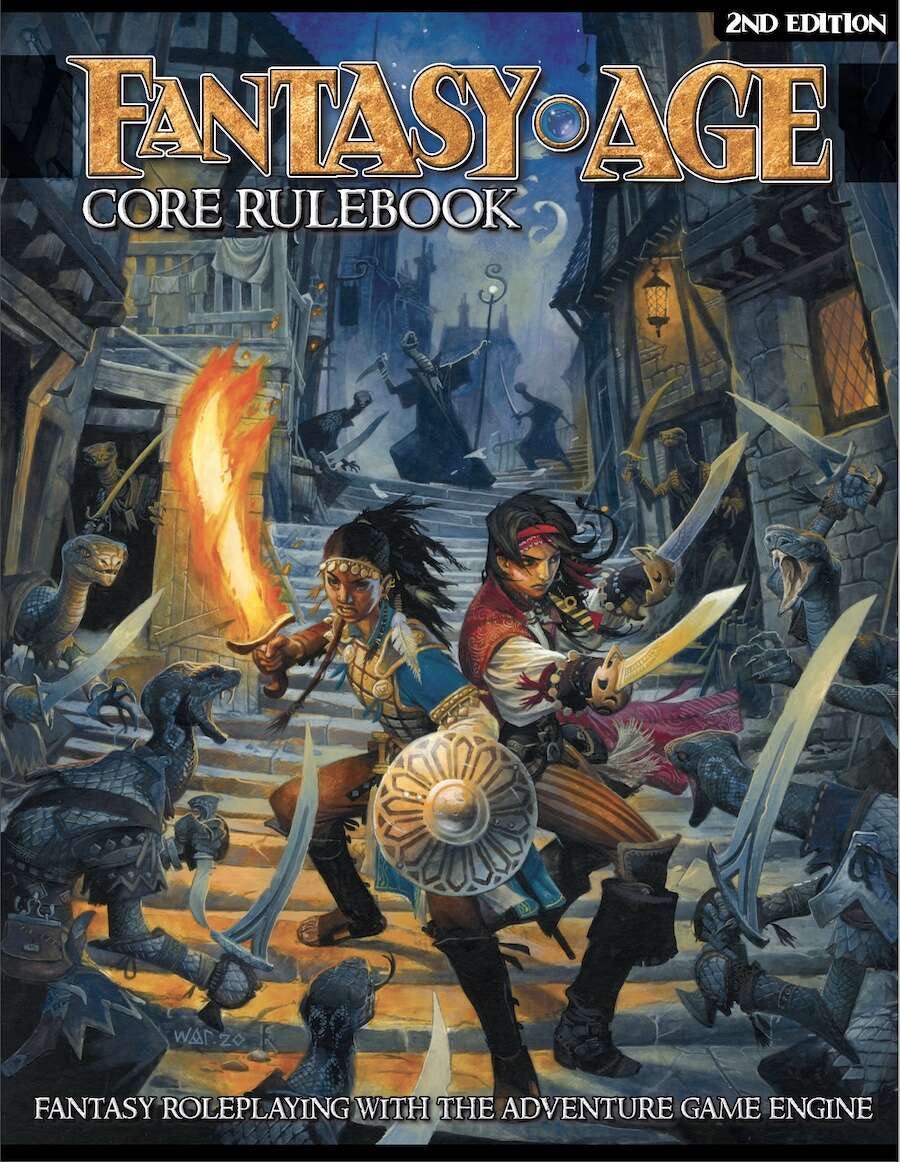
The hardback copy Green Ronin Publishing’s second edition of the Fantasy AGE role playing game is a book I keep going back to as a pleasure read because it is a beautifully illustrated tome with well written rules. The cover of the book was painted by Wayne Reynolds whose paintings gave signature style to both D&D 4th edition and Paizo’s Pathfinder role playing game. In this particular illustration, Reynolds has captured a moment of action in Green Ronin’s City of Freeport setting, a setting so deeply influenced by pulp sword & sorcery tales that it includes sinister Serpent Folk.
It should be no surprise that the cover of Green Ronin’s house fantasy role playing game features the City of Freeport, as the Death in Freeport module for the d20 system was Green Ronin’s first product. While Green Ronin, and Freeport, may have started out as a d20/3rd edition D&D company, they quickly branched out. First with the Mutants & Masterminds role playing game, which is nominally d20 but isn’t really and shares more DNA with Champions and DC Heroes than with D&D (more on that in a later review). Then with the True 20 system which took the foundation of the Mutants & Masterminds system and transformed it into a multi-genre system. Finally, with the publication of the Dragon AGE role playing game based on the Dragon Age computer rpg.
The AGE system (Adventure Game Engine) that underpins the Dragon AGE role playing game has continued to grow with the publication of Modern AGE (a contemporary RPG), Fantasy AGE, and role playing games based on The Expanse and Fifth Season properties (you can find a list here of some AGE games).
The AGE system has some elements that will be familiar to players of D&D, but it is a far cry from that game mechanically. It is in no way D&D adjacent in the way an OSR ruleset or Fantasy Heartbreaker is. My gaming group playtested the Blood of Ferelden adventure and the Dragon Age 2 and 3 boxed sets. You can see our credits (after I redacted other playtesters to remove clutter) in the Dragon Age 2 boxed set below.

I mention that I playtested the game, not only to point out that I have a personal connection, but also to highlight how much I like the game. You see, I wasn’t in on the playtest for the first boxed set. It was my enjoyment of the initial game that prompted me to request that my group be allowed to playtest other materials for the game. I fell in love with the game instantly because it offered some really distinct mechanics that I believe make gameplay more dynamic and rewarding.
Two of these mechanical innovations are rooted in the basic resolution mechanic in the game, which is based on rolling three six-sided die against a target number. This is similar to Champions, but with one big twist. One of these dice is called a “stunt die” and so needs to be distinguishable from the other die and it is the source of the two innovations I want to discuss as the die has two different effects.
The first effect that the stunt die has is to determine how successful your character is on an action. Instead of the game having the intensity of success determined by how high the overall result is (say a 15 vs a 19 total being “less successful”), AGE has that intensity determined by the value of the stunt die. So your total could barely hit the target number, but because the stunt die was a 6 you succeeded extremely well. Even though this means that very high rolls will always be very successful (they will have a high stunt die too after all), it means that even lower rolls can be large successes. I like that and think it adds a nice heroic feel.
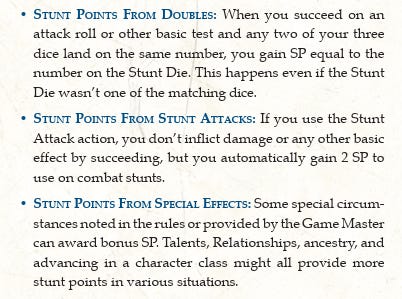
That brings me to the second innovation, the one that the stunt die is named for and that’s the “stunt system.” If any two of the three six-sided die come up as doubles, then the action generates a number of stunt points equal to the value of the stunt die. Overall, some form of doubles occurs approximately 44.06% of the time meaning that stunts are relatively frequent occurrences.

You can spend these stunt points on a variety of effects, for example if you are in combat you might choose to Disarm your opponent (see the partial list of combat stunts below). There are a wide variety of combat stunt options, and these really make combat dynamic, but stunts exist for non-combat tasks as well and the mechanic is open for expansion in a number of ways.

The stunt system makes Fantasy AGE, and other AGE games, truly unique and worth your time.
July 9 — Inspectres from Momento Mori Tactics
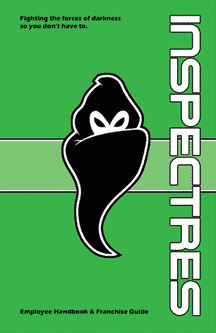
Inspectres is Momento Mori Tactics’ game of reality shows and monster hunters and it is one of the foundational games in the storytelling game marketplace. Modern storytelling games would not exist as they do today without the contributions of game designer Jared Sorenson.
Like many Sorenson designs the mechanics are simple, but tied strongly to the game’s theme. In this case, the players are owners of an Inspectres franchise that have their attempts to fight supernatural monsters broadcast on television in an attempt to earn profit for themselves and for the corporation.
While storytelling games predate Inspectres, see last article’s discussion of Good Guys Finish Last for one earlier example, this is one of the games that most modern mechanics have some connection too. For example, in the recent Candela Obscura kerfuffle, Critical Role were criticized for borrowing ideas from John Harper’s Blades in the Dark game. To be certain, Harper’s creations influenced the design, but his own game was a product of influences that date back to Inspectres as you can see from this Reddit discussion where Harper specifically laments having excluded Inspectres from the list of inspirations.

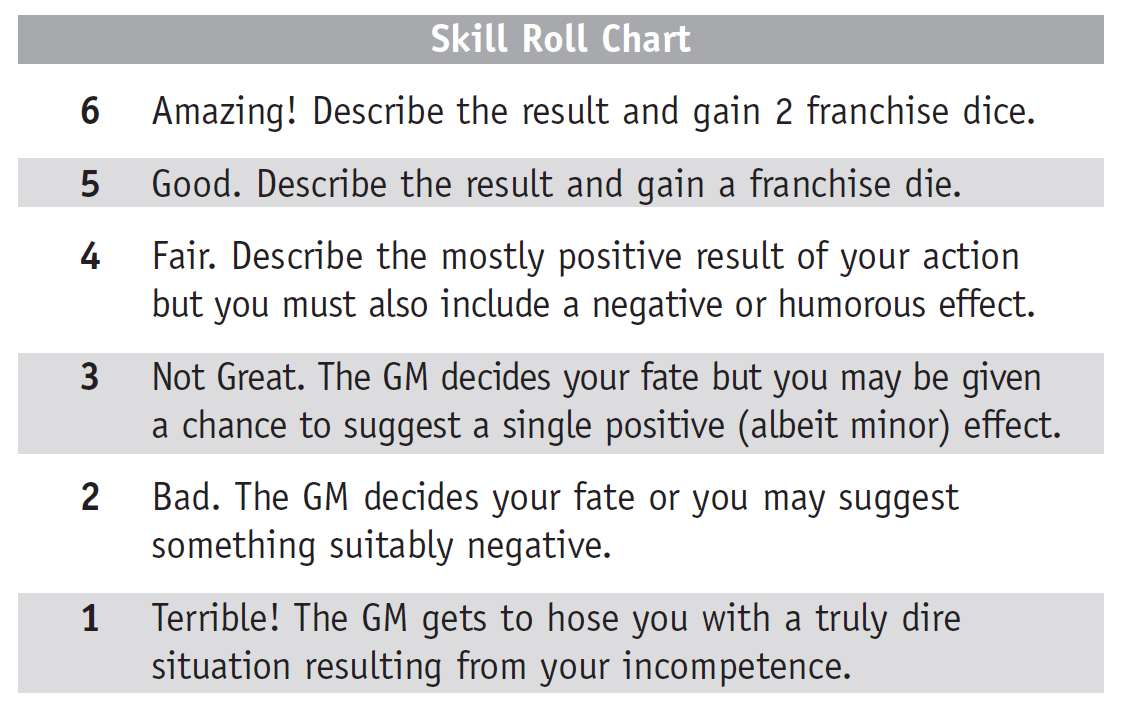
If you look at the skill roll result chart for Inspectres, you can immediately see the influence it had on later games where player agency takes the forefront of gameplay and where tactical combat mechanics take a back seat to dramatic performance and interaction. I highly recommend checking it out and will go into more discussion of the game when it gets a full review in the future (and when I address the Candela Obscura game in full). If the idea of combining MTV’s Real World with Ghostbusters appeals to you, then this is the game for you.
July 10 — Warhammer Fantasy Roleplay 4th Edition

I’ve been a fan of Warhammer Fantasy Roleplay for as long as I can remember. I’ve played every edition of the game ranging from Games Workshop’s original edition, and Green Ronin’s second edition (there’s that publisher again) to the much maligned (but beloved by me) third edition of the game. Each edition of Warhammer Fantasy Roleplay has stayed true to Games Workshop’s combination of grim dark and satire, and each has develop mechanics that reflect that combination in slightly different ways. Though none have deviated as much from the first edition as Jay Little’s designs for the third edition, designs that became the foundation for Fantasy Flight Games’ Star Wars line of games and which got the praise they deserve in that incarnation.
The first edition of the game was a percentile based game that was very lethal, but where careful players had the potential for long term success. I experienced genuine fear of character loss on multiple occasions. The percentile system underlying Warhammer Fantasy Roleplay was a nod back to Rick Priestley and Richard Halliwell’s wargame Reaper, a percentile based wargame that influenced the creation of Warhammer Fantasy Battle. A detailed examination of how mechanically one can adapt a percentile system to six-sided dice (as Warhammer Fantasy Battles does) can be found in Rick Priestley’s book Tabletop Wargames.
Needless to say, the fourth edition is a return to the classic percentile system with some fantastic innovations on contested challenges that speeds up the game and makes the game slightly more heroic. While players won’t be fighting Bloodthirsters any time soon, they are slightly less fragile than in the first edition of the game and since “relative success” matters in combat you end up with fewer “I swing and miss” rounds of combat. The fourth edition is an improvement in almost every way over the first edition, while remaining very faithful to the tone and mechanical feel of the original game. Check it out.
July 11 — Traveller
I’ve already done a pretty thorough rundown of why you should check out Traveller in my annual Mayday! Mayday! post. Read that and then give the game a spin. I’m sure I’ll do a full review at some point, but lists can’t get too in depth.
July 12 — Hero Kids

If you are looking for a fun fantasy game to play with your kids, then Justin Halliday’s Hero Kids is worth checking out. When my twin daughters were five to seven years old, I was looking for games to play with them that would introduce role playing in an easily accessible manner, but that would also provide a good foundation for later play. Steven “Stan!” Brown’s Pokemon Jr. game for Wizards of the Coast/Hasbro was a fantastic game for this purpose, sadly Wizards dumped it like a hot rock.
Because of that failure of foresight by the monolith, there was a large vacuum to be filled by independent creators. Halliday was one such designer to step up to the challenge and the result was his Ennie winning role playing game Hero Kids. Mechanically, it’s a simple game that only requires six-sided dice to play, but it is one of the best supported independent games on the market and has sufficient material for YEARS of game play. It also has a robust community who have released a variety of products across many genre. Check it out!
July 13 — Beach Patrol by Gallant Knight Games

Alan Bahr’s Beach Patrol is the first Tinyd6 engine game I’m recommending this month, but it won’t be the last. I chose it for inclusion this week for a variety of reasons. It covers a genre not often addressed in role playing games, and so is a step away from dungeon crawls and haunted houses. In Beach Patrol, players take on the role of lifeguards engaging in the kinds of high octane, slow motion action we see them participating in on television and film. That’s right, this is what Baywatch the game would look like if it was designed by someone with a vision for what makes that show work.
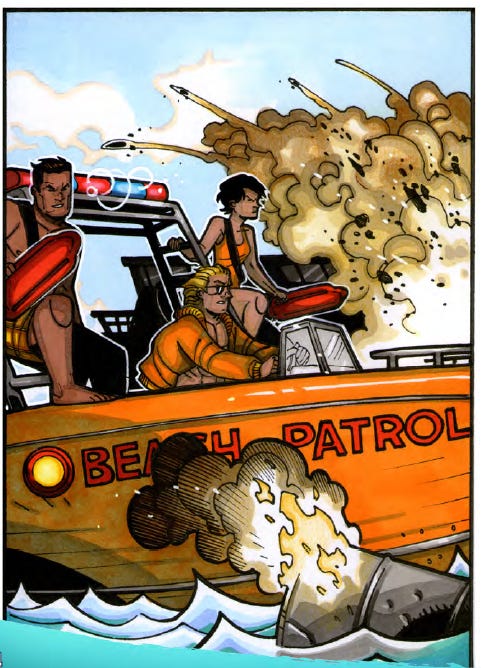
The key innovation in Beach Patrol is a mechanic called SLO-MO MODE that I think could, and should, be adapted to a number of different role playing games. SLO-MO MODE is a player empowering mechanic that gives a player the opportunity to describe their character being a real badass, but the action has to take place in SLO-MO.

Both the Gamemaster and players have access to the SLO-MO mechanic, so you want to make sure to keep in mind any protocols your group has in play for fairness. It’s the kind of mechanic that can be wonderful to add, but can lead to negative feelings if used in a way counter to your group’s norms and expectations.
While Beach Patrol is tongue and cheek in many ways, it is an excellent role playing game that actually has a lot of potential for campaign play. Whether you want to go more noir and transform it into Miami Vice meets Baywatch or whether you want to add Supernatural elements to your game, and who doesn’t want spellslinging surfer cultists, there are mechanics for you here and you can supplement them with the entire Tinyd6 line. Not all Tinyd6 games are on the same “scale” (supers characters are more powerful for example), the basic mechanics are the same and only require minor tweaking to get it to work.
Buy and have some summer fun!
July 14 — Runequest from Chaosium Games

This list has gone on for some time, so I’m not going to go into as much detail on this game as I have on past entries, but you absolutely MUST check out Runequest if you want to expand your role playing game library. The most recent edition of the game is beautiful and certainly worth your time and money, but I’m recommending that you check out the second edition of the game in this particular post.
What makes Runequest such a breath of fresh air in the gaming marketplace is its combination of extremely tactical combat, influenced by designer participation in the Society for Creative Anachronism and provides a more detailed blow by blow combat system than D&D, with the fantastic mythological setting of Glorantha.

When it comes to combat, parries and dodges are real things in Runequest while, depending on the edition of D&D they are merely modifiers. Similarly, in Glorantha your character’s faith matters in ways far beyond that of Clerics in D&D. While there is no formal “alignment” system in Runequest, a system that too often gets transformed mistakenly into a morality system, there are allegiances. Your characters become members of actual faiths and membership in faiths can lead to tremendous benefits and power. No game captured the epic heroism of bronze age tales better than Runequest. If you wanted to make a character based on Achilles, it wasn’t long before your character felt like Achilles…Runelord of the Cult of Thetis and all. The game managed to emulate the grim and gritty lives of the common man with the godlike powers of the chosen of the gods and that was quite the feat.
In fact, if I wanted to play a game that could emulate Brandon Sanderson’s Stormlight Archive series of books, Runequest is among the first games I would pick up for that adaptation. Cults and Order of Radiants are pretty good analogies for one another and the importance of mythic origins to character abilities also makes it a good fit. I’m not saying that Chaosium should try to convince Brandon to abandon his own game and get Chaosium to make a version using the Basic Roleplay system, but I am saying that someone deeply versed in the Cosmere should give it a shot.
July 15 — Dragonbane from Free League
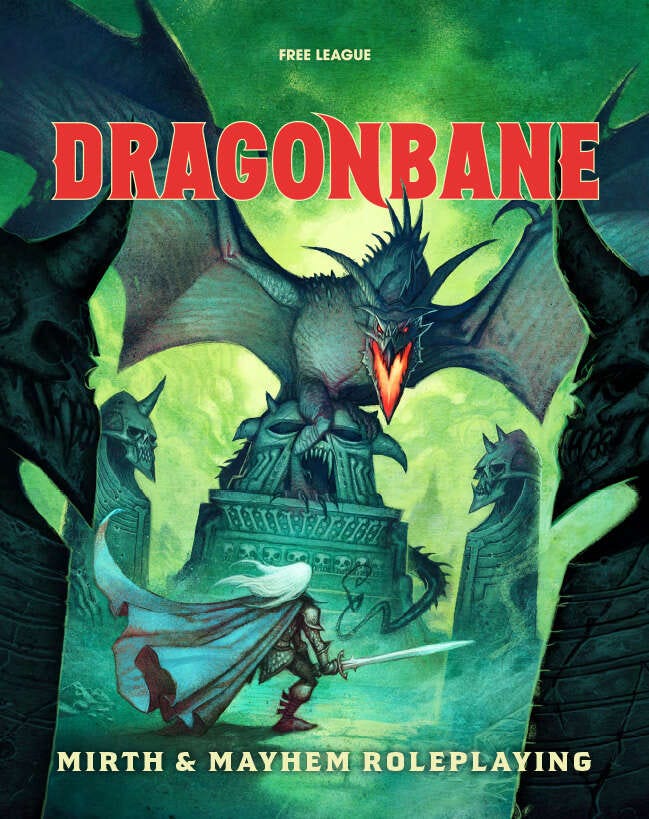
Dragonbane from Free League/Fria Ligan is the latest edition of Sweden’s equivalent to Dungeons & Dragons, in popularity, Drakar och Demoner. Drakar och Demoner is a fantasy role playing game heavily based on Chaosium’s Basic Roleplay Engine that underpins Runequest and Call of Cthulhu. I wrote a pretty extensive article about the development of the game earlier this year and you can check that out, but I’ve included a nice synopsis below.
The Long Road from Magic World to Dragonbane

There is a particular pleasure in watching a game begin as a translation and evolve into something completely new, that gets translated into the language of the game that originally inspired it. If y…
The game was originally published by Target Games, a Swedish company founded in 1980 by Fredrik Malmberg, Lars-Åke Thor, Johan Arve, Klas Berndal, and Roger Undhagen as a game store. Like Games Workshop in England, Target Games quickly expanded into publishing and the company was active from 1980 to 1999, when the company filed for bankruptcy at the tale end of the collectible card boom.
Target Games produced role playing games, war games, and a collectible card game based on one of their most successful “meta” products went on to produce a number of excellent role playing and war games that have had significant influence on the overall roleplaying game market. Target Games is one of the most important publishers in the history of role playing games and Fredrik Malmberg is the Swedish equivalent of Ian Livingstone in my opinion. They released most of their roleplaying games under the Äventyrsspel (adventure game) brand and they published both in house and translated role playing games. Their in house games included Mutant, Mutant Chronicles (very different from Mutant), and Kult, while their translated games included Drakar och Demoner, Chock (a translation of Pacesetter Games’ Chill), Sagan om Ringen (a translation of ICE’s Middle Earth Role Playing), and Stjärnornas Krig (a translation of West End Games’ Star Wars Role Playing Game).

The original version of Drakar och Demoner was a fairly direct translation of Chaosium’s Magic World supplement for the Worlds of Wonder boxed set, with the primary difference being that Drakar och Demoner included rules from the Basic Role Play core rulebook in order to be a fully playable role playing game. One of the best places to see this is in the selection and translation of monsters included in Magic World. Take a look at how they translated Skeletal Guardians.

The game has evolved over the years and the latest edition, Dragonbane, shifts away from a percentile system into one that uses a 20-sided die roll below system. The basic mechanics are the same, but skills are now in 5% steps rather than including the possibility of individual percentages. Given that most skills and rolls in Drakar och Demoner were in steps of 5% to begin with, this change makes sense and it works smoothly.
When Target Games went out of business, Target founder Fredrik Malmberg formed Paradox Entertainment as an intellectual property management company. This IP included Target Games’ catalog, but quickly expanded to include the works of Robert E Howard and others. All of these brands were eventually brought together under Cabinet Entertainment which is managed by Fredrik Malmberg. That’s right, the publisher of Mutant Chronicles and a ton of really cool role playing games is the person in charge of the Conan brand right now and I think overall this means that Conan is in good hands.
Paradox Entertainment licensed the rights to Drakar och Demoner to RiotMinds in 2000 and sold the rights to them in 2005. RiotMinds produced a couple of versions of the rules including the Trudvang Chronicles and Ruin Masters role playing games before eventually these rights to Free League. The art is beautiful and I’ll have a more in depth review when my boxed set arrives (I’ve been using the pdf, but prefer physical).
July 16 — Villains & Vigilantes edition 2.1 by Monkey House Games.
There are three primary ways of emulating superheroes in roleplaying games, point based systems, level based, and narrative. Point based systems aim at ensuring that all characters are mechanically balanced. Characters are given an identical pool of points to build characters and campaign guidelines regarding what an “effective” character looks like. This is the approach that Superhero ‘44 (the first superhero RPG) and Champions used.
Other games attempt to allow for all players to have some impact while accepting the fact that hero power levels vary wildly. A game like Marvel Super Heroes (FASERIP) does this by having rules for characters ranging from street level martial artists to cosmically powered characters like the Silver Surfer. Through mechanics like Karma and tweaks on the edges like the mechanics for the various martial arts, the game tries to make it so that lower powered characters still matter in cosmic brawls. The results are a bit mixed in the original core rules, but get much better in the Advanced Marvel Rules.
More recent games have created strongly narrative systems that minimize differences in combat ability and focus on storytelling. Games like Smallville, Masks, and Marvel Heroic did using a modified version of either the Cortex+ system or being “Powered by the Apocalypse.”
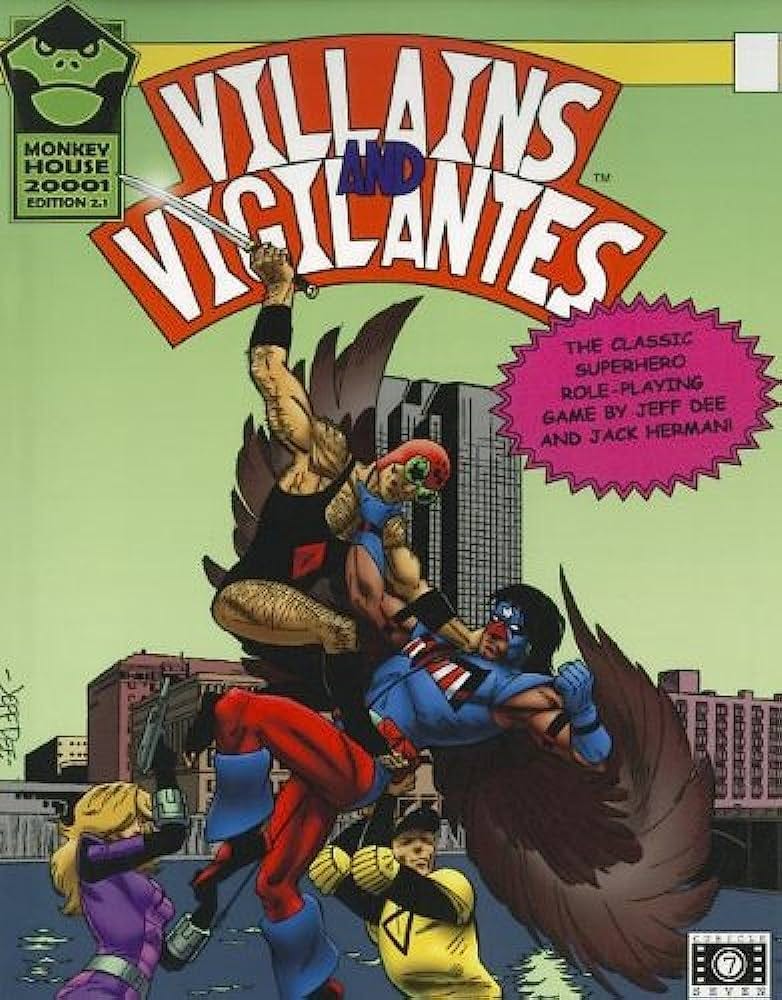
July 16th’s selection, Villains & Vigilantes, has taken the second approach in all of its editions but it hit the ball out of the park with it’s second edition. The Monkey House Games Edition 2.1 published in 2010 is my favorite version of the game rules and it also happens to the one that is published by the creators. Find a copy. Buy it and play.
July 17 — Warhammer Age of Sigmar Soulbound by Cubicle 7.

As I argued above, I still count Warhammer games as independently published because they are the work of an independent outfit and not the megalith that is Games Workshop. In this case, I chose their controversial Age of Sigmar setting. Many longtime fans of Warhammer Fantasy, in both its Battles and Role Play versions, are very critical of the Age of Sigmar setting and dismissively call the Stormcast Eternals “Sigmarines,” referencing their similarity to Space Marines in 40k.
While I see that connection, especially in one of the sculpts for the Eternals, I find the connection between Stormcast Eternals and the Radiants of Brandon Sanderson’s epic Stormlight Archive series to be much stronger, and much more appealing. This is a relatively unique setting that uses interesting mechanics (I’ll give a full review later in the year) to create a fun experience. I’ve read through the new Stormlight Archive RPG and I think that Soulbound is a better fit for the setting, and I think that’s saying something.
July 18 — Masks: A New Generation

Sheesh. I love superhero role playing games. I’m not a big fan of Powered by the Apocalypse games in general because the math of the mechanics isn’t well thought out, they are too “jargony” in a hobby that has enough hard to understand jargon, and they don’t tend to acknowledge the fact that the mechanics are a modified version of Inspectres and FATE. All that aside, the pure love of the genre that comes across in the writing as well as the well thought out character archetypes make Masks a fun game to play.
I still think that the game is a little too jargony in mechanics. I find the use of the term “Moves” instead of abilities/actions to be unnecessarily obscure and I don’t like that Critical Role’s new game Daggerheart has also adopted this terminology. In play, I’ve found that “moves” tend to narrow down how players describe their actions in play because they use the “move name” rather than describe what they are doing. I’d much rather hear, “I attack it with my broadsword” a hundred times in a session than “I directly engage the threat” again and again and again.
July 19 — Mazes by 9th Level Games
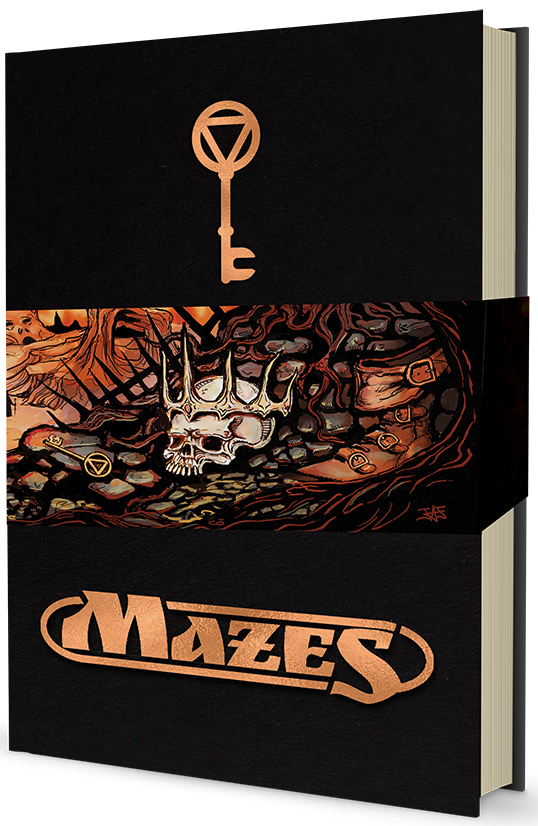
Give me a game where the mechanics and setting blend together to create a unique experience and I’m all in. Mazes has an interesting polyhedral based system that connects which die (d4, d6, etc.) that a player’s character uses to resolve actions with a specific kind of play. All die rolling is done by players, like the next game, which makes the game easy to run and focuses play on the player characters and their actions rather than on NPC/Monster actions. The link is for the pdf, but track down a physical copy.
July 20 — Symbaroum by Fria Ligan

Did you ever want to play a game where the Dark Forest seemed really dark? That had a robust setting where the magic system and mechanics reflect a very particular world? That has mechanics that are player focused, players roll all the dice, and which has some of the most beautiful art in any RPG? If you answered yes to any of those questions, then Symbaroum is for you. It’s a fantasy setting that captures the dark mystery of older and more dangerous fantasy and merges it with a touch of Sword & Sorcery. Rich and thematic.
Symbaroum is a game that I keep going back to again and again for inspiration as I design my own game setting. It has the right balance of dire stakes and potential for high heroics and draws deeply on a very specific mythology to create a tight and moody setting with a very good mechanical foundation. Even including little oddities in translation, the game is easy to learn and understand and really fun to play.
July 21 — Leagues of Adventure from Triple Ace Games.

Paul “Wiggy” Wade-Williams is almost single-handedly the reason I came to love Savage Worlds as a game system. He was a prolific creator in the early days of that system and his ability to mash together ideas to create high concept adventures amazed me. I bought everything with his name on it and was never let down. After a while, he launched his own game company called Triple Ace Games and used the Ubiquity engine as the mechanics for a number of settings.
Among my favorites is Leagues of Adventure, a Steampunk game that perfectly captures the fun and excitement of the Secret Adventures of Jules Verne series or your Steampunk book/show of choice. It’s right up my alley and the Ubiquity system is easy to learn and requires only the dice you already have to play. You can use any sized die to resolve actions because all that matters is even and odd.
July 22 — My Life with Master
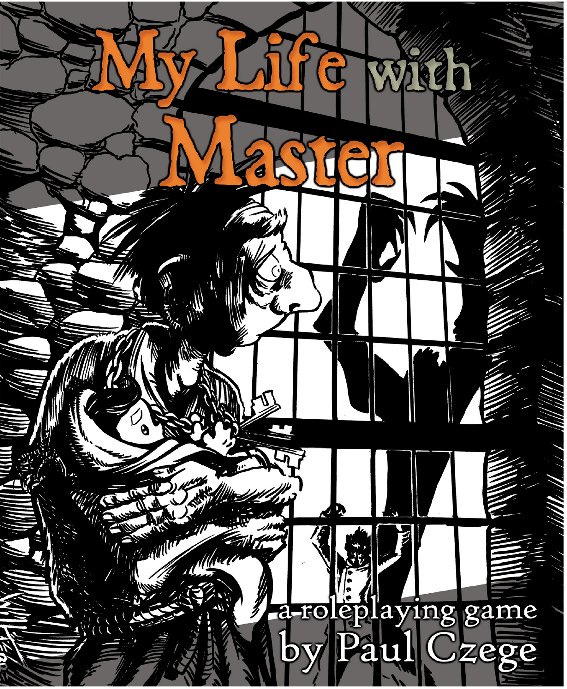
My Life with Master is a game that was designed by Paul Czege and embodies a lot of the preferences of the story gaming community in the early 2000s. Many story games migrated away from tactical combat and focused on mechanics that examine interpersonal relationships and humanity, often in disturbing ways. My Life with Master is a potentially deeply disturbing game where the players take the role of minions for a villainous “Master” (played by the GM) who is the cause of fear and dread over a local village. Your first thought might be that you are portraying Igor to the GM’s Frankenstein. That’s one possibility for a PC. Another possibility is to play The Creature itself as well. The players try to gain enough humanity, self-possession, and “love” to rise up against the Master, but must do his will as they grow. I don’t think it’s an accident that a lot of modern role playing game safety tools came out of the story gaming community, though discussions of such tools date back much further and include discussions in Interactive Fantasy in the early 90s. When you are dealing with subjects as dark as what many story games were focused on, you need to make sure that everyone is on board and to set norms of what is acceptable in your group. I’ll do a discussion on the “Magic Circle” and its relationship to safety tools at a later date, but in a game like My Life with Master it is vital that everyone know the boundaries of play. This is not a game to play with an edgelord, unless everyone in your group is an edgelord.
July 23 — Shiver

Shiver from Parable Games is a game I hadn’t heard of prior to backing the Kickstarter for the “Gothic” expansion to the game, but I’m glad I discovered it. Stylistically, I think it’s a really cool game, but I am most fond of its mechanics. It’s a simple die pool system where players have statistics with an “Attribute” rating and a “Talent” rating. These are combined to create die pools of differing types and you try to roll successes to achieve actions. All fine and good and typical so far, but when you look at the talent die you notice a little echo of John Harper’s Lasers & Feelings. The talent die has different possibilities when used on mundane or arcane actions. I will do a longer review later, but this is a very cool game.

Speaking of cool, Parable Games just released stats for Jimothy the Raccoon as a cryptid for use in Shiver. You can follow their latest crowdfunding project to get a pdf of those stats.
July 24 — Mothership

Mothership It’s not often that a game builds a huge community, expansions, and spinoffs when you’ve only printed a part of the full game, but that’s what Sean McCoy’s Mothership has done. The only rules available so far, unless you backed the Kickstarter or did a late pledge, are those in the Player’s Guide. The game incorporates three different die mechanics, but the primary one is percentile based and there are enough rules in the Player’s Guide and sample adventure to build off from, and boy did the community do just that. Mothership made it clear that there were a market and community for horror games outside of It Which Shall Not Be Named because it’s the dominant game in the genre.
July 25 — Never Going Home

Never Going Home isn’t a horror game where you experience a lot of jump scares, though I guess that could happen, but it is one where you imagine the horrors of a very real and terrible war with the addition of supernatural elements. It’s Gallipoli without the laughter. Because the game makes it easy to create new characters, and is unit rather than individual focused, the terror comes not from a single loss but from repeated loss as the game moves forward. It’s the kind of dread you feel as you realize, around hour 15 of playing Darkest Dungeon, that you’ve come to think of the adventurers as disposable resources to be managed and begin to wonder why that doesn’t upset you more, but of course in wondering you are beginning to feel the real sense of dread.
July 26 — Tunnels & Trolls

Tunnels & Trolls may technically break the “independent creator” rule at the moment. Rebellion Publishing just bought the game rights from Webbed Sphere Inc. who bought the rights from the Rick Loomis estate in 2021. Webbed Sphere Inc. didn’t really do anything with the property; Rebellion Publishing looks like they will do more with the property. The game provides an opportunity for them to dive deeper into the tabletop gaming space, something they’ve already shown a desire to do with their republishing of older Judge Dredd board games and an in-house magazine based RPG series called Adventure Presents. I’ll be posting reviews of the Adventure Presents games later this month.
Tunnels & Trolls is one of the earliest roleplaying games ever produced and it was created as a direct response to Dungeons & Dragons. Lawrence Schick wrote that the game was the second role playing game ever published in the invaluable history of rpgs Heroic Worlds, but Jon Peterson’s analysis regarding the Rules to the Game of Dungeon demonstrate that it was beaten to the punch by another small print run game.
Tunnels & Trolls was created as a reaction to Dungeons & Dragons. Some friends of Ken St. Andre wanted to play D&D and handed him a copy to run. He couldn’t understand the rules, and having read the “Little Brown Books” many times I can see why. Ken St. Andre describes how he created the game in the introduction to the preprint of the 1st edition as follows:

The key point here is that he wanted a simple game that was not derived from miniature gaming. In that way, his game is very different from Dungeons & Dragons. While we may play D&D with a theatre of the mind approach, or not, the mechanics of the game are very much rooted in miniature skirmish rules. I’ve got an extensive work on this coming soon that includes references to Geoff Engelstein’s excellent Building Blocks of Tabletop Game Design.
Tunnels & Trolls isn’t based on skirmish rules, instead combat (when it’s done at all) is based on abstract die roll comparisons where the higher roll wins and the difference is the damage. For example, a player character might roll 4d6 and add 12 to the roll for high attributes, while a monster might roll 4d6 and add 20 to the die roll for its monster rating (only in the first round in some editions after which it would be +10). It’s very abstract and open to interpretation.
The Saving Throw mechanics of T&T are also very different from D&D at the onset. First, because they were attribute rather than attack type based (modern D&D “borrows” from T&T in this respect) and second in that they are given a “level of difficulty” so you might have to make a 2nd Level Strength (or Luck) Save in Tunnels & Trolls. The basic formula for a saving roll on 2d6 in T&T is:

or for higher levels the following equation minus the stat.

So, a first level character with an average (11) Luck would need a 9 or better on 2d6 to save. That might seem very unlikely at first (approximately 28%), but the fact that Tunnels & Trolls is the first “exploding die” system (in this case exploding on doubles) increases the likelihood significantly and adds a nice random element to the game.
I highly recommend the 5th edition edited and partially illustrated by the very talented Liz Danforth.
July 27 — Vaesen

Vaesen A beautifully illustrated game from Fria Ligan that uses their Year Zero game system, the same system underpinning Tales from the Loop, and that focuses on Nordic horrors. While many modern horror games focus on cosmic horror, it’s nice to play a game that is deeply rooted in a particular mythology…a real mythology. It provides not only a role playing game experience, but an educational one as well. One of the best things that has come out of the internet age is that Americans get the opportunity to experience some of the really cool stuff Sweden has been doing in the hobby space.
July 28 — Cryptworld (aka CHILL)

Cryptworld Before Gary Gygax was ousted from TSR, he moved to Los Angeles in order to try to get a development deal for Dungeons & Dragons and other TSR properties as the head of Dungeons & Dragons Entertainment. While he was out there, two of his early partners (the Blume brothers) ascended to manage TSR’s day to day business. As a result of their management, TSR posted a net loss of $1.5 million and had to fire 75% of their staff. This is one of the reasons Gary returned in an attempt to take back control of his company, a task he hoped that Lorraine Williams (the sister of his friend and collaborator Flint Dille) would help him accomplish. That didn’t work out as Gary had hoped/expected and that has been the topic of a number of books. I won’t go into discussion of that here, but will recommend Jon Peterson’s books as a good place to start. I did say he was a great historian after all.
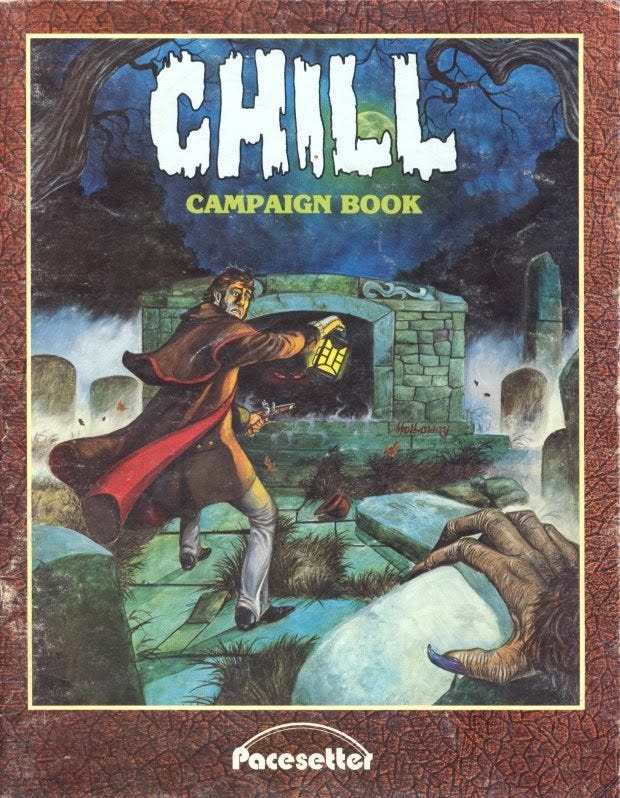
Among the 75% of TSR staff that were fired were Mark Acres, Andria Hayday, Gaye Goldsberry O’Keefe, Gali Sanchez, Garry Spiegle, Carl Smith, Stephen D. Sullivan, and Michael Williams. This talented group of game designers went on to form Pacesetter Games, one of the most ambitious game companies of the 1980s and one of the most creative game companies in the history of the hobby. Among their creations was an excellent game called Chill, a horror game with a very different vibe than The Game That Shall Not Be Named. Where that other game focused on cosmic horror and the death of player characters etc., Chill had players play characters who were members of an organization called SAVE that battled the supernatural and protected regular people like you and me. The world wasn’t ready for the game, even with its solid mechanics the “fighting against evil” vibe didn’t appeal to the horror rpg fans of the day. I guess we’d have to wait a decade for Buffy and the Winchesters to create the fanbase. Chill’s first edition is a great game that is not easily available today, except thanks to Dan Proctor and the folks at Goblinoid Games. They acquired the rights to a number of Pacesetter games, and to the mechanics, and used those to create Cryptworld. Cryptworld isn’t identical to Chill, though it plays very similarly, but it is a very worthy successor. Much more so than the 3rd edition Chill that funded on Kickstarter. If you are looking for a game to play this Halloween, make it Cryptworld I know I will be playing it.