


This posti is a greatly expanded version of an article I originally posted way back in January 12, 2010.
Back in January of 2010, I posted a list of my ten favorite roleplaying games of the “Aughts.” It was, as far too many of my older lists were, an exercise in confident assertions delivered without any real justification. These are kind of the literary equivalent of throwing darts while blindfolded and then insisting you aimed. When I wrote the post, I promised future posts explaining why each game was so remarkable. I did not write those posts, though I have written about many of these games in my recommended games here. I am a little ashamed of myself for not writing those posts, but I still have yet to finish my Megaforce review so it looks like I still suffer from “I’m going to write about” syndrome. Having said that, I believe that sixteen years feels like sufficient penance and consider this revisit as finally paying the debt I owe.
I still stand by the list substantially a decade later and feel even more comfortable using the term “aughts” after hearing my daughters talk about the 90s as the 1900s. Yes, there are things I’d reconsider, a couple of omissions I’ve made peace with, and at least one entry where I’ve become considerably more complicated in my feelings. But the core conviction that the Aughts were a genuinely remarkable decade for tabletop RPGs has only strengthened with time. In many ways it was the last decade where individual games boldly pronounced that they were for just one style of play and if you wanted to play another style of game, you could play a different game. Where modern games try to appeal to every one of Robin Laws’ gamer types, games in the aughts felt free to focus on just one style of gamer. Today’s games try a little too hard to reach a middle ground, something I partially blame 4th Edition D&D for…even as it makes the list.
Let me tell you why each of these games earned its spot.
My Favorite Games from the Aughts
1. Dungeons & Dragons 3rd Edition (and 3.5)
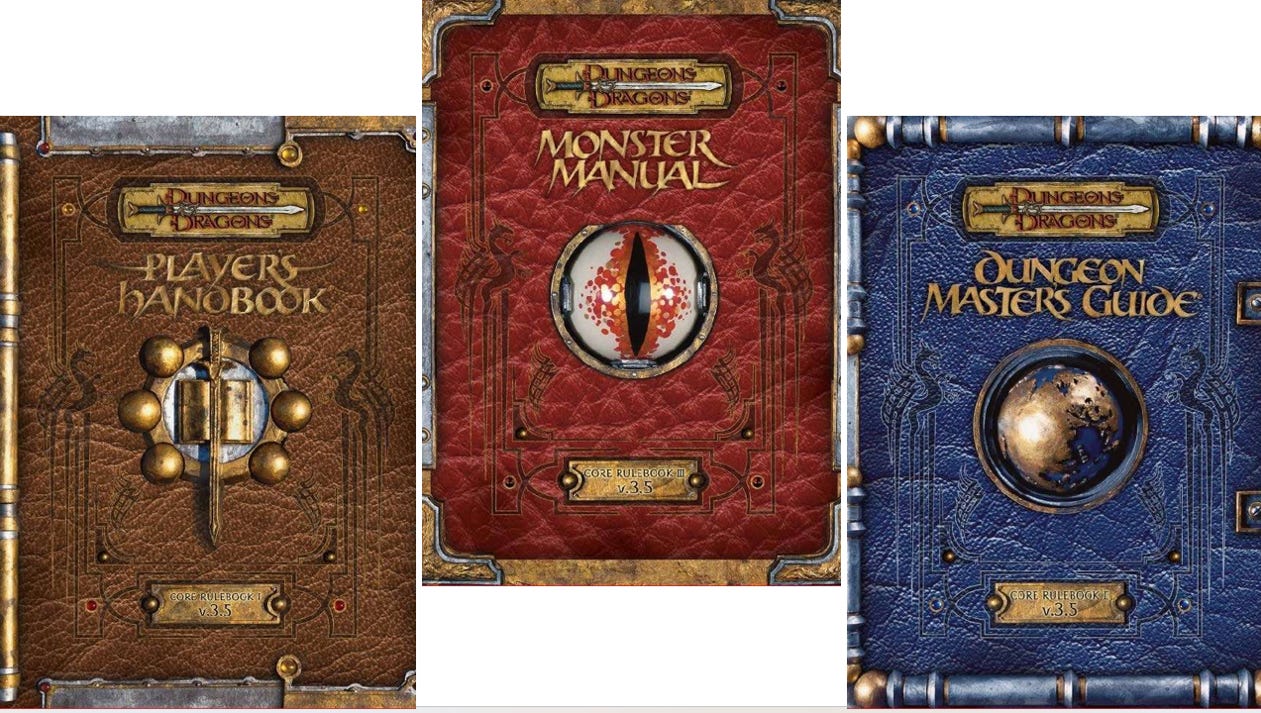
I’ll confess something that will surprise no one who knows me: I was skeptical of 3rd Edition when it dropped in 2000. I had a collection of AD&D 2nd Edition books that represented years of investment, both financial and emotional, and I had the instinctive conservatism of someone who’d learned to navigate one system and wasn’t eager to start over. I was, in the technical sense, wrong, but the game is still one that I have conflicted feelings about.
What Monte Cook, Jonathan Tweet, and Skip Williams accomplished with 3rd Edition was a genuine unification of the game’s often contradictory mechanical legacy into something coherent. The d20 system gave every resolution a common chassis. All you had to do to resolve any action in 3.x was roll a d20, add a modifier, meet or beat a target number. This sounds like an obvious mechanic until you remember that its predecessors had different subsystems for almost everything. The attack matrix, grappling, THAC0, secondary skills (for the AD&D fans) were all handled differently from one another.
The feat system deserves particular credit. It was the mechanism that allowed player characters to feel genuinely differentiated without the baroque class-and-kit scaffolding of 2nd Edition. A Fighter who took Cleave played differently from a Fighter who stacked Combat Expertise. That’s not nothing. It’s actually quite a lot.
3.5, released in 2003, tightened what needed tightening and broke a few things that had been working fine, which is the natural law of revised editions. But together, the two versions represent the moment the RPG hobby re-entered mainstream awareness after a bruising decade of contraction and moral panic, and they deserve enormous credit for that. The problem with the system, as I see it now, is that it borrowed too much from GURPS and HERO. In retrospect, it shouldn’t have suprised me how many mechanics (like Hardness and the skill system) would reflect HERO mechanics. After all, Monte Cook was a lead designer on the system and he worked on HERO for almost a decade. My thoughts on this are more articulated in my 2024 article on how D&D got GURPSified.
I Liked D&D More Before it Became GURPS

“Almost all old school dungeon delving is an off the cuff Player VS DM negotiation made in the moment.” — Jim Zub
2. Savage Worlds
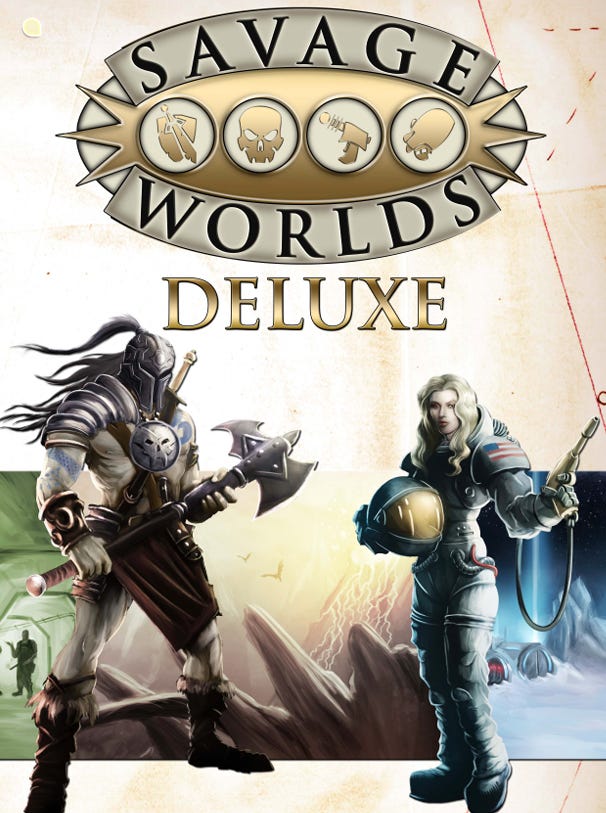
If 3rd Edition was the game that consolidated and professionalized a hodge-podge system, then Savage Worlds was the game that asked what you’d get if you optimized for fun per hour at the table rather than for simulation fidelity or strategic depth. Shane Lacy Hensley’s 2003 masterwork adapted the complex step-die pool system of Deadlands and filtered it through the simplified mechanics of the Great Rail Wars miniature game and found the perfect balance of “role” and “roll” play.
The answer, it turns out, is an “inspiration system” based on “Bennies” that feels like like it was invented by someone who actually plays games with other humans. I used the term inspiration there on purpose as D&D 5e’s inspiration system shares a lot with Savage Worlds’ Bennies. Then there’s the Wild Die mechanic. This mechanic has players roll a trait die and a d6 simultaneously and take the better result in order to show how their heroic characters are slightly better than the average person, they are “Wild Cards.” It doesn’t matter whether your attribute is d4 (the worst) or d12 (the best), you roll an additional d6 and take the best result. This is the kind of elegant solution to the asymmetry problem of demonstrating the heroic nature of PCs without too much power creep that seems obvious only in retrospect. It provides just enough cushion against catastrophic failure to keep the narrative moving without insulating characters from genuine consequence.
“Fast, Furious, and Fun” is the game’s own tagline, and this one is simply accurate. Savage Worlds is the game I reach for when I want to run something at a convention, when I want to introduce someone to the hobby, when I want to have Super Heroes fight Cthulhu, or when I want to run a pulp adventure involving dinosaurs in an unusual environment without spending four sessions on character creation. It is, in the best possible sense, a game that knows exactly what it is.
3. Burning Wheel
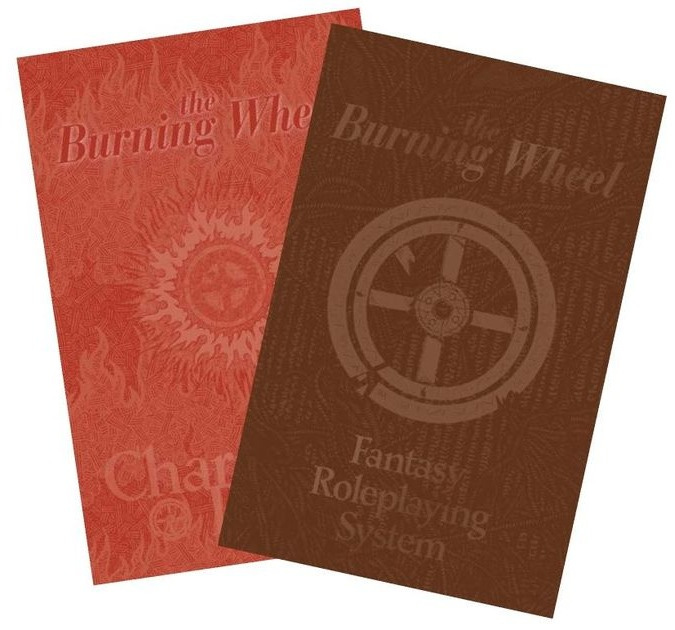
Luke Crane’s Burning Wheel is a game that took me a while to vibe with. It had an odd writing style that did things like call bad die rolls “traitors” and other snarky bits. Yet it has become a game I’d recommend to anyone who has decided they don’t like roleplaying games because they’ve never found one that takes human beings seriously. It marks a high point in storygame design and a lot of modern gamers who are using D&D for their more narrative games should actually be playing Burning Wheel. It does what they want much better than D&D.
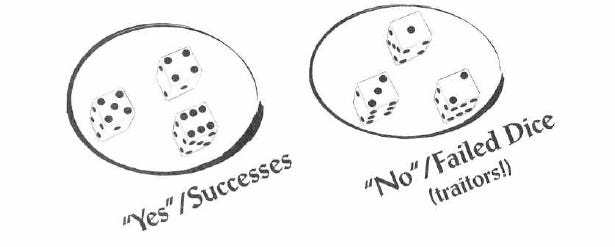
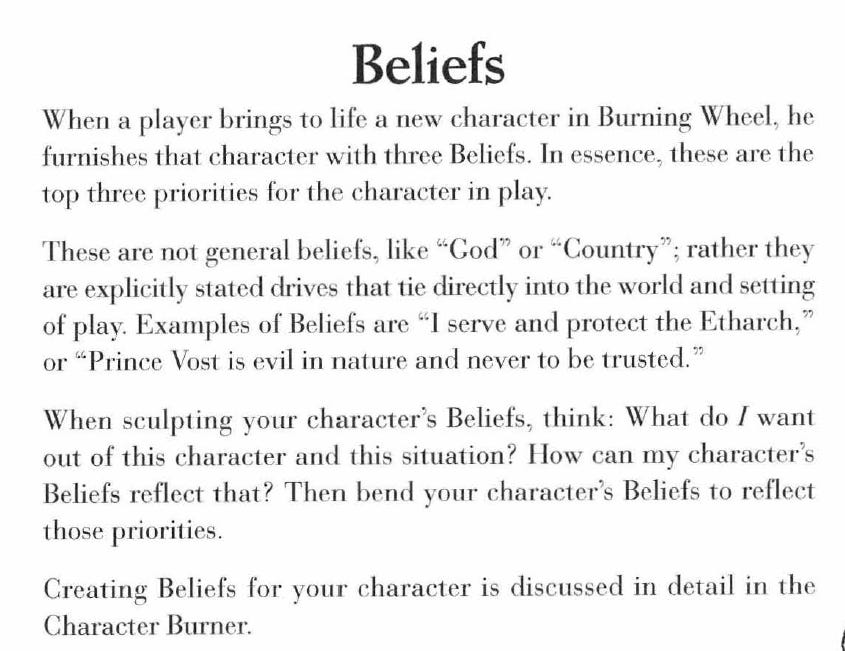
The Beliefs system is a central component of the game’s design. Each character has Beliefs which are player-authored statements that describe how your character views the world, what they think about another character in the setting, or what moral or philosophical principle they’d die defending. Belief binds your character to the world and shapes how you respond to challenges. The GM’s job is not so much to construct a plot that players play out but to find ways to put character Beliefs under pressure, ensuring that the action of the game makes ignoring your convictions costly. What the game calls the “give and take” is its core rhythm. This rhythm is a deliberative processs where the GM presents challenges, the players act on their Beliefs, circumstances change, and new Beliefs are written to reflect who the characters are becoming. This tension results in emergent narratives in a highly structured story focused environment.
The skill advancement system is where the game’s intellectual demands become most visible. In a system that echoes Runequest’s skill use to improve system, Burning Wheel skills advance by accumulating a required number of logged tests, but not just any tests. You can’t Morrowind your way to improvements here. The game distinguishes between routine tests, difficult tests, and challenging tests, and advancement requires a specific combination of the latter two. This means advancement is not simply a reward for playing; it’s a reward for taking risks you might fail. The tension between short-term success and long-term advancement is one of the game’s most genuinely interesting recurring decisions. Do you muster extra dice and pass safely, or do you hold back and log a challenging test you need? As with Runequest, practice exists as a separate subsystem for acquiring tests outside of active play, but it costs significant in-fiction time, which the GM is encouraged to make expensive.
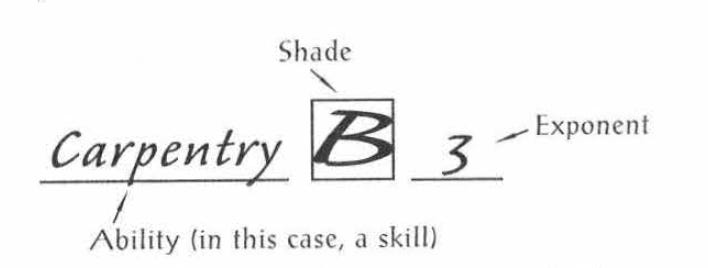
The dice mechanics are based on pools of d6s counting successes against a static obstacle that ranges from 1 to 10. This pool is represented by three factors. First, the name of the ability/skill being used, then the “Shade” of the die, and finally the exponent. The number needed for success on each die differs on the Shade of dice rolled. The default shade is Black and requires a 4 or more to be successful. The other shades are Grey (3 or better) and White (2 or better). The Exponent is the number of dice rolled in a challenge. Thus the Exponent (from 1 to 10) represents the amount of experience the character has with that ability, the Shade represents the heroic potential of that character. I won’t get into too much more detail here, but I will say that Luke Crane managed to mimic a step-die system using only six-sided dice with the Shade system. Every roll begins with a declared intent and a declared task, and a failed roll doesn’t mean nothing happens; it means the GM controls the outcome, which is frequently more interesting than success. The system is dialog in action and it is one of the most influential storygames ever invented. You should give it a try if that genre is your bag.
4. Trail of Cthulhu
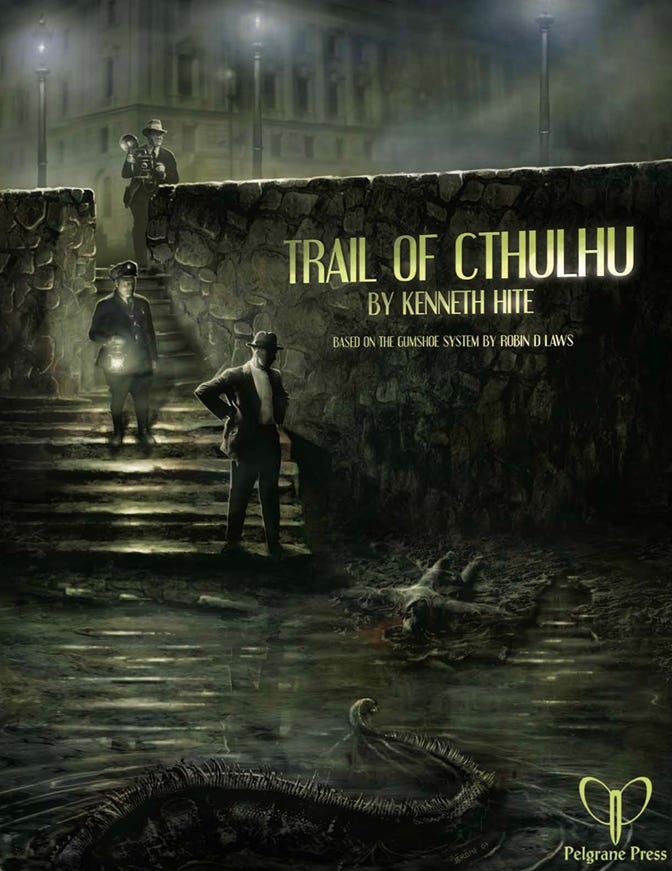
It should be no surprise that one of the most insightful game designers would find an innovative, yet in retrospect obvious, solution to a game design problem, but when I first read the GUMSHOE rules I was deeply impressed with what Robin D. Laws had created. Kenneth Hite adaptated that system in Trail of Cthulhu in 2008 and this adapation resulted resulted in a fantastic investigative role playing game. Investigative role playing stories and adventures are extremely difficult for game masters to run in most “quantified” game systems and Laws identified and solved the central design failure of how to handle them.
That failure is pretty simple. In most RPG systems, you can fail to find a clue. This sounds like tension. It is not tension; it is stasis. A mystery that cannot be solved because the detective failed a Spot Hidden roll at a critical moment is not a mystery, it’s a brick wall with atmosphere. GUMSHOE inverts the assumption. Investigative abilities, when used in the right context, automatically succeed at finding core clues. The drama lives not in whether you find the evidence but in what you do with it.
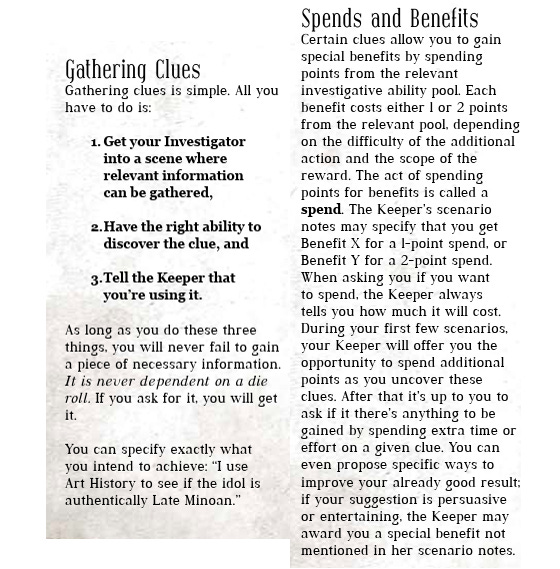
I’ve long used something similar in logic to this mechanic as a Game Master. My pre-GUMSHOE fix was to have the mystery be whatever the players decided it was. That can lead down some wonderful paths, and I still use that tool often, but sometimes the players want to solve an existing puzzle and GUMSHOE let’s them do that.
Hite’s took this chassis and drenched it in Lovecraft. His focus was less on the the Lovecraft of creature-feature shocks, but the Lovecraft of cosmic indifference and the fragility of the rationalist project. The Stability and Sanity split, distinguishing between moment-to-moment psychological resilience and the slow erosion of your character’s capacity to maintain a coherent worldview, they take inspiration from Sandy Petersen’s Lovecraftian horror rules from Call of Cthulhu and add some interesting depth. The Pulp mode and Purist mode give you the choice between Indiana Jones and actual dread. Hite’s game assumes you’ve read your Lovecraft, and if you haven’t then Ken has written some great companion volumes that will guide you through them.
5. Hero System 5th Edition

I want to be careful here, because loving the Hero System is the kind of thing that gets you baffled looks from a lot of modern gamers. It is a system in which character creation can, without exaggeration, take longer than some short novels. It is a system that hands you a construction toolkit rather than a finished product and argues that this is a better way to present a role playting game. It is one of the most STEM-coded mainstream RPGs ever designed, and I say that as someone who finds the intersection of game design and analytical reasoning genuinely delightful. Like GURPS, and the “war game” Car Wars, the character creation system provides a beautiful kind of puzzle solving joy for those who embrace it. It is a wonderful solitary game.
It is also, once you’ve mastered an understanding of the rules, among the most “precise” RPGs I have ever played. The Powers system allows you to model essentially any fantastical ability through a modular construction language of base effects, advantages, and limitations. You can easily create powers or spells that allow for flight powered by solar energy, telepathy based on sugar consumption, or a force field that only protects against magic. If you want to run a game where the mechanical distinction between Iron Man and Spider-Man (or even the “biological vs. technological” Spider-Man) is easily distinguishable at the character-sheet level, Hero is your only honest answer.
5th Edition, released in 2004, was the culmination of two decades of iterative refinement. The sheer conceptual ambition of a system designed to run superhero campaigns, high fantasy, space opera, and covert action with a shared mechanical core remains impressive. That it largely succeeds is remarkable. My personal favorite version of the Hero System is the one used for 4th Edition Champions that was published in the 1990s, but the one I admire the most is the 5th edition. Steven Long, who wrote a lot of great 4th edition era products that stretched the older version of the rules, has a truly deep understanding of the underlying mathematics of the Hero system and he refined them even more with this edition.
I’ll just give you one quick example before I move on to the next game. Making a character in the Hero System is like building a computer from scratch. In building your own computer, you need to know a bit about von Neumann architecture and the manufactured parts that each unit requires. You don’t need to know it’s called von Neumann Architecture (though I do recommend reading John G. Kemeny’s Man and the Computer in which one of the inventors of the BASIC programming language shares the details of von Neumann’s lecture at Los Alamos about binary thinking machines.
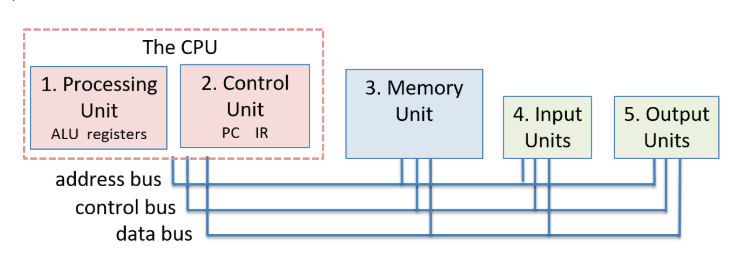
In building a Hero System character, you have to understand the foundations of how the mechanics of the system work at the unit level. You need to understand what buying 5 points of Strength means and we can get a bit of a start by looking at the character sheet.
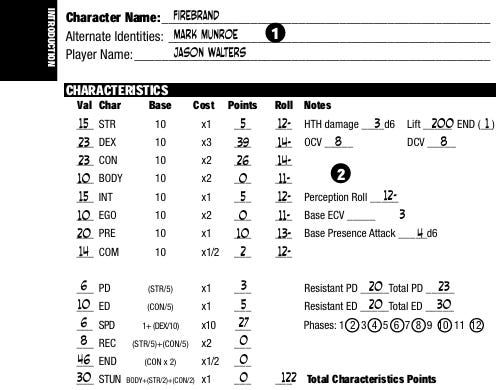
Those five points get you:
1d6 of physical damage at a range of 0 at a cost of 1 endurance when used
Double the lifting capacity of the prior 5 points that also costs 1 End to use
1 point of “Non-Resistant” Physical Defense
1 point of Recovery
2.5 points of Stun
1 “Skill Point” on Strength Based Checks
I know that there are a lot of terms in there that you may not understand. For example, “non-resistant” means defense that doesn’t work against “killing” attacks. At first glance, it looks like the five points you spend on Strength get you more than 5 points of value…and they kind of do. Without getting too detailed, I will focus solely on the “1d6 of physical damage at a range of 0 at a cost of 1 endurance when used.” The most fundamental mathematical concept in Hero is that 1d6 of Damage at a range greater than 0 costs 5 points and 1 endurance and that 5 points of Defense (at 0 endurance) costs 5 points. This is “Dune Math” or “Wargaming Math.” The underlying assumption is that defenses are cheaper than the “average” damage output. In this case 3.5 damage for 5 points and 5 points of defense for the same cost.
Defenses and attacks have “types” like physical, mental, energy, etc. that all follow this pattern. Notice that the 1d6 provided by Strength is at a range of 0, when a normal spend of 5 points adds 5 inches (10 meters) to the range of a power. Most of us cannot use our full Strength at range, though we can throw things and so I should have included that above since that lets you use “some” of your Strength at range, so Strength is (in part) a purchase of 1d6 of damage (5 points) at No Range which adds a -1/2 modifier to the cost we would pay. That -1/2 is added to the denominator when calculating how much a power costs. A power normally costs (Cost/1), or just the cost in points. If you add a limitation like No Range, this is added to the denominator. In this case, the new cost would be (Cost x 1)/1.5, or 3.3333 rounded down to 3. Advantages increase the x 1 in the numerator. So that part of Strength makes up approximately 3 points of the value.
The game prepackages a lot of combined powers, for example the Armor power is the Force Field power with 0 Endurance Cost, and sometimes they end up being a cost savings as it is with Strength. The point is that the game has costs for Damage, Defense, Movement, Range, etc. baked in and that those are the building blocks you need to think about when designing abilities. The more you understand what the constituent parts are, the more creative you can be with the system. Yes, it provides those pre-packaged bundles, but it provides a lot more. For me…too much more, which is why I prefer 4th edition. I may prefer the 4th edition of Champions, but I recognize that Steven Long’s design here is one of the most complex and balanced games ever made. That I prefer the slightly fuzzier, but still very quantified, earlier game is no insult.
6. Dragon Warriors

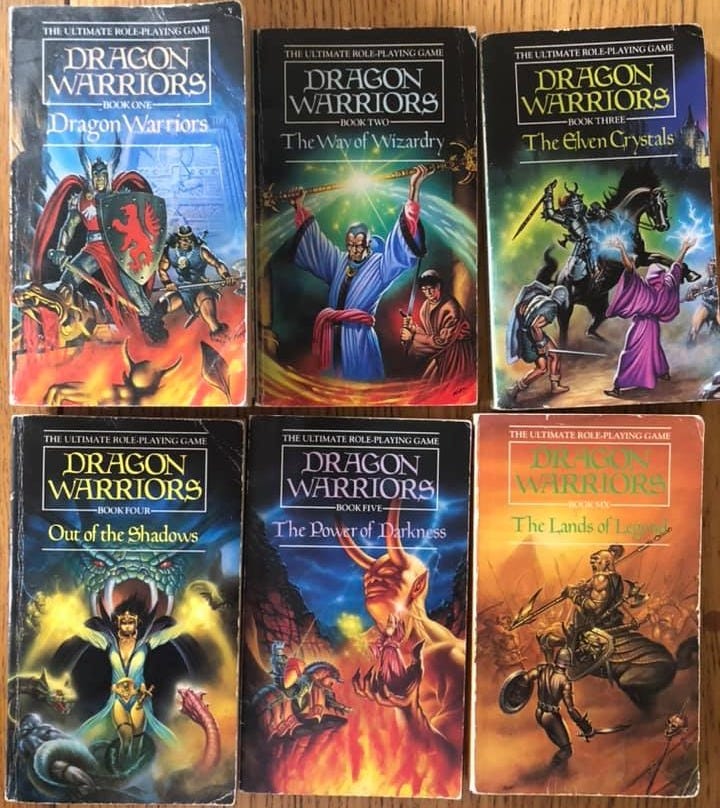
Dragon Warriors (currently available as a Pay What You Want on DriveThruRPG from Serpent King Games) is the anomaly on this list, and I mean that as a term of endearment. The game was originally published in the United Kingdom between 1985 and 1986 as a series of inexpensive paperback books. The rules were designed by Dave Morris and Oliver Johnson and aimed at readers who might be encountering roleplaying for the first time through the fantasy novel section of their local bookshop. Dragon Warriors was out of print for two decades before Magnum Opus Press brought it back in 2008 in a beautiful single-volume hardcover. Its inclusion on a “best games of the Aughts” list is primarily due to the fact that this is when the game became more widely available outside the United Kingdom and because the game had several significant edits in the new edition.
The system is elegant in the way that things designed for accessibility tend to be: attributes, a roll-under mechanic for most tasks, and a combat system that is genuinely tense without being complicated. What distinguishes Dragon Warriors from its contemporaries is its setting. “Legend” is a mythologized dark-ages Europe that draws on folklore rather than Tolkien, on the strange and threatening supernatural of the medieval imagination rather than the taxonomy of orcs and elves. The monsters feel like they belong to a world where people are genuinely afraid of the dark, which is exactly the atmosphere the game intends.
In my opinion Dragon Warriors is one of the best Sword & Sorcery game systems ever designed. The authors (Dave Morris and Oliver Johnson) have moved on to using GURPS for their adventures in the Land of Legend, but I think this is a mistake. While there are different subsystems for magic and melee combat, a reflection of the era the game was originally created, the game’s combat system is solid and the magic system is tied to Legend much more that GURPS sould be natively. The game is heavily class driven and each class feels different and has a distinct role in the world and I am a huge fan of the combat rules.
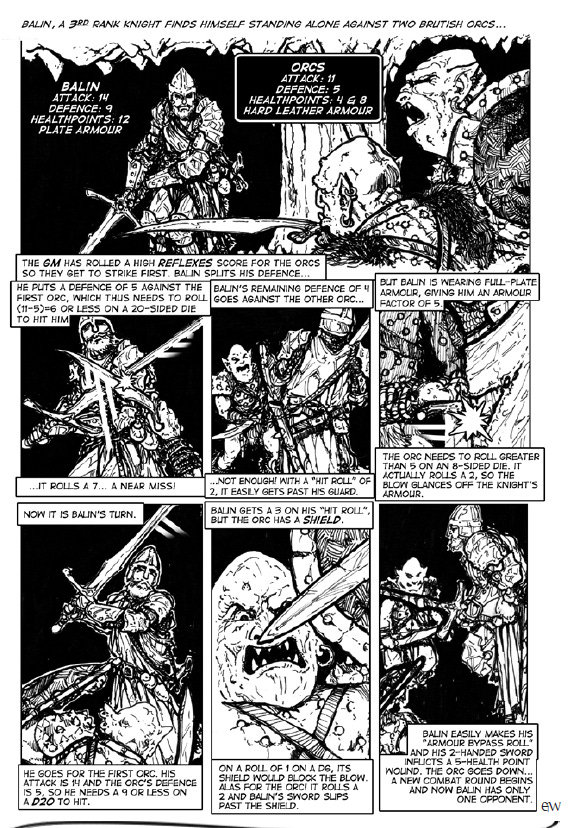
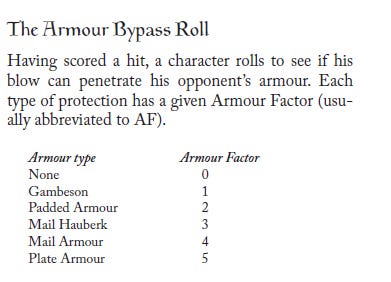
In this case, you roll to hit and then roll a penetration die for your weapon to see if it gets through the armor. After that, the weapon does a fixed amount of damage (modified by your Strength). I adore the armor bypass rule because it allows weapons like Crossbows and Bows to do the same amount of damage while also representing the armor bypassing tendencies of the Crossbow. The Bow rolls d6 to bypass armor and the Crossbow rolls a d10. The armor factor, aka armor bypass number, is an elegant solution to the “does armor make you harder to hit or harder to hurt” question. Here, it makes you harder to hurt but it isn’t mere damage reduction. I’ve written about the rpg damage algorithm in an older post, so I’ll share that rather than go down that rabbit hole, but this (and the way Palladium RPG handles it) is a wonderful way to address that question.

7. Dungeons & Dragons 4th Edition

I’ve said this many times on this Substack and elsewhere. I love 4th Edition D&D. I’ve loved it for as long as I’ve played it. My all time favorite editions of D&D are B/X and 2nd Edition AD&D, but I have had so much fun with the 4th Edition system. I’ve used it to play a Star Wars adventure and even used it to run a Phoenix Wright Ace Attorney game. It’s a flexible and fun system. I know this puts me in a minority so small that we could probably hold our annual convention in a moderately sized broom closet, but that doesn’t change my love of the game.
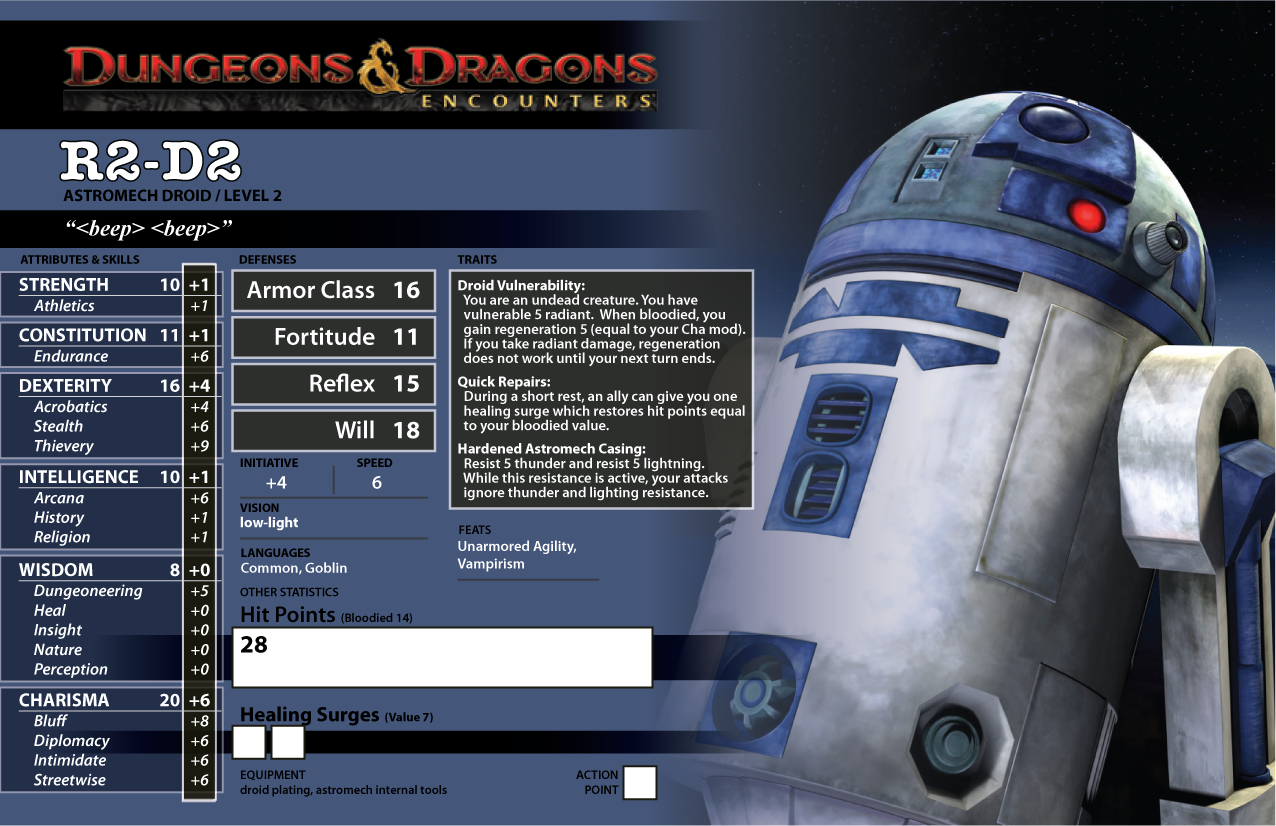
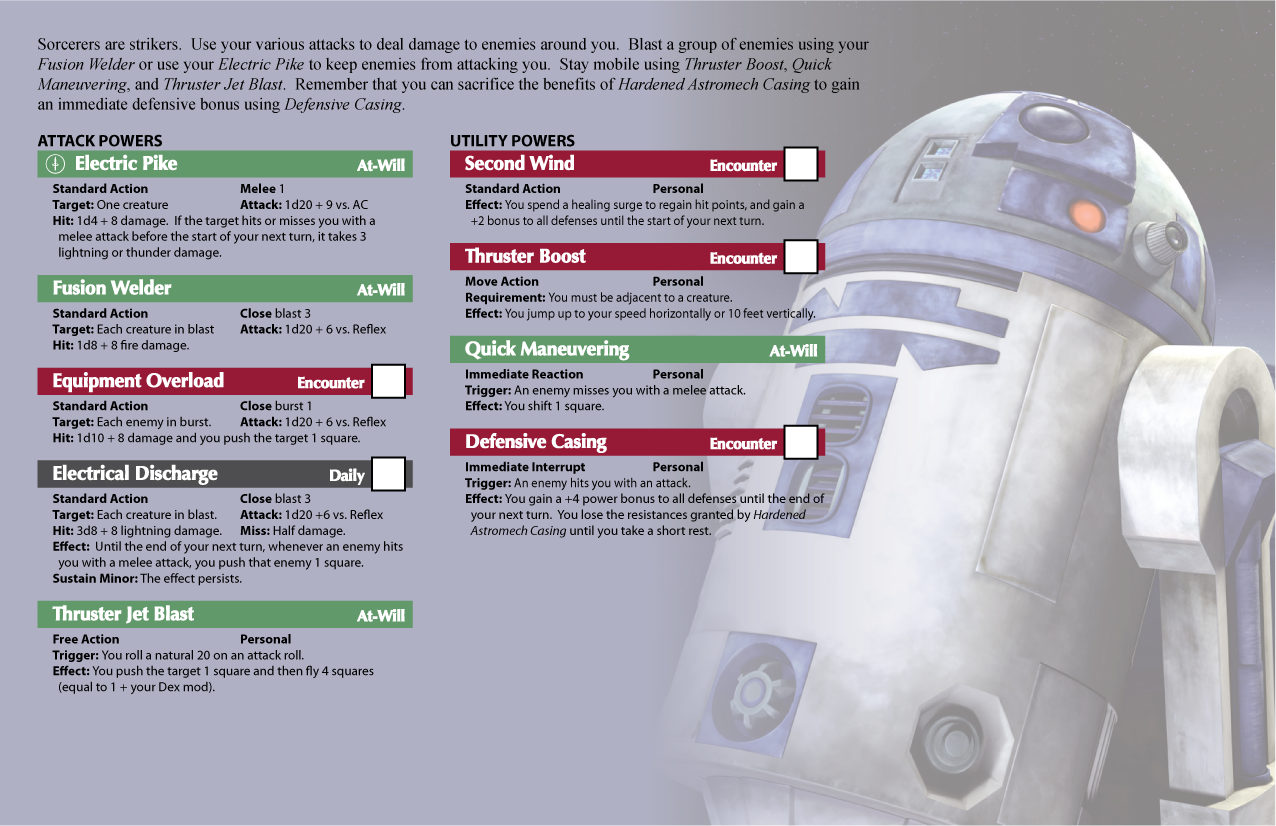
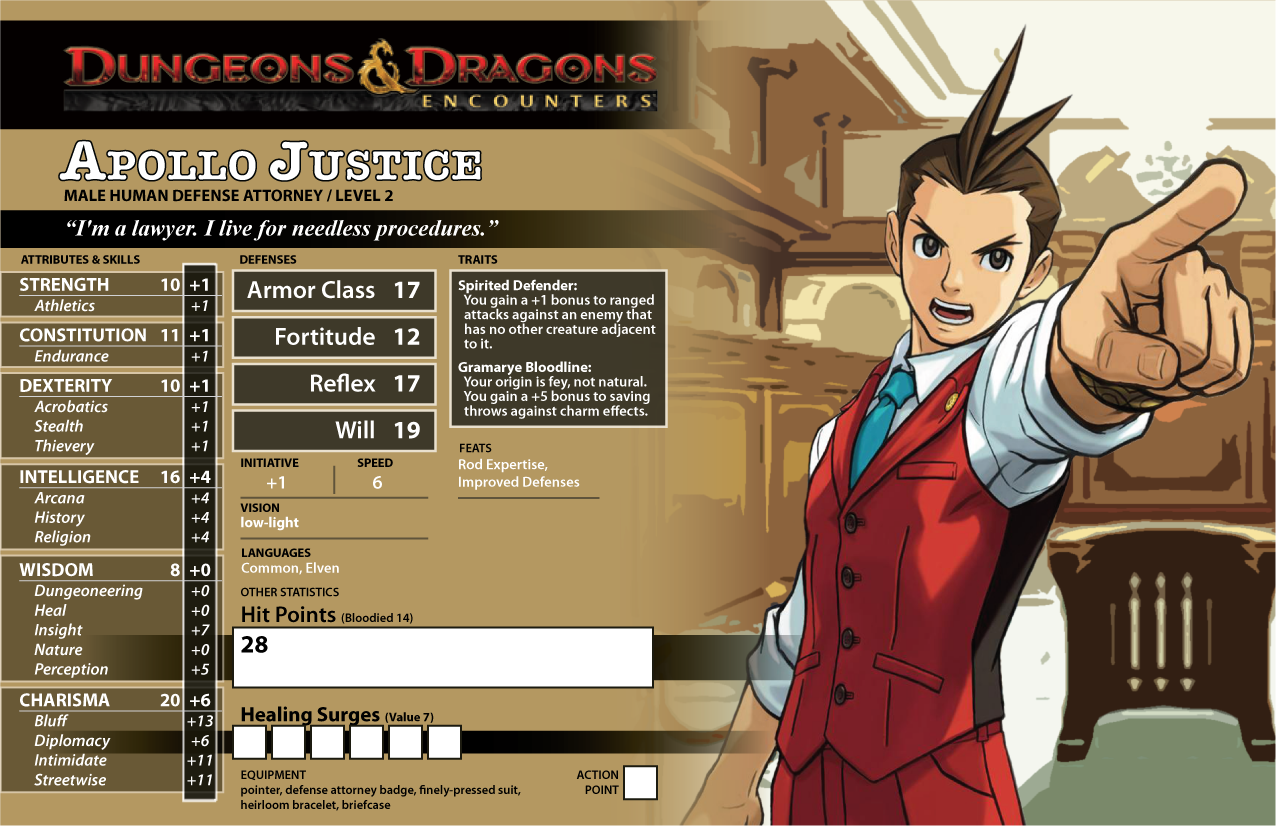
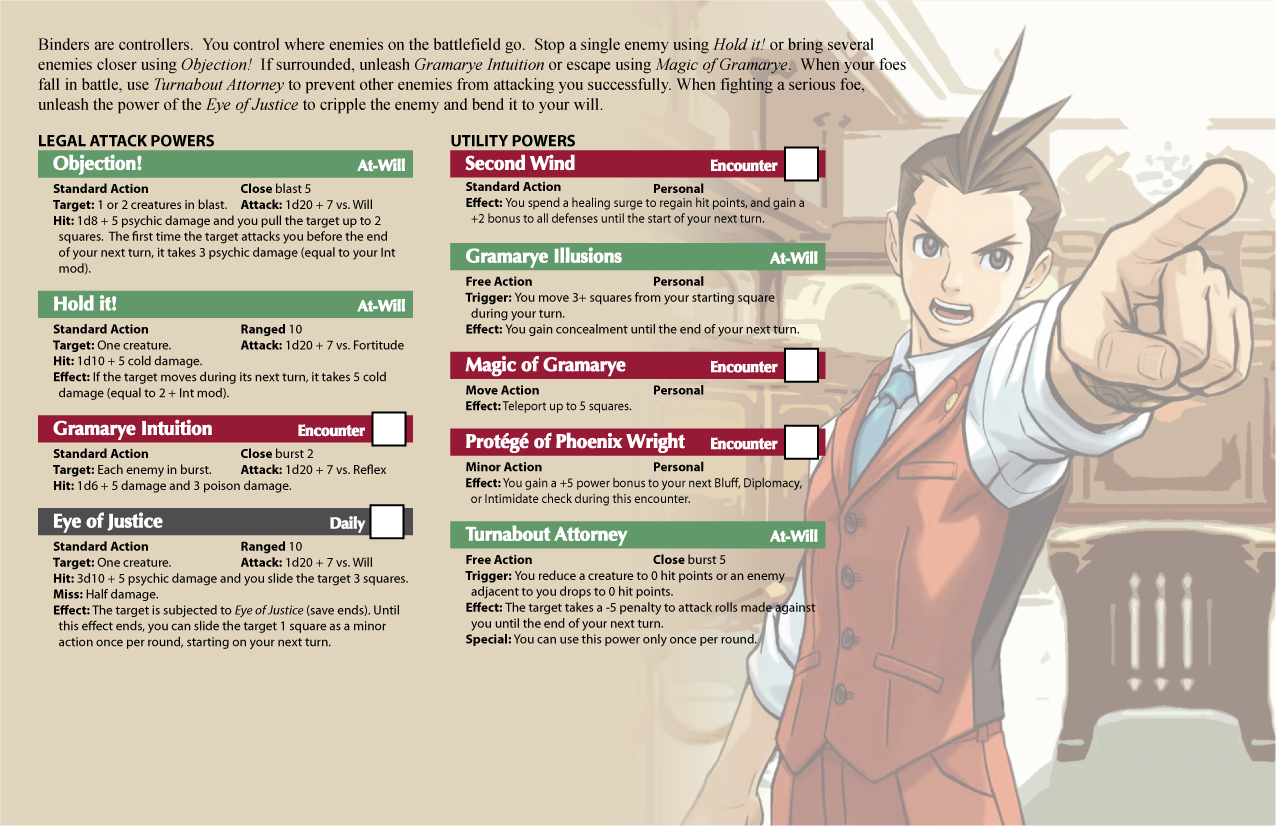
I’m not new in my defense of 4e either. I’ve been defending the game since before it launched a wrote a small defence in February of 2008. I’ve written a couple of posts on Zones of Control in D&D and how 4th Edition wasn’t an outlier on being miniatures dependent in play. An my most thorough defense of 4e was my discussion in a 2024 post titled How Not to Present/Market Your RPG: Dungeons and Dragons 4th Edition.

I’m not going to stop liking it and writing about it just because it remains unpopular. I think it is a great game and very much a D&D game. In many ways its returned reliance on class over feats and streamlined skill rules made it a return to older playstyles where 3.x had become GURPS/Hero and abandoned the player focused problem solving for skill rolls over skilled roles.
Here is my basic argument in its compressed form. 4th Edition is a better game than its reputation suggests, and its reputation is largely a product of two catastrophic own-goals that had nothing to do with the underlying mechanics.
The first was presentation. Robert J. Schwalb, one of the game’s own designers, put it plainly in 2011 when he wrote that the edition’s layout “abandoned nearly everything familiar about the game’s look.” This visual discontinuity shaped players’ perception of the mechanics before they’d rolled a single die. The class abilities were presented in tightly formatted Magic: The Gathering-style power boxes, stripped of the ecological and contextual prose that had been accumulating in D&D rulebooks for thirty years. As Rob shows though, if you format the rules to look like older editions you begin to see that Encounter Powers are just those old 3/day abilities of old.
4th Edition uses a power system that was heavily influenced by the Tome of Battle and late 3.x supplements. Those were 4e’s rules being playtested and my group loved them at the time. The game only looked alien because it was dressed up in alien clothing accessible to MMORPG and Magic players. Schwalb’s reformatted Cleric, which he shared publicly, and which is available at the link above, is genuinely striking: presented in a more traditional layout, the same mechanics read like D&D again.
Dungeons & Dilemmas: D&D Has Too Many Spells

There are too many spells in Dungeons & Dragons rulebooks and it reduces the sense of wonder in the game. Magic systems are one of the most difficult design challenges that face prospective game desi…
I’ve been arguing since 2014, in my piece on how Monster Manuals have presented creatures from OD&D to the present that the gutting of monster fluff in the core 4e books, which reversed thirty years of steadily expanding ecological and sociological detail, was the single largest driver of the “this doesn’t feel like D&D” response. Nothing signals “we care about worldbuilding” more reliably than at least two paragraphs on what a creature eats and where it sleeps, and 4th Edition simply didn’t bother. 4e provided pictures and stat blocks and assumed you would do everything else. It wasn’t until the excellent Monster Vault: Threats to the Nentir Vale that 4e correected this problem and added depth to the base Nentir Vale setting.
The second own-goal was the marketing campaign, which I can only describe as an act of aggressive institutional self-sabotage. The launch videos openly mocked THAC0, gleefully dunked on 3rd Edition’s grappling rules, and radiated the specific energy of someone who wants you to know they’ve moved on from their previous relationship. This is not how you persuade the people who loved those previous editions to give your new one a fair hearing. It is, however, a reliable method for triggering an edition war.
Which is a genuine shame, because the underlying game doesn’t deserve any of it. The Defender/Striker/Leader/Controller role framework is honest and functional — it makes explicit what every edition had implicitly assumed about party composition and stops pretending otherwise. The at-will/encounter/daily power structure gives every character meaningful decisions on every turn, including the Fighter, who in earlier editions was largely waiting for the casters to finish their homework. The argument that 4th Edition was “more miniatures-dependent” than its predecessors is one I addressed at length in my Zones of Control piece. Anyone who makes that claim has, I submit charitably, not carefully read the flanking and attack of opportunity rules in 3rd Edition and has probably missed the disengagement attacks of Basic D&D.
One of my backburner game projects is a hybrid that blends 4th Edition’s power structure with Moldvay/Cook Basic D&D. With it, I’m trying to use the formatting and power level (much lower) of B/X D&D as a foundation to which I add some of the best ideas from 4th edition. I’m not the first to work on games based on 4e’s mechanics. Shadow of the Demon Lord by Robert Schwalb pulls a ton from 4e and completely removes the 3.x influenced skill system in a way that makes it a pure Old School Game. 13th Age from Pelgrane Press is a succesful attempt to create a verson of 4e that doesn’t use any miniatures. Draw Steel from MCDM games is straight up 4e with some tweaks to streamline play and I’m a big fan. The starter adventure The Delian Tomb is a bargain, but it is also A LOT of material and probably should have been released as a physical product.
4th Edition is the great counterfactual of the Aughts. What the decade might have looked like if Wizards had formatted it differently, marketed it without contempt, and kept the OGL… that’s a timeline I’d like to visit.
8. Spirit of the Century
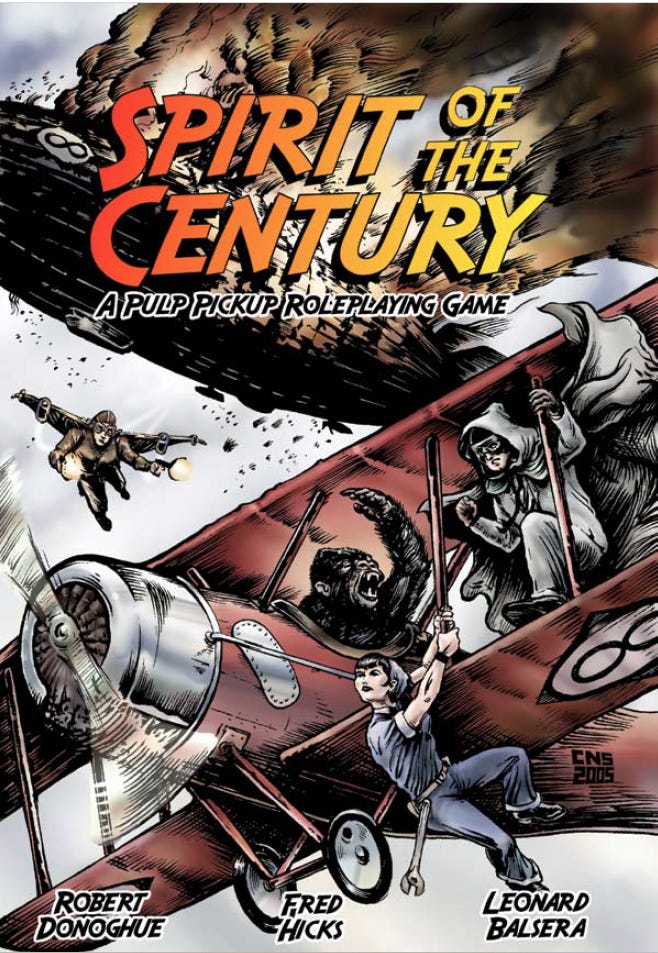
Spirit of the Century is Evil Hat’s love letter to pulp adventure. A love letter that applies Julius Schwartz tinted lenses to the two-fisted, globe-trotting, villain-punching genre fiction of the 1920s and 30s. When I say, “Julius Schwartz tinted lenses,” I am referring to his famous quote about how putting an ape on the cover of a comic inceases sales. As you can see from the cover of Spirit of the Century, they have taken this very much to heart and if you look at the cover of Weird Tales below you’ll see that Schwartz’s axiom also applied to the pulps. Spirit of the Century it is written with a warmth and enthusiasm that is frankly infectious.

Spirit of the Century was one of the first games put the FATE system in front of a broad audience. FATE is an acronym for Fudge Adventures in Tabletop Entertainment and is based on the FUDGE role playing game system by Steffan O’Sullivan. When FATE used a relatively silly acronym they were merely following a longstanding tradition in the role playing game hobby. Other acronymic games include “The Other Roleplaying Game” (TORG), Generic Universal Role Playing Game System (GURPS), and Freeform Universal Do-it-yourself Gaming Engine (FUDGE).
Just as FATE was a simplification and popularization of the FUDGE engine, so too was FUDGE a response to GURPS. O’Sullivan thought that GURPS was didn’t scale well on the smaller level, so he began working on the Simple Laid-back Universal Game (SLUG) and eventually designed FUDGE. It’s a very solid system, but there is room to add various storytelling elements and that is what the folks at Evil Hat Games did.
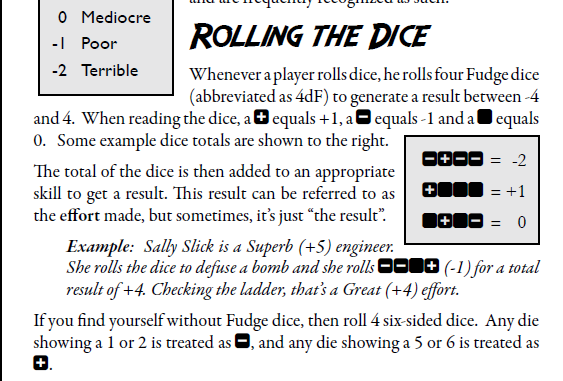
Spirit of the Century, like all FATE games, runs on Fudge dice. Thes are six-sided die that are marked with +, +, blank, blank, -, - instead of with the regular numbers you and I are used to. Characters in the game have a number of skills that influence die rolls in the right circumstances and they also have Aspects. These Aspects are short descriptive phrases attached to characters, scenes, and situations that can be invoked for bonuses or compelled for narrative complications.
The Aspect system is, philosophically, a direct challenge to the assumption that characters are defined by their numbers. A character in Spirit of the Century is defined by statements like “Man of a Thousand Faces” or “The War Changed Me.” These phrases are simultaneously mechanical resources and narrative commitments. Players can spend a Fate Point to invoke their aspect, which makes them perform better in a particular situation. Similarly GMs can compel your Aspects, for which they have to give you one or more Fate Points in return. When they do this, they’re not merely imposing a penalty to your action. They are also extending an invitation to make your character interesting. The Fate Point economy that flows from compels and invocations is the most elegant I’ve seen for keeping the table engaged in collaborative storytelling rather than competitive resource management. You can see echoes of this system in Monte Cook’s Cypher System.

Spirit of the Century, and the FATE system, make the table feel like a writers’ room. That’s a specific kind of magic, and it’s harder to achieve than it looks. As with Burning Wheel, this is a game system that is better at accomodating the style of play that a lot of YouTube games are advocating. It isn’t that you cannot use D&D for storygames, but the system isn’t designed for it while games like FATE are.
9. My Life with Master

Paul Czege’s My Life with Master is the smallest game on this list. It’s a thirty-six page pamphlet that is filled with more discussion of tone and storytelling than it is with mechanics. It is also the recommendation here most likely to provoke the response “wait, is this even a game?” from someone encountering it for the first time.
It is a game. It is a game about being a minion of a Gothic horror villain. Players take on the role of a Renfield, a hunchbacked servant, or some other desperate creature who has exchanged autonomy for belonging. The game takes this foundation to force the characters to go through a narrative in which they go through the slow, painful accumulation of enough Self-Loathing and Love to finally defy their Master and, perhaps, find something resembling freedom. This isn’t a long term campaign game and it isn’t one designed to be played however you want. This game has a purpose.
While it does favor a particular style of play, I believe that one of the great successes of My Life with Master as a game is that its theme and its mechanics are perfectly integrated.
The mechanics of My Life with Master are simple, deceptively simple. At their most basic, the player and the game master roll handfuls of dice, add the totals, with the highest total winning the contest. Winning a contest also allows the winner to describe the victory as they wish, within the limits of the possibilities of the scene and the overarching narrative. This is a very reductive version of the system and I recommend buying the game to get the full version of the system.
That said, I want to highlight that the factors which influence the success or failure of any given action are directly related to the theme of the game. How fear-inspiring a Master has significant influence on how actions are resolved. So too is how superstitious a community is contrasted with the level of reason in that community. Is the town filled with fearful peasants or elites educated in Alienism during their days attending an Austrian University? This provides a perfect mechanical environment for simulating a romantic/gothic setting. This is especially the case given that the amount a minion is loved or can love is balanced against the amount a minion experiences self-loathing or how weary a minion is from all the horrific acts he or she has perpetrated. These are the factors that matter in the game and not how high a minion’s dexterity score is.
Most of the decisions which shape the environment of play are crafted as a shared experience by all who are playing. Together, the players and game master create the town. Even the design of the Master is collaborative as the rules recommend that everyone contribute to that design. Given the “you win the conflict, you control the narrative” aspect of the rules, this is a game where everyone tells stories at some point. Over time every player will tell several stories, where each minion is the protagonist and where the Master is the universal antagonist they all work for. One of the key innovations of My Life with Master is the way it emphasizes the protagonistic nature of all the player’s characters.
My Life with Master is not for everyone. It is for people who want to sit around a table and tell a story that has something to say about cowardice, complicity, and the possibility of moral redemption. Those people know who they are.
"But Master, Why Must I Feed the Children Maggots?" A Narrative Game Review

I just recommended Nosferatu in my most recent Weekly Geekly Rundown and as I was thinking about it, I was reminded of a role playing game I own and have played a couple of times over the years. It’s…
10. Scion: Hero, Demigod, God
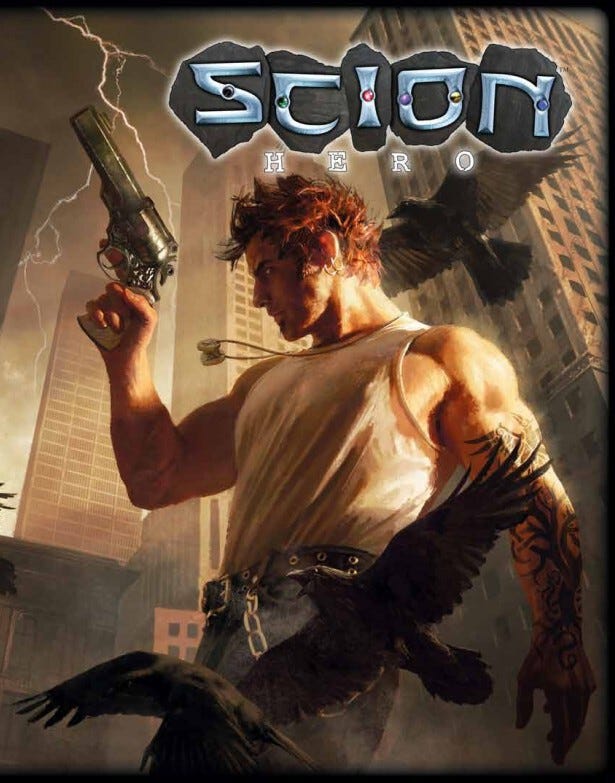
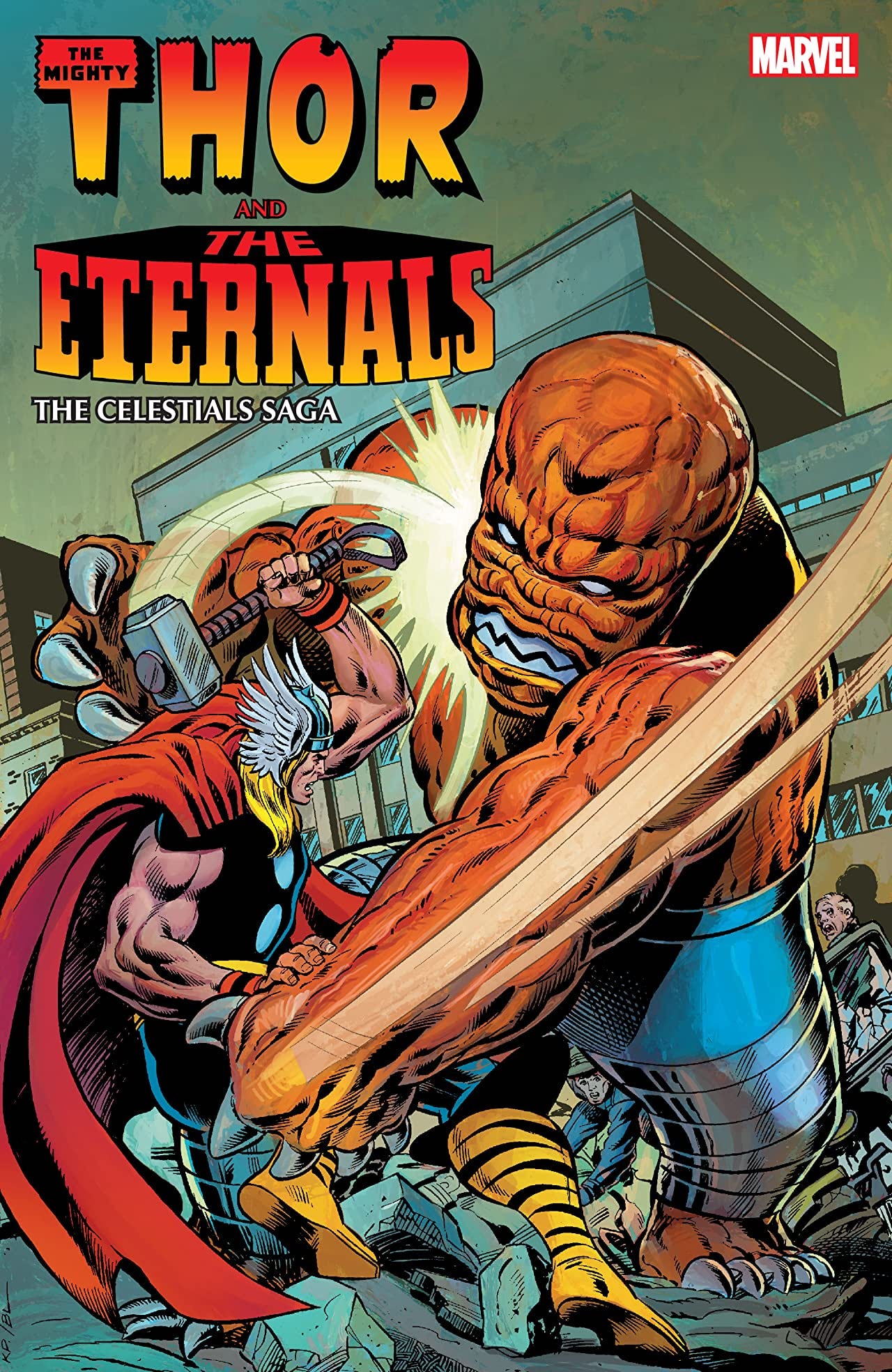
Scion is the game on this list that most visibly didn’t survive the gap between its ambitions and its execution. I am deeply in love with the setting and the theme of this game. In part because one of the best role playing game I ever played in was one where our DM had us play as the reawakened Gods of Norse Mythology fighting in modern day Los Angeles because Ragnarok had arrived. Roger Frederick, the DM in question, combined the fake Ragnarok from the Thor Eternals Saga (Thor Annual #7 and Thor #283-291) with Highlander and created a wonderful experience for every one of his players. Roger died in 2017 from a bacterial infection. It hit hard and fast. He had previously survived being run over by a bus in the Portland, Oregon area a decade earlier. He had sued the bus company for damages, but his attorney recommended he settle for a relative pittance of what he deserved because he was one of those weird adults who collected dolls (action figures). Fuck, I wanted this to be about how cool, yet frustrating, I found a game and now I’m just pissed off at the bigotry that geeks and gamers faced in the mid-2000s and earlier.
Anyway, the concept of Scion is irresistible. In the game, you play the mortal children of gods from the world’s mythologies : Norse, Greek, Egyptian, Japanese, Aztec, and more. During play you discover your divine heritage and ascend through tiers of power from Hero to Demigod to God. White Wolf’s Storyteller system provides the chassis, the same dice-pool-of-d10s-counting-successes engine that ran the World of Darkness games. The setting draws on genuine comparative mythology with evident enthusiasm and at least some scholarly literacy.
I’ve always found the World of Darkness Storyteller system a little fiddlier than it ought to be. It’s supposed to be narrative, but you end up doing a lot of power gaming in some settings. The mechanical problems underpinning the system are very real. Chief among them is that scales poorly as characters acquire divine Knacks and Boons as the characters advance. As with other Storyteller games with power creep, some powers are so dramatically more effective than others that the game can feel unequal across the table in ways that the designers clearly didn’t anticipate. The game is better at inspiring a campaign than sustaining one through its full three-tier arc.
But I keep it on this list because the idea of Scion opened a door that hasn’t closed and because the setting material itself is amazingly rich. The premise is inspiring enough it generates compelling play even when the mechanics creak. Who doesn’t want to play a game where the children of gods walk among us and grow into their full divine inheritance? It is the game of the decade that most clearly illustrates the gap between conceptual ambition and mechanical craft, which is itself a useful thing for a game designer to study. Sure, I might use a different system to play the premise (likely Savage Worlds, Hero, or DC Heroes), but I want to play this game setting.
11. Fireborn
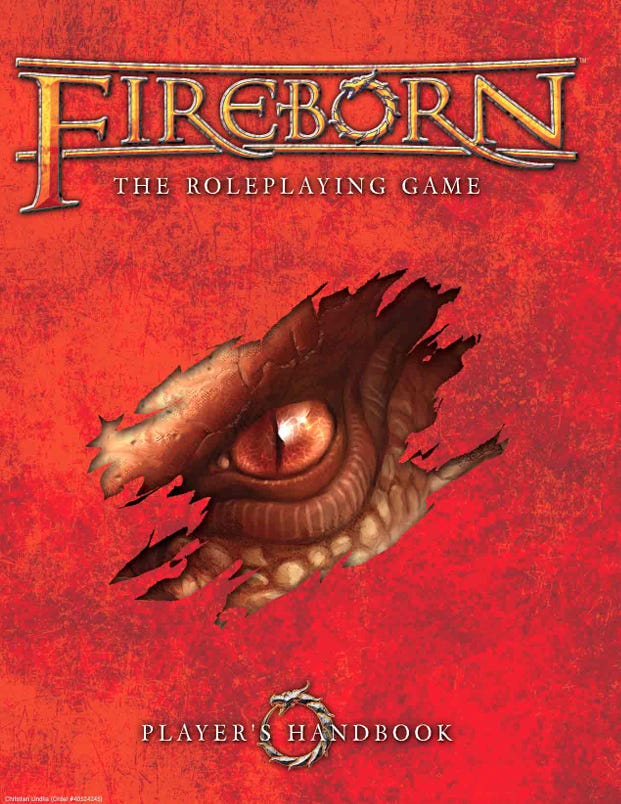
Fireborn might be the most underplayed game on this list. Fantasy Flight Games released it in 2004 and it vanished with almost no cultural footprint, which is a shame bordering on an injustice.
The premise is elegant and genuinely unusual. In the game you play Scions. These are ancient dragons who have reincarnated into human bodies in near-future London, who possess only fragments of their draconic memories and precious little of their original power. The game runs on two interlocked time tracks simultaneously. The base setting is modern London, where Scions navigate monster hunting, political machinations, and the creeping return of magic to a world that has spent centuries convincing itself the impossible doesn’t exist. The second track is the mythic age, accessed through a mechanic called flashbacks. These are collectively remembered dramatic events from the Scions’ draconic past, played out in real time at the table. What happens in the flashbacks directly unlocks abilities in the modern timeline. Past and present are not separate stories; they are the same story told across two eras simultaneously. What’s cool about this is that you can slow play the modern game while having the flashbacks provide adventure after adventure as the players slowly hunt down who their main enemies are.
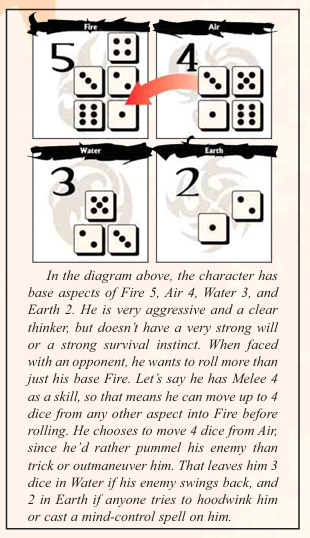
The resolution system, called Dynamic d6, is built around four elemental Aspects (Earth, Air, Fire, and Water). Each of these Aspects governs a domain of action. Fire drives aggressive physical action and combat. Water governs defense, stamina, and reflexes. Air covers reasoning, awareness, and social manipulation. Earth handles willpower, concentration, and resistance to magic. Characters roll a pool of standard d6s equal to their relevant Aspect score, with fours, fives, and sixes counting as successes against a threshold. The interesting wrinkle is the stance change mechanic: before rolling, a character can physically move dice between Aspect pools, borrowing Water dice to bolster a Fire attack, for instance, at the cost of their defensive capacity until their aspects reset at the start of their next turn. It makes every roll a small strategic decision about resource commitment, and it creates a genuinely dynamic rhythm in combat that the name promises.
Karma is the game’s magical resource and it also ties both timelines together. It fuels the supernatural powers and legacies Scions unlock through flashbacks, and the growing ability to access those draconic capabilities in the modern age is the mechanical representation of your character slowly remembering who and what they used to be. The game enforces group play by having the Scions bound together into broods. These are groups whose souls have been intertwined across all of their lifetimes. Their lives and stories are connected and this gives the party structure both narrative weight and mechanical purpose.
The dual timeline structure demands a GM willing to run interleaved narratives without losing the thread of either, which is a steep ask. But the potential payoff is a kind of emotional resonance that most RPGs never reach. This is a game that is a temporary last-gasp of the meta-plot era where game systems had a storyline in mind and where campaigns had endings. D&D was designed for emergent play and never-ending campaigns, but the metaplot games of the 1990s changed that emphasis to one where players would be able to tell a story and then move onto a different game. The contemporary Scion’s dawning recognition of who they were, made mechanically legible through flashback scenes, is the kind of design that people remember years later.
That almost no one played it long enough to find out is one of the Aughts’ quiet tragedies. Given that Reign of Fire came out around the same time and also failed to catch on, maybe the early 2000s just hated the thought of Dragons in London. But c’mon man! Mad Max with Dragons! Mad Max with freakin’ Dragons! Who doesn’t want to see that?! Especially when you add Matthew McConaughey, Christian Bale, and Gerard Butler to the mix. Fireborn has a slightly different premise, but it’s just as cool. The biggest challenge GMs will face is how to pull off the pay off of the setting. There is very little, though some, adventure support and for meta-plot games, having an example of how to structure the big pay off really matters.
The decade was, in retrospect, defined by a productive argument about what roleplaying games are for. 3rd Edition said they’re for heroic adventure with granular rules. Burning Wheel said they’re for exploring character under pressure. FATE said they’re for collaborative storytelling. 4th Edition said they’re for tactical engagement. My Life with Master said they’re for examining uncomfortable human experiences in a safe fictional frame.
None of them were wrong. The Aughts gave us the full spectrum, and we are richer for the argument.
This piece is an expanded revisitation of a post originally published at Cinerati on January 12, 2010. If you were there, hello. If you weren’t welcome to the conversation.
A great list and wonderful summaries. I’m off to download Dragon Lords now!
Have you ever heard of the game Nephilim? It seems to be in your wheelhouse based on the Scion and Fireborn write ups.