


Has Hasbro Alienated the Fanbase?
Way back in 2023, when Hasbro should have been celebrating the 50th Anniversary of Dungeons & Dragons, Linda Codega of Gizmondo unleashed a firestorm when she published a leaked version of WotC’s intended replacement Open Gaming License. Social media was quick to respond and there was a great deal of conversation about how Hasbro might be changing the Open Gaming License (OGL) and thus changing the entire landscape of 3rd Party products for the World’s Most Popular Role-Playing Game.
Hasbro’s plans demonstrated that they had not learned the real lesson of 4th Edition’s release. The release of that edition, and the new “Gaming System License,” demonstrated how the fanbase responds to attempts to limit independent creators making products for Dungeons & Dragons. That attempt to move away from an open license to a closed one had wide ranging consequences, one of which was that a lot of D&D players decided to move on. Hasbro eventually reversed course and left the old OGL in place and released a Creative Commons version of the 5th edition for game designers to use, but the damage was done and many people were looking for a new game to play.
A lot of this damage could have been healed with the release of the 6th (2024) edition of Dungeons & Dragons, but that edition has received lukewarm support. In part because they refuse to admit it is a new edition, even though it completely reworks some classes (the Monk) and includes several significant game play changes. While it’s not as different from 5th Edition as 3rd Edition was to earlier versions of the game, it is almost as different as 2nd Edition was to AD&D (if you include all the proficiency rules from various supplements). Also in part to the fact that the presentation of the new edition has been more “slice of life”/cozy fantasy and less Sword & Sorcery/Epic Fantasy in tone. The fact is that D&D players and groups include all those styles of play, but that the marketing and design focus on the former at the expense of the latter with a dash of nostalgia that some view as pandering.
If you are one of the people who feels put off by the current direction of D&D, I’ve got five potential alternatives for you to consider. Heck, even if you aren’t (and since I run a 6th edition game that includes me), I still recommend these games. One of the things that seems different about the gaming community today from when I started playing is that players seem to specialize more and focus on a single game when there are tons of games to play in a variety of genre. In this article, I’ll be sticking to the Fantasy genre, but in the coming weeks I’ll add some other genre to the mix. There is a vast catalog of role-playing games I think every gamer should try out, but given that D&D is a “Fantasy: role-playing game, I’ll limit my suggestions to that milieu.
1) Warhammer Fantasy Role-Play
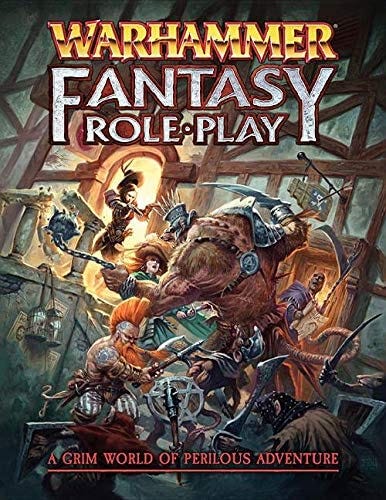
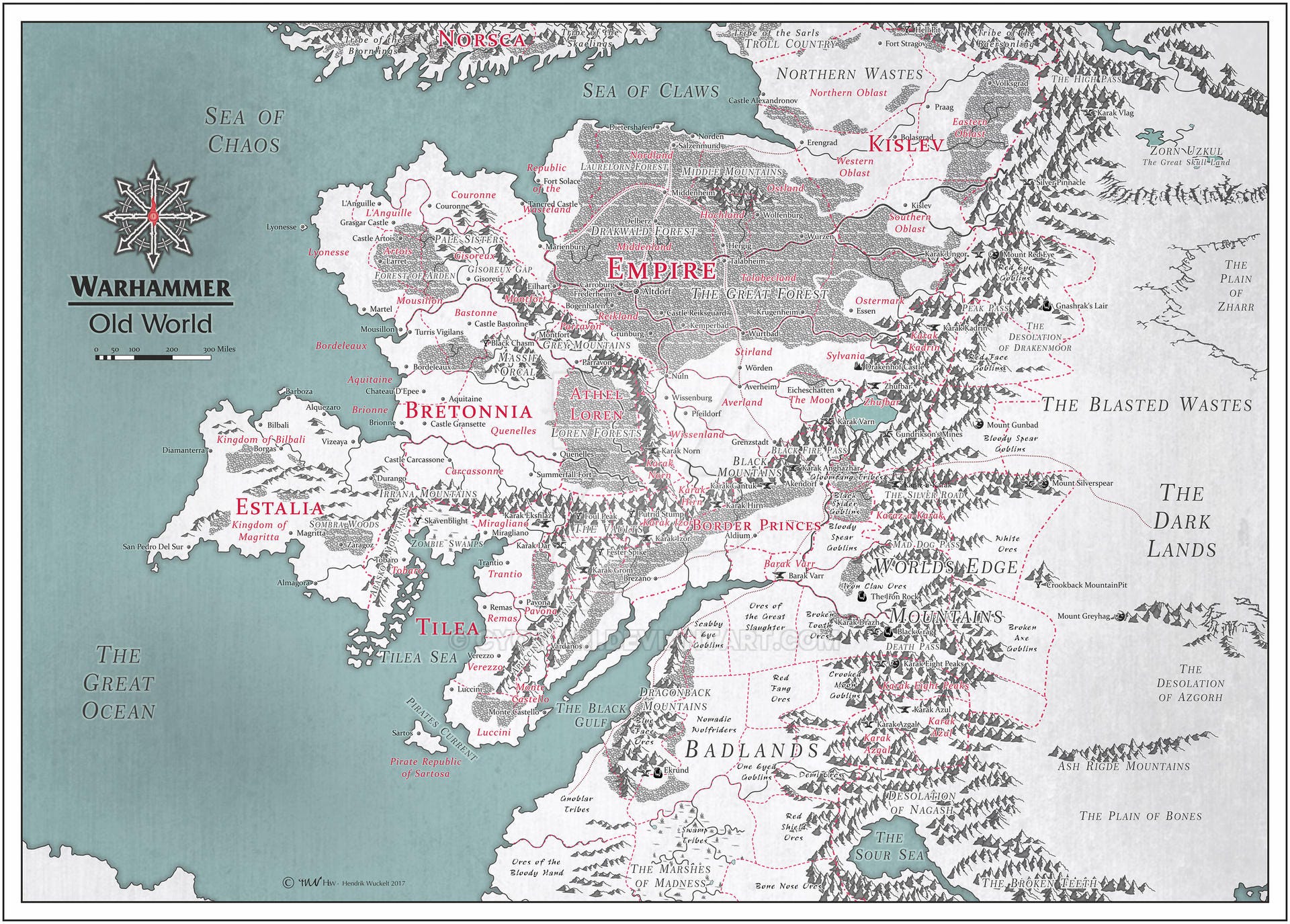
The first edition of Warhammer Fantasy Role-Play was published in 1986 by Games Workshop as an alternative to Dungeon & Dragons. The game was set in the “Old World” setting that was developed over time for the Warhammer Fantasy Battle miniatures wargame. This setting was a fantasy version of Europe during the Middle Ages, but one filled with anachronisms and biting social commentary. The Old World is one of the first “grimdark” settings in role-playing games, it is a place where danger (whether demon or disease) lurked in the shadows.
The mechanics of the first edition are a combination of an easy to understand percentile based system with some subsystems like damage based on the Warhammer wargame. It was part of a wave in gaming to get adventure out of the dungeon and into the city and the adventures written for it are top notch. The gameplay is straightforward, works well with narrative game play, but is one where players should think twice before having their characters jump into combat. Life in the Old World can be nasty, brutish, short, and diseased for those who don’t tread carefully. That first edition is still available in digital form.
The latest edition by Cubicle 7 adds elements of modern game design to the mix and in doing so manages to keep the rich narrative elements of the original game while allowing for characters to be slightly more heroic. The combat system is slightly less lethal and has fewer “dead” turns where neither the characters or their opposition get closer to victory. The older version of the game could be frustrating as there could be several combat rounds filled with “I miss, Dave misses, Christina misses, and all the Orks (sic) miss.”
Under the older system, combat could go from stalemate to “total-party-kill” in the blink of an eye with a combination of “hurry up and wait” and “wait, wait, there has to be something I can do to save my character.” The new system gets rid of the swingyness between failure and death and in doing so creates a balanced experience with dynamic and entertaining combat better suited to the modern gamer. It takes a while to learn, it’s pretty unique in how it’s executed, but once you get the hang of it play goes quickly.
As for the other elements of game play, Warhammer Fantasy has always been a game well suited to narrative game play. So much so that the 3rd edition, the edition prior to this latest entry, used the system that eventually became the foundation for the Star Wars narrative rpg by Fantasy Flight Games. The current edition isn’t as storyteller based as that narrative dice system, but it comes from a long line of games that provide both engaging combat and engaging non-combat mechanics and opportunities.
2) Pathfinder for Savage Worlds
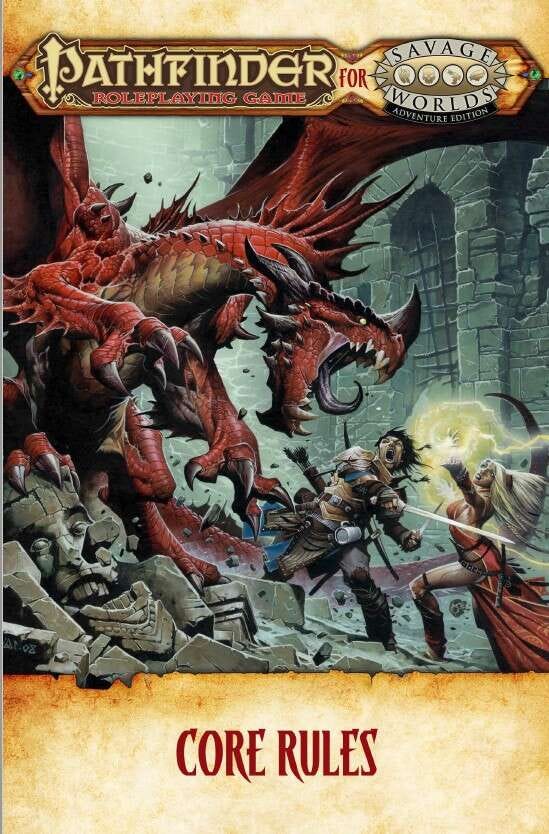
If you’ve been around gaming long enough, you know that no list of alternatives to D&D would be complete without including Pathfinder. When Hasbro fumbled their roll out of 4th Edition D&D by wanting to force publishers to use a narrow “Gaming System License,” the Pathfinder role-playing game by Paizo Inc. was published to fill the gaming space Hasbro was abandoning. Pathfinder was in many ways a revision of Dungeons & Dragons 3.5 rules set, many fans call it D&D 3.75, and by offering players an opportunity to continue playing a game 90% similar to the one they loved, they jumped at the opportunity.
The Pathfinder role-playing game now exists in three forms: Pathfinder 1st Edition, Pathfinder 2nd Edition, and Pathfinder for Savage Worlds. All of the editions are worth checking out, but my personal recommendation is Pathfinder for Savage Worlds. This version of the game takes Pathfinder’s Golarion game-setting (a world with both grimdark and traditional fantasy elements) and mixes it with one of my favorite role-playing games, Savage Worlds.
This particular mix is a mix made in heaven. The core Pathfinder role-playing game mechanics, like D&D 3.x, can get bogged down in minutiae that detract from game play. Combat in Pathfinder 2nd Edition provides a multitude of options in combat, but it offers so many that it often leads to analysis paralysis among less experienced players. This is true of the 3rd edition of D&D, and really true for Pathfinder 1st edition, so if you have experience with those systems this might not be as big an obstacle to you as it might be fore someone who’s only experience in role-playing is 5th edition D&D which streamlined a lot of mechanics and options.
Savage Worlds offers an array of options, it’s combat system is based on a miniatures skirmish game called The Great Rail Wars after all, but those options are resolved quickly and dynamically. What I love about Savage Worlds as a role-playing game is how well it achieves its goal of being “Fast! Furious! Fun!” It’s easy to teach, easy to play, and flexible. In the Pathfinder for Savage Worlds Core Rulebook the game designers combined Savage Worlds and Pathfinder mechanics (and setting) to create something truly special.
3) Old School Essentials
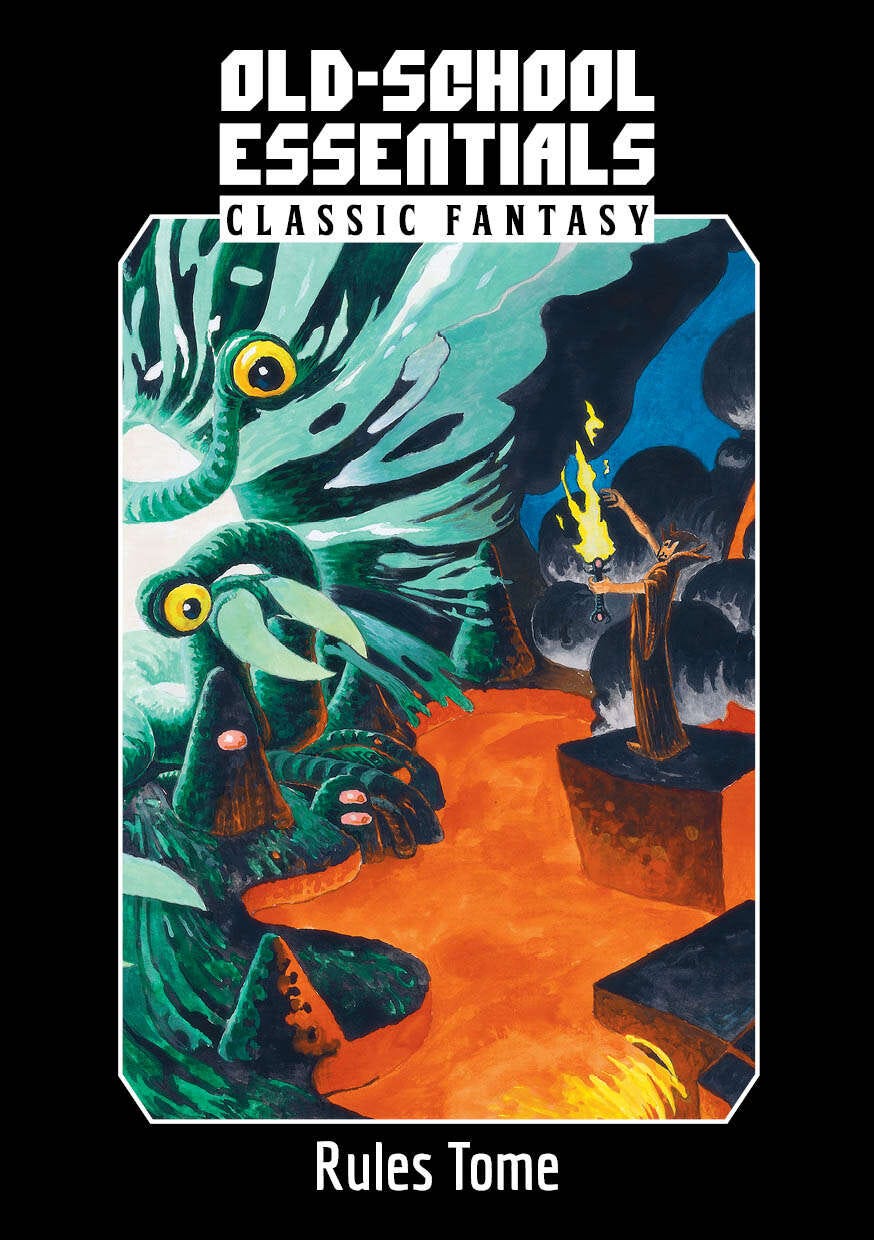
If you hang out with me long enough, you’re sure to hear me discuss how much I love the old Moldvay/Cook Basic and Marsh Expert version of the D&D role-playing game. You really should go and buy those books right now. There are many other people who share my love for those rules and some of them have put together a marvelous set of rules based on the old Moldvay/Cook books. That game is Old School Essentials.
What the crew at Necrotic Gnome have done with Old School Essentials is brilliant. Not only have they written a rules set that is 100% compatible with the older Moldvay/Cook/Marsh rules, they have added a ton of options that allow you to use those rules to play modern style games. They’ve added classes and archetypes based on options in newer versions of the game that fit perfectly with the streamlined version of D&D that Tom Moldvay, Dave Cook, and Steven R. Marsh designed in the early 80s. This is D&D at its easiest to play.
One caveat though, combat with low level characters in Old School Essentials is far more lethal than combat in 5th edition D&D. It’s a game that reminds you that fighting isn’t always the best solution and that Charisma is not a dump stat (I’ll have a post on Charisma in the Moldvay/Cook/Marsh and OSE later this month). Old School Essentials captures a style of rules from a bygone age, a style that prioritized different things than many modern games but a style worth playing. Characters don’t have a skill for everything, because not everything was supposed to be decided by the roll of a die. It’s a refreshing way to play the game.
4) 4th Edition Dungeons & Dragons
I know, I know. I hear you.
“4th edition sucks!”
“Isn’t the whole reason you are writing this because Hasbro is making the same mistake they made with 4th edition? Doesn’t that mean we shouldn’t play 4th edition?”
Yes, they might be making the same mistake as they made with 4th edition if the rumors are true. If so, they are attacking third party designers and players in ways that look remarkably like the strategy they used for 4e which was a marketing failure from top to bottom.
The thing is, 4th edition D&D is a really good game. It revolutionized D&D and many of the innovations it made to the underlying mechanics of D&D combat were what made 5th edition work so well. Do you like “death saves?” Those are from 4th edition. Do you like how clear Conditions make the effects of combat and how easy it is to understand how those keywords work in play? Those are from 4th edition. So much of 5th edition is 4th edition repackaged with better “layout” in the publication. Robert Schwalb, designer of the next game on the list, argued that layout was one of the reasons that people thought 4th edition didn’t look/feel like D&D. He was right and 5th edition proved him so.

There is plenty of 4th edition stuff available, though I personally recommend sticking with the Essentials rules sets Heroes of the Fallen Lands and Heroes of the Forgotten Kingdoms. Pick up the Neverwinter Campaign Setting and Lost Crown of Neverwinter and you’ve got the perfect gaming experience to capture the feel of Critical Role or the upcoming D&D movie.
5) Shadow of the Demon Lord
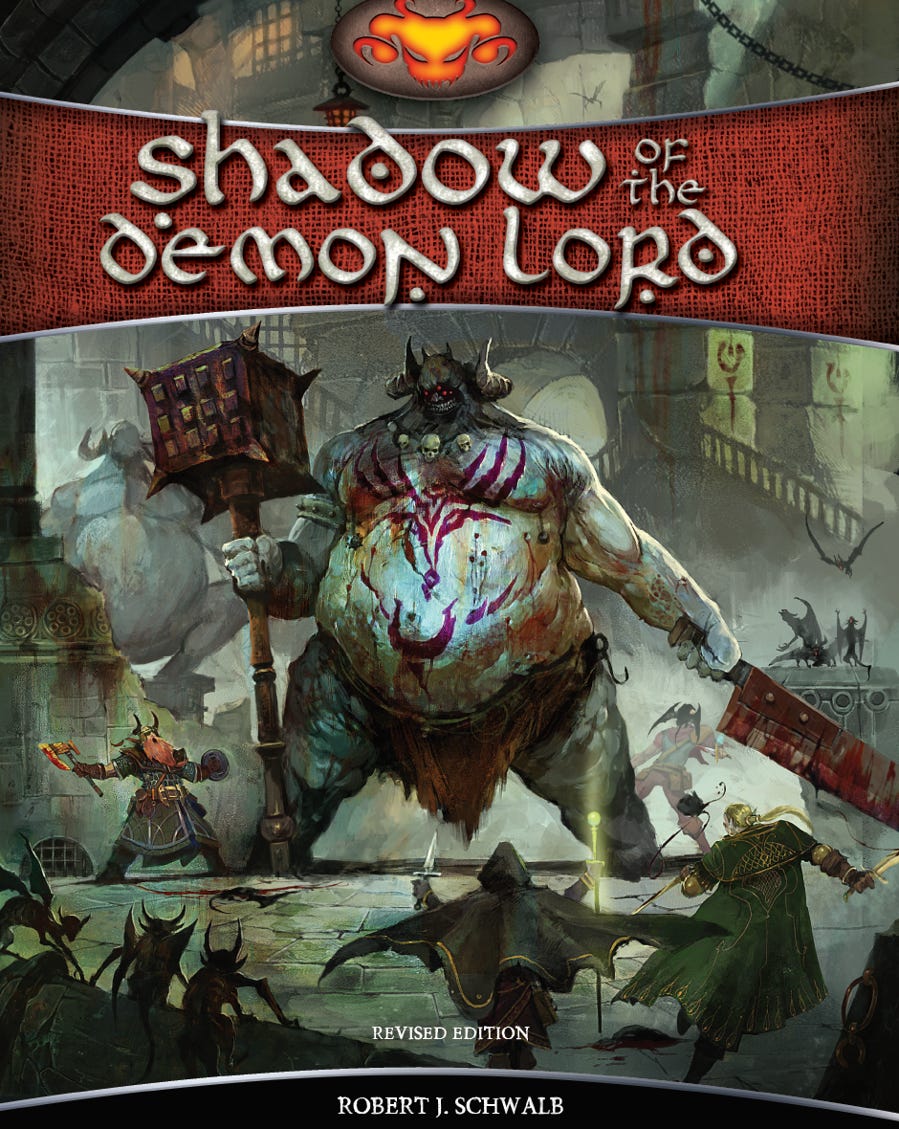
Are you looking for an easy to play fantasy role-playing game that has a strong setting and a lot of options? Look no further than Robert J Schwalb’s excellent Shadow of the Demon Lord. Schwalb’s sensibilities run grimdark. I think he internalized all the fears of the Satanic Panic and decided to channel those fears into creating a rich and detailed game setting.
Unlike with Warhammer Fantasy’s earlier editions, his grimdark sensibilities didn’t lead him to design a game where character’s lives are nasty, brutish, short, and mutated. Instead, he designed a game where the characters feel heroic, even as they fight foes in what is otherwise a hopeless world. Shadow of the Demon Lord is like the Diablo video game series. Everything seems bleak, hopeless, and dominated by the forces of Satan, but that’s the state of the world before the player characters show up.
If one were to play solely in Schwalb’s setting, and I’m avoiding a number of spoilers here, the world would be nihilistic regardless of player actions and success, but there is no need to play in his setting. The mechanics work as the basis for any tone of fantasy adventure without ever having to change them. The mechanics can be used for any style of play ranging from kid friendly play (Rob’s currently in the process of making a game that does exactly this with his Demon Lord rules) to the grimmest of grimdark. The setting is up to you. Schwalb offers a metric ton of adventures and expansions for those who want to foray into the shadows he imagines, but there’s a ton of material for those who want to fight in brighter places too.
6) Honorable Mentions
The five above are among my favorite games, but there are many more games I’ve enjoyed over the years and I’ll mention some of them here. There is no ranking here, just the fact that writing in some depth about five games takes time and I don’t have unlimited time. Consider every game above, and every game on the short list of honorable mentions, as a #1 on a favorites list. Heck, even the honorable mention list is incomplete for fantasy games I think are great.
Tiny Dungeon Second Edition (BUY THIS!!!)
Tunnels and Trolls (So Much Fun!)
Runequest 2nd Edition (Glorantha is one of the richest settings ever designed)
Runequest Roleplaying in Glorantha (Have your friendly local game store order you the Runequest Starter Box. It’s AMAZING!)
As I wrote above, there are dozens more games that I could add to the list. The world is filled with wonderful fantasy role-playing games in a variety of styles. Don’t feel trapped by D&D. Go out and explore the options and play a wide variety of games. Variety is the spice of life and gaming is best when it’s spicy.
What are some games you would add to the list?
Other than the “real time torches” gimmick, I think Shadowdark looks like a great option for D&D refugees :)
I wish the new upcoming “Tunnels and Trolls” bore any semblance to T&T, and that the new “Monsters Monsters” line didn’t really so much on AI “art.” Sigh.