



Roll for Initiative! Go First Dice Let You Roll for Initiative in All Kinds of Situations!
As someone who has played a lot of games, one of the things I like to examine in a rules set is how it addresses the issue of which player goes first. There are almost as many ways to answer this question as there are games and My Kind of Meeple has a rundown of 140 ways that different games answer this very question. Some of these solutions can be a game in and of themselves and end up using time you’d rather spend playing the game. Who wants to spend half-an-hour debating who has read more history books, when there is a game to be played?
As much as I love playing other games, the games I play most frequently are role playing games and a lot of the alternative ways of figuring out who goes first don’t work there. That’s where “Go First Dice” come in. They are dice that you can roll to determine who goes first that are fair, but that have no possibility of two people rolling the same number. You just roll and go. Mathematician James Grime has a very good video up at the Numberphile YouTube page discussing these dice, their application, and the challenges of creating dice that work for larger and larger playing groups. James doesn’t go into the mathematics of permutations in great detail, but does mention how those are at play here.
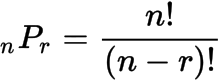
To be fair, outside of James, GameTek , and me, there probably aren’t a lot of people who care about the underlying math, even as the results of the problem are really cool. On a side note, at the beginning of the video you can see a game set up that uses the Einstein (monotile) that GameTek mentioned a couple of years ago. You can buy a set of these tiles at MathArtFun. I haven’t purchased a set of the Einsteins yet, but I have purchased a set of “Go First Dice.”


The Lamentations of Luke Y. Thompson
Luke Y. Thompson’s Mortal Cinema had a banner week this week. His Good Omens Season 3 review became his most-read post and gave Luke a much needed boost. The traffic seems to have come thanks to some virality on twitter, but he hasn’t tracked down the culprit yet. This is the algorithmic paradox of the modern internet in miniature. You can do careful, sustained work for eighteen months and then have your biggest day because of a social media chain reaction you didn’t start and can’t trace. It reminds me of my Peanuts post last year. It went viral, for me, and I even got a couple of new subscribers out of it. Luke’s been one of the most reliably honest voices on film and pop culture for as long as I’ve been reading him, and it’s genuinely good to see the work finding the audience it deserves.


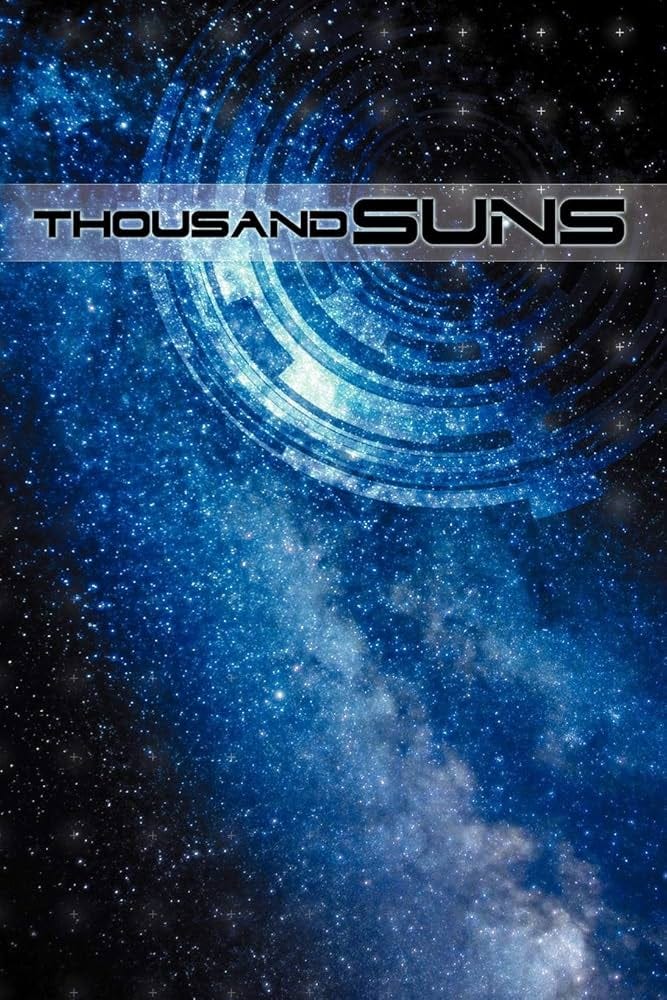
James Maliszewski has been buried in the first draft of his upcoming second edition of Thousand Suns for the past few weeks, and rather than go quiet he’s been doing something I always appreciate. He’s been providing brief, honest check-ins that treat his readers like collaborators rather than an audience waiting for a product drop. His current focus is finalizing the rules for the “High Struggle,” the ship combat and extended conflict system he first outlined back in March, and early internal playtesting is apparently going well. I’ve been watching this project develop since Maliszewski first announced the Thousand Suns revival over at Grognardia Games Direct, and the methodical transparency of his design process is a model for how small publishers should communicate with their readership. I’ve been a fan of James’ for a long time and own the original Thousand Suns rulebooks as well as his Dwimmermount mega-dungeon. Check in on his progress over at Grognardia Games Direct.

Ben Milton’s The Glatisant: A Questing Beast Newsletter dropped its 74th issue a couple of weeks ago and as always it’s a great resource if you want to know what’s happening in the OSR. This issue includes Ten Foot Pole naming both Fortress Tomb of the Ice Lich and City of the Ape-Men the best of the month. Ten Foot Pole says Ape Men, compares favorably to Isle of Dread. This is high praise indeed for anyone who grew up on that module. Between the adventure roundups, the product news, and Milton’s own editorial asides, the Glatisant does more useful work for the hobby in one newsletter than most gaming sites manage in a month. In fact, Glatisant was one of the inspirations for The Weekly Geekly.

I’ve been a fan of Jim Zub’s since before he was writing on the Munchkin comic book. His Zubstack highlights his current work, like his upcoming Free Comic Book Day releases Conan: Tides of the Tyrant-King (Prelude) and the Manga Classics: Journey to the West book. The news that really caught my eye this time was buried in the gaming section. Monolith has announced a new Kickstarter for the Conan Board Game and the Hyborian Age tabletop RPG. I’ve got both and I’ll be reviewing the newest Tabletop RPG soon. Zub has been writing Conan comics for Titan and Heroic for a while now and the accumulated weight of that work is starting to produce some genuinely interesting crossover projects. The thing I’ve enjoyed most about Zub’s run is how he understands how important “Weird” elements are to Sword & Sorcery fiction.

Dr. Rebekah King posted an entry this week that made me both happy and sad. I was thrilled to hear she’s making such great progress on her Monograph (that’s academic for book on a single topic) based on her dissertation. It will be wonderful to see how she changes and expands the dissertation for a wider audience and I very much look forward to reading the book when it finally hits the shelves. On a sadder note, this means that she’s pulling back from two articles a week to one. She’s framing this as a quality-of-life adjustment and is asking her readers what they want more of going forward and I think this is the right choice, even as I selfishly want more Curiosities. Of particular note in her video, was that she said that one of the reasons she wanted to slow down (in addition to workload and quality assurance) was that she wanted to make sure she was a more active member of the Substack community.
Rebekah’s a valuable voice, in her own essays and in comments, and I was happy to hear that she values being a “reader” as much as being a writer here. There are too many academics and journalists (I’m not naming names but they include some of the most popular Substacks) who want us to read and pay, but who aren’t even willing to read and comment on others work here. Her horror history work is some of the most smartly contextual stuff in the Geekosphere, and whatever she publishes at one piece per week will be worth the wait. Oh, and as far as the video she posted was concerned, I thought the “meta” artwork in the background was to die for. That “inspiring view” was truly remarkable and the whole set up was a great deconstruction of Dark Academia. It was far better than the deconstruction I did with Matt Thompson a while back where I work a cardigan and sipped coffee from my Beholder Mug.

As always, reading Matt Thompson’s musings over at Critical Hit Parader, "America's Only Rock 'n' Role Playing Magazine," is like having a conversation with a life long friend. Matt and I share so many interests and it was an honor to chat with him on video a while back. He has a piece this week that hits me right in the fandom. He covers the odd event that transpired last week when there were two TTRPG announcements involving Elric drop within moments of one another. Given the history of Michael Moorcock properties in the IP wars of early TSR and Chaosium, the fact that two companies (one using an adapted version of Chaosium’s Worlds of Wonder Magic World rules set and the other using an alternate D&D rules set) are once again licensing Elric simultaneously is hilarious. Of course, unlike the Chaosium and TSR “deals,” I imagine Moorcock is actually getting residuals this time…and yes if you read Moorcock’s interview in Kobold Quarterly #5 you’ll see that he wasn’t paid until the new Chaosium crew took over.
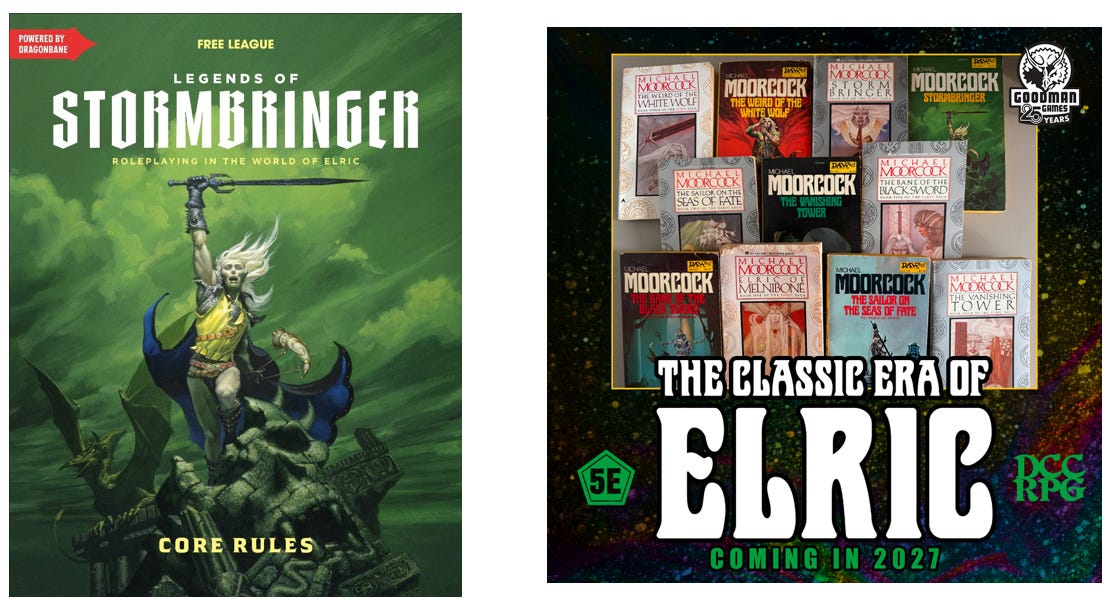

Thompson uses this news as a launchpad for a six-song countdown of the best Elric-related music in the rock canon : Blind Guardian, Cirith Ungol, Hawkwind, Diamond Head, Smoulder, and BÖC's "Black Blade," which Thompson notes is sung from the point of view of Stormbringer rather than Elric. That last observation is the kind of thing that rewards close reading of liner notes, and it's exactly the sort of connective tissue between music and gaming history that makes Critical Hit Parader worth following.

Retroist has me waffling regarding whether I want to hunt down a copy of the 1984 Dune board game from Parker Brothers. Reading his article, and the reviews on Board Game Geek (ever overly pretentious and filled with presentism), I am leaning heavily towards buying a copy. It sounds like an easy to play and enjoyable game. It isn’t asymmetrical like the Avalon Hill version, which is an adaptation/variation of Cosmic Encounter, and looks like a good introductory game. I love the asymmetric version of the game, but I am also a fan of quality main stream games like Candy Land and Risk. Yes, I said those were quality main stream games.


Dragonbane from Free League
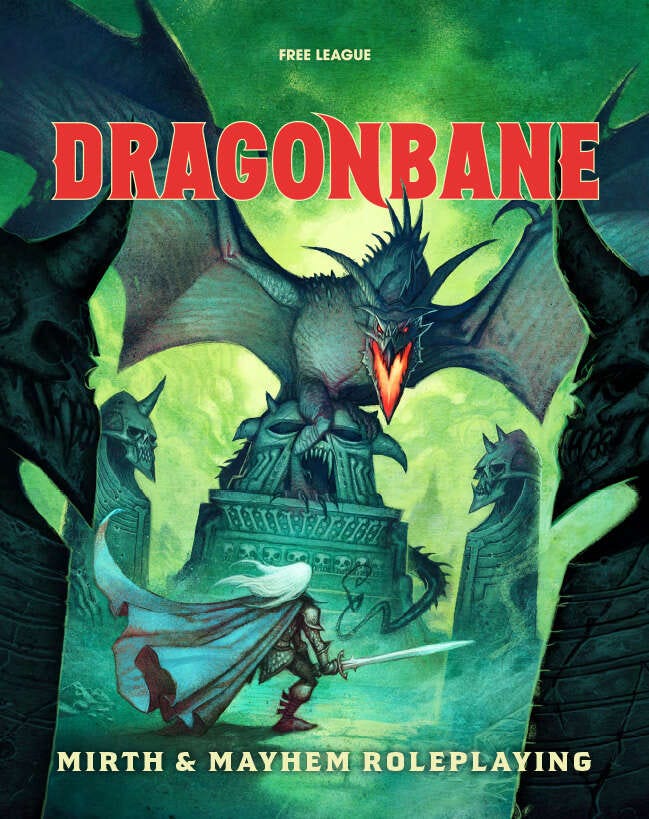
Dragonbane from Free League/Fria Ligan is the latest edition of Sweden’s equivalent to Dungeons & Dragons, in popularity, Drakar och Demoner. Drakar och Demoner is a fantasy role playing game heavily based on Chaosium’s Basic Roleplay Engine that underpins Runequest and Call of Cthulhu. The game was originally published by Target Games, a Swedish company founded in 1980 by Fredrik Malmberg, Lars-Åke Thor, Johan Arve, Klas Berndal, and Roger Undhagen as a game store. Like Games Workshop in England, Target Games quickly expanded into publishing and the company was active from 1980 to 1999, when the company filed for bankruptcy at the tale end of the collectible card boom.
Target Games produced role playing games, war games, and a collectible card game based on one of their most successful “meta” products went on to produce a number of excellent role playing and war games that have had significant influence on the overall role playing game market. Target Games is one of the most important publishers in the history of role playing games and Fredrik Malmberg is the Swedish equivalent of Ian Livingstone in my opinion. They released most of their roleplaying games under the Äventyrsspel (adventure game) brand and they published both in house and translated role playing games. Their in house games included Mutant, Mutant Chronicles (very different from Mutant), and Kult, while their translated games included Drakar och Demoner, Chock (a translation of Pacesetter Games’ Chill), Sagan om Ringen (a translation of ICE’s Middle Earth Role Playing), and Stjärnornas Krig (a translation of West End Games’ Star Wars Role Playing Game).

The original version of Drakar och Demoner was a fairly direct translation of Chaosium’s Magic World supplement for the Worlds of Wonder boxed set, with the primary difference being that Drakar och Demoner included rules from the Basic Role Play core rulebook in order to be a fully playable role playing game. One of the best places to see this is in the selection and translation of monsters included in Magic World. Take a look at how they translated Skeletal Guardians.

The game has evolved over the years and the latest edition, Dragonbane, shifts away from a percentile system into one that uses a 20-sided die roll below system. The basic mechanics are the same, but skills are now in 5% steps rather than including the possibility of individual percentages. Given that most skills and rolls in Drakar och Demoner were in steps of 5% to begin with, this change makes sense and it works smoothly.
When Target Games went out of business, Target founder Fredrik Malmberg formed Paradox Entertainment as an intellectual property management company. This IP included Target Games’ catalog, but quickly expanded to include the works of Robert E Howard and others. All of these brands were eventually brought together under Cabinet Entertainment which is managed by Fredrik Malmberg. That’s right, the publisher of Mutant Chronicles and a ton of really cool role playing games is the person in charge of the Conan brand right now and I think overall this means that Conan is in good hands.
Paradox Entertainment licensed the rights to Drakar och Demoner to RiotMinds in 2000 and sold the rights to them in 2005. RiotMinds produced a couple of versions of the rules including the Trudvang Chronicles and Ruin Masters role playing games before eventually these rights to Free League. The art is beautiful and I’ll have a more in depth review when my boxed set arrives (I’ve been using the pdf, but prefer physical).

My daughters are graduating from High School this year. Good God! Time flies so quickly. Anyway… as a part of their graduation gift, I took them to Denver to see Good Kid live. Good Kid have been on the family play list since the twins were in Middle School and they are a musical bridge between me and the girls. While I have always been a poor man’s “soc,” in that I wore polos and played baseball, soccer, and wrestling in High School and joined a fraternity (even as I was poor), I’ve also been a fan of punk (in all forms from hard core to pop) since at least my own middle school days. I remember when my friend Steven, at Crow Canyon Middle, first introduced me to Minor Threat. They captured my youthful, but respectful, rage just perfectly. Good Kid are a pop punk/indie band that prove that traditional rock is far from dead among the younger generation.
The show was exactly what a Good Kid show should be. The music was fast, tight, joyful in a slightly desperate way, and built for rooms that are too small for how loud the crowd gets. Though in this case the venue (Mission Ballroom) was exactly the right size and the crowd was big enough for crowdsurfing. Good Kids are a Canadian indie rock quintet who built their audience through Fortnite streams, Twitch, and letting anyone who wants to use their songs online. This sounds like a gimmick until you hear the songs and realize the music is the kind of high energy rock you thought died a decade ago. Their debut full-length, Can We Hang Out Sometime?, came out in April after years of numbered EPs, and the tour supporting it has been selling out rooms across North America and Europe.
Here are two songs to start with if you don't know them:
"Alchemist" is one of their best-loved deep tracks, though it didn’t make the cut during the fan participation Guitar Hero segment of the concert…yeah, there’s fan participation at a Good Kid show like you wouldn’t believe. Solid fan interaction like you would expect from an Indie band. Alchemist is also a song that tends to convert people. The title is a nod to Fullmetal Alchemist, which tells you something about where this band lives culturally, but the song itself is just a perfect piece of guitar-driven indie rock with a chorus that does exactly what a chorus is supposed to do. Alchemist is one of their less punk pieces and you can hear the influence of Snow Patrol, Modest Mouse, and Jimmy Eat World in this one.
”Mimi’s Delivery Service” — like “Alchemist” is influenced by anime, but it’s also a love song written by a husband who is saw his wife struggling emotionally with meaning and the challenges of creative work. It’s a beautiful song and the discussion of the song at the concert was one of the funniest moments all show. One of the band members wanted to write a song for his wife and had a melody, but didn’t think they were a good lyricist and so asked their band mate to help out. Needless to say, the joke was that it was an interesting experience writing a love song to your bandmate’s wife.
And now for some Good Kid-adjacent recommendations:
Bloc Party — “Helicopter” Good Kid cite Bloc Party as a direct influence and you can hear it, particularly in the guitar interplay. “Helicopter” is Bloc Party at their most urgent. This is a song that convinced me they were worth paying attention to back in the early 2000s and I think the song has held up remarkably well. There are so many bands at the end of the Shoegaze and Indie Rock era, before it was displaced fully by Nu Metal, that never got as much attention as they deserve and this song belongs on your play list next to Arctic Monkeys.
Speaking of Arctic Monkeys, you can definitely hear the influence of Fluorescent Adolescent in Good Kid’s various songs.
“Seventh Heaven” — INOHA opened the Denver show and called Good Kid “one of our biggest inspirations.” This was the first time I saw the band and the four-piece indie/punk band from San Antonio impressed me almost as much as Electric Frankenstein did the first time I saw them, and that’s high praise indeed. They got the crowd warmed up and got the crowdsurfing started. “Seventh Heaven” was the song that everyone in the audience knew the words to and it has pulled over four million YouTube views. That’s enough views that made me feel slightly foolish for not having heard them before the show. It’s their signature track for good reason. It’s got the kind of chorus that seems like it must have already existed somewhere, which is the highest compliment I know how to pay a song.
I think my favorite INOHA song is “A Next Time.” You can hear influence from the Orange County (CA) and Long Beach alternative scenes from the 1990s smashed together with Silicon Prairie punk.

Point Blank (1967)
John Boorman’s Point Blank (1967), just received a new Criterion Collection 4K release that has instantly jumped to the top of my want list. As much as I love Excalibur, and it just got an amazing Arrow release, this film just edges it out because of the way Boorman pushes crime film boundaries.
Lee Marvin plays Walker (yet another name for Richard Stark’s Parker), a man who gets shot by his partner and left for dead. Walker has come back, as a force of nature or spirit of vengeance, to collect the $93,000 he’s owed. The plot is a simple revenge thriller premise and Boorman treats it as an excuse to make something genuinely strange. His version of this story (also adapted in Mel Gibson’s Payback) is non-linear, dreamlike, and features French New Wave influence and a preternatural calm at its center that is, according to Jim Jarmusch (see below), entirely due to Marvin’s performance and broader influence.
The film’s modernist locations, the Huntley House, the Brewery, the concrete geometries of late-60s LA, are not incidental. Boorman is explicitly using the architecture to say something about the corporate crime organization Walker is dismantling, which is a reading that the new release makes easier to sustain. The stark modernist archetecture also helps demonstrate why LA is the second most noir of all cities, with only San Francisco beating it out for dread and despair. Many tragic noir tales take place in New York city, but as Coyote Ugly shows us, you can always take the train back to New Jersey to recover and be safe. That’s not true with LA. When you leave your safe home in Kenosha, WI or Haddonfield, NJ to make your way and become a star in LA, there’s no train home. There is do or die and Covenant House and the banks of the channelized LA River are filled with people who were devoured by the beast that is LA. It’s my favorite city, but it’s a place where dreams decay and where the most famous hotel is haunted with enough secrets to inspire a season of American Horror Story.
The Go First Dice article by Eric Harshbarger was fascinating! Thanks for the kind words - I get the same vibes reading your posts. We need to have another chat sometime!
Thank you so much for all of your support and encouragement as always, Christian! I’m looking forward to this new era of Curiosities and it means a lot to know I have readers like you who respond to my writing with such thoughtfulness and care. I’m glad you liked the background— after you interviewed me in my fairly uninspiring kitchen I thought I needed to at least make a joke out of how unaesthetic my flat looks.